


Editor’s Note: We asked authors of Original Investigations to provide short plain-language summaries that would briefly summarize what inspired their study, the basic approach taken, what was learned, and why it matters. We hope our readers will find this valuable in helping them keep up with the latest research in the field of nephrology.
Highlights from the May 2026 issue:
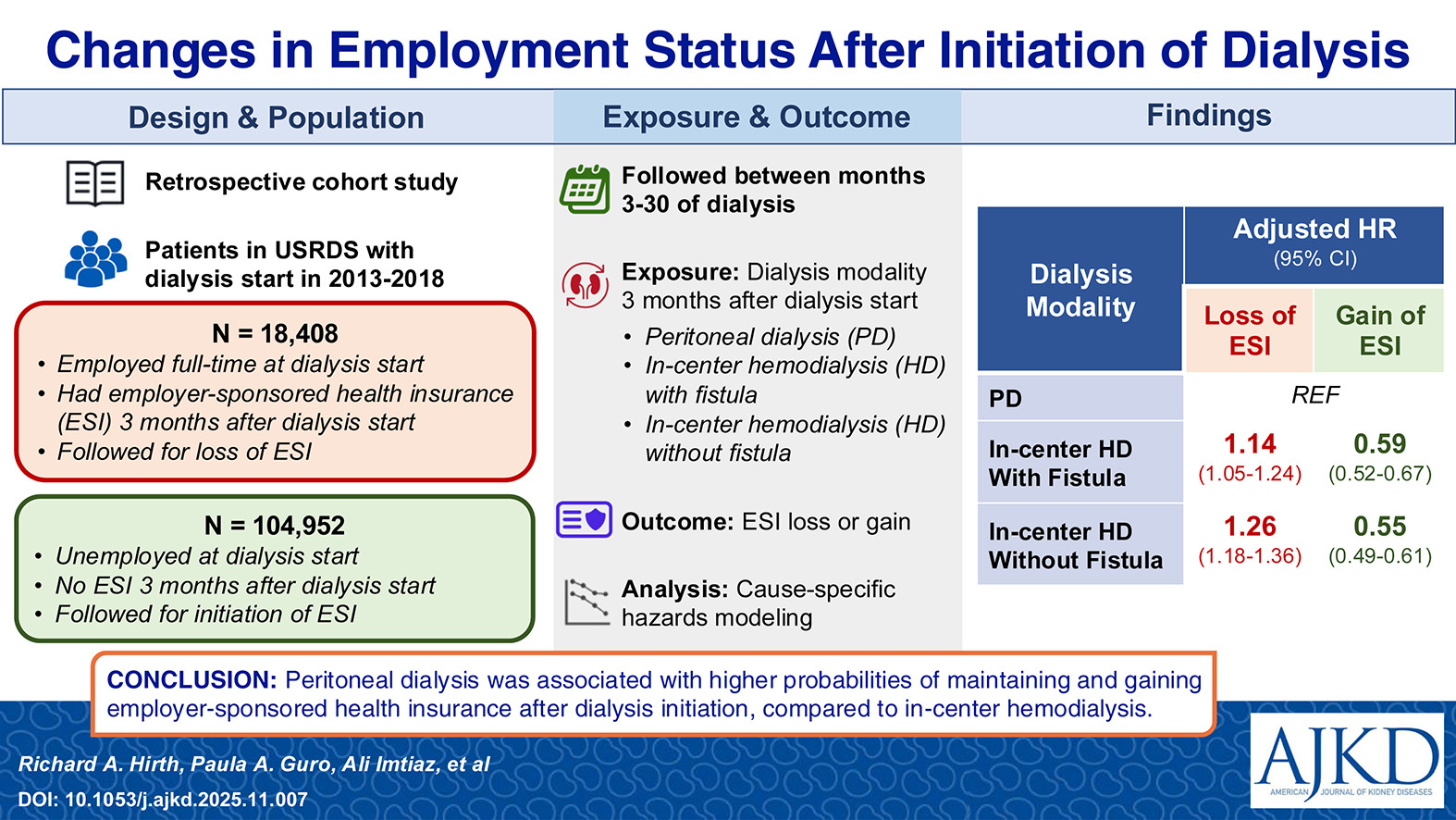
Changes in Employment Status After Initiation of Peritoneal and In-Center Hemodialysis by Richard Hirth al. [OPEN ACCESS]
DOI: 10.1053/j.ajkd.2025.11.007
EDITORIAL: A Patient-Level Analysis of Home Dialysis and Employer-Provided Health Insurance in Kidney Failure by Yajaira S. Jimenez et al. [FREE]
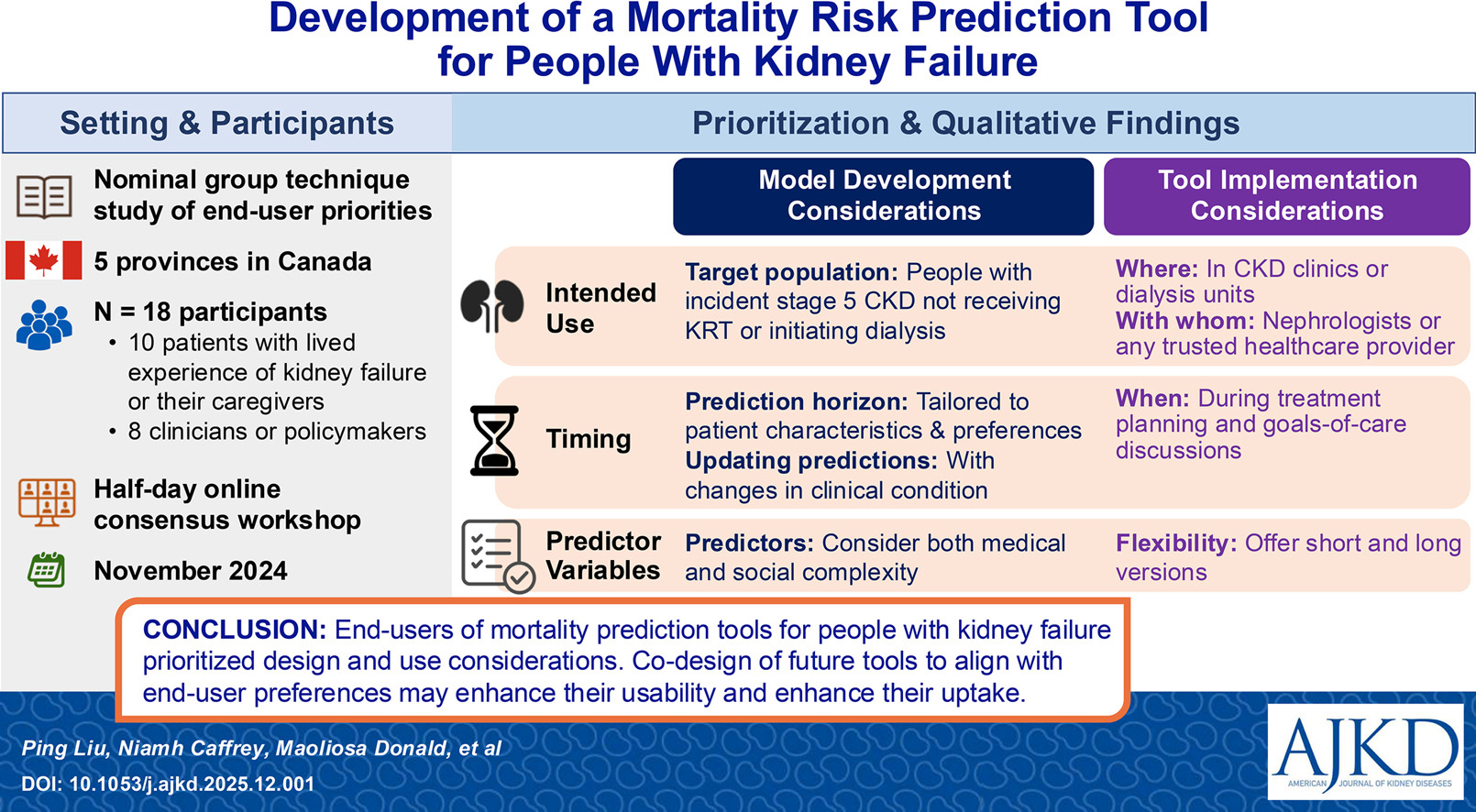
Development of a Mortality Risk Prediction Tool for People With Kidney Failure: A Nominal Group Technique Study of End-User Priorities
by Ping Liu et al. [OPEN ACCESS]
From the authors: Many calculators predict survival for people with kidney failure on dialysis, but few are used in practice, in part because they were not created with input from people who need them. To learn what users want, we conducted an online consensus workshop involving individuals living with kidney failure, caregivers, clinicians, and policymakers from across Canada. The participants discussed how and when the tool should be used and on which factors the tool should be based. They prioritized the use of the tool during clinic visits, personalizing the prediction horizon, and taking into account health conditions and frailty. The participants emphasized the importance of trust, comfort in communication, and support systems when using the tool. Involving users in tool design may enhance its usability and adoption.
DOI: 10.1053/j.ajkd.2025.12.001
EDITORIAL: Incorporating Patient and Provider Preferences in Risk Prediction Models by Navdeep Tangri and Michael Reaume [FREE]
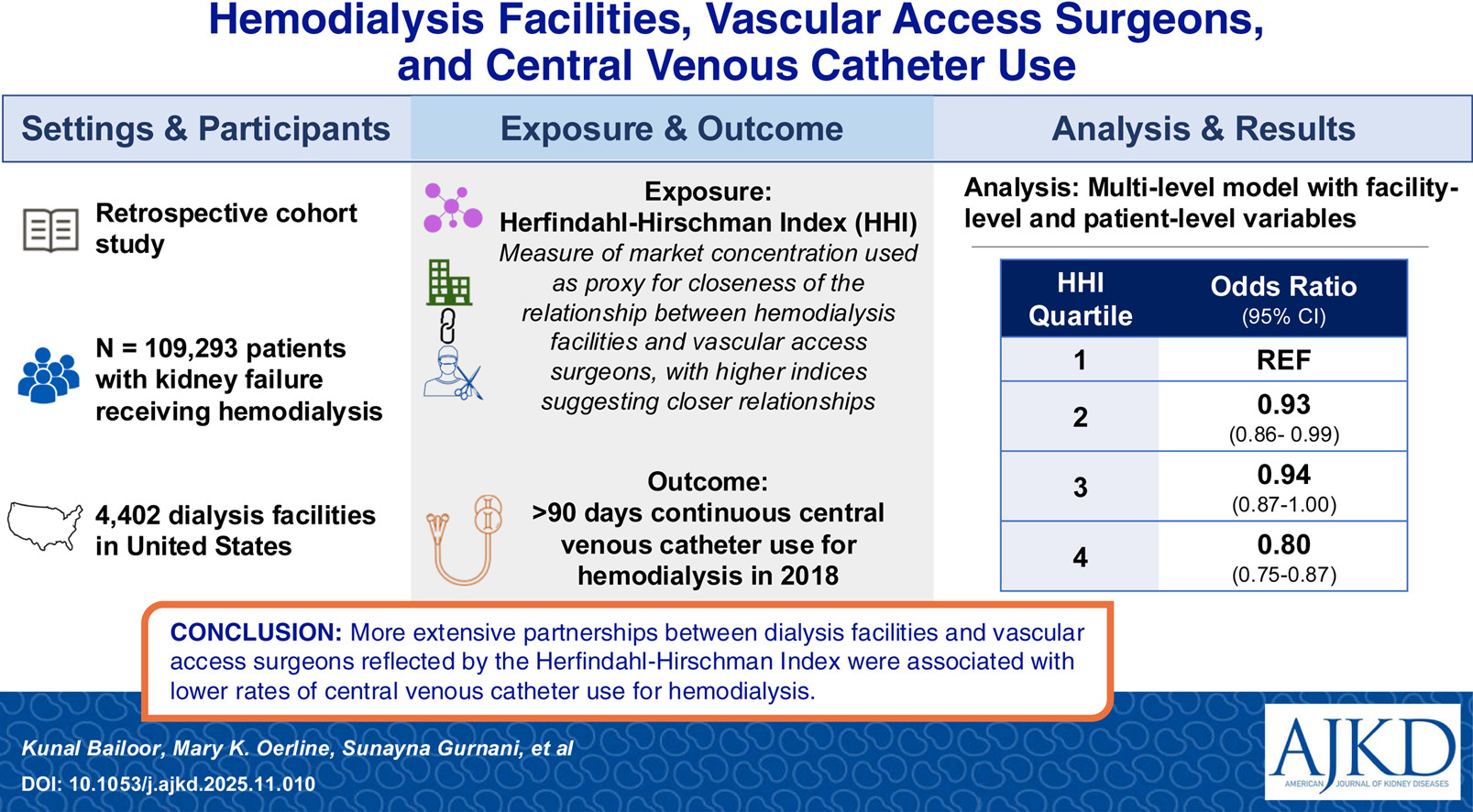
Hemodialysis Facilities, Vascular Access Surgeons, and Central Venous Catheter Use: A Retrospective Cohort Study by Kunal Bailoor et al. [OPEN ACCESS]
From the Authors: The goal of this study was to learn if patients in dialysis facilities that partnered with surgeons (measured using a marker of market concentration) who place and maintain permanent hemodialysis vascular access grafts and fistulas experienced lower use of a temporary form of vascular access for hemodialysis, central venous catheters, which are associated with an increased risk of infection. We found that closer partnerships between hemodialysis centers and surgeons were associated with less use of catheters for the patients served by those dialysis centers. These findings may inform strategies to reduce the use of central venous catheters and improve outcomes for patients with kidney failure requiring dialysis.
DOI: 10.1053/j.ajkd.2025.11.010
EDITORIAL: Measuring Relationships Between Dialysis Facilities and Vascular Access Surgeons by Andrea Lubitz et al. [FREE]
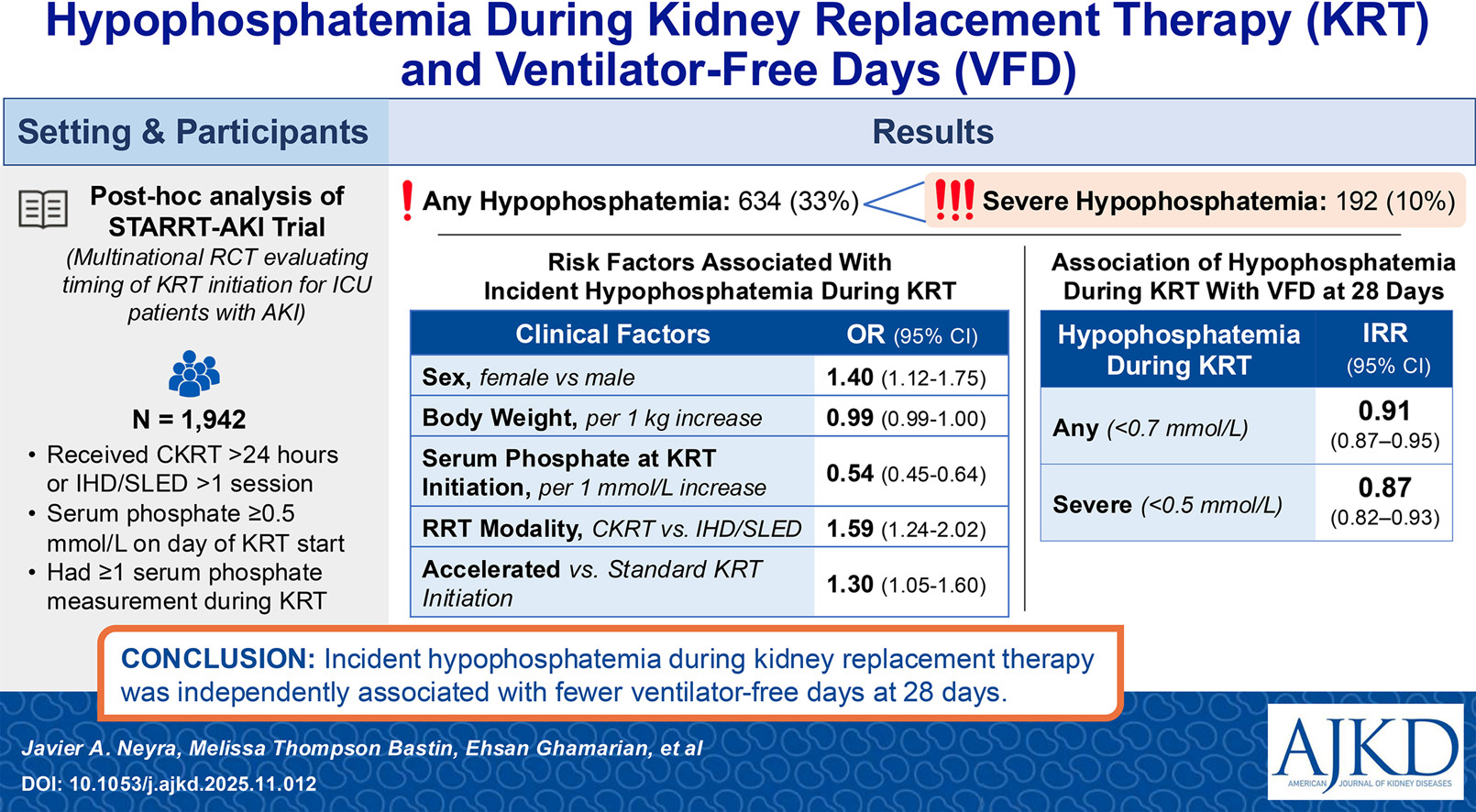
Hypophosphatemia During Kidney Replacement Therapy and Ventilator-Free Days: A Post Hoc Analysis of the STARRT-AKI Trial by Javier A. Neyra et al.
DOI: 10.1053/j.ajkd.2025.11.012
EDITORIAL: Continuous Kidney Replacement Therapy–Induced Hypophosphatemia: A Nuisance or a Clinically Meaningful Target? by J. Pedro Teixeira [FREE]
Response to Rituximab as a Maintenance Therapy in Adult Idiopathic Nephrotic Syndrome: A French Multicenter Cohort Study by Manuel Laslandes et al.
From the authors: Rituximab is effective in reducing relapses and the need for administration of steroids and other immunosuppressant drugs in childhood idiopathic nephrotic syndromes (INS). In adults, few data are available, particularly with regard to maintenance dosing. This study identified all adult patients with INS who received rituximab in 10 French clinical centers. These 134 patients were followed for a median of 36 months. Rituximab was associated with a reduction in the number of relapses and exposure to steroids and other immunosuppressants. Maintenance dosing of rituximab between 6 and 12 months was significantly associated with a lower risk of INS relapse without an increased risk of severe infections. The role of maintenance therapy with rituximab requires further evaluation in prospective studies.
DOI: 10.1053/j.ajkd.2025.09.021
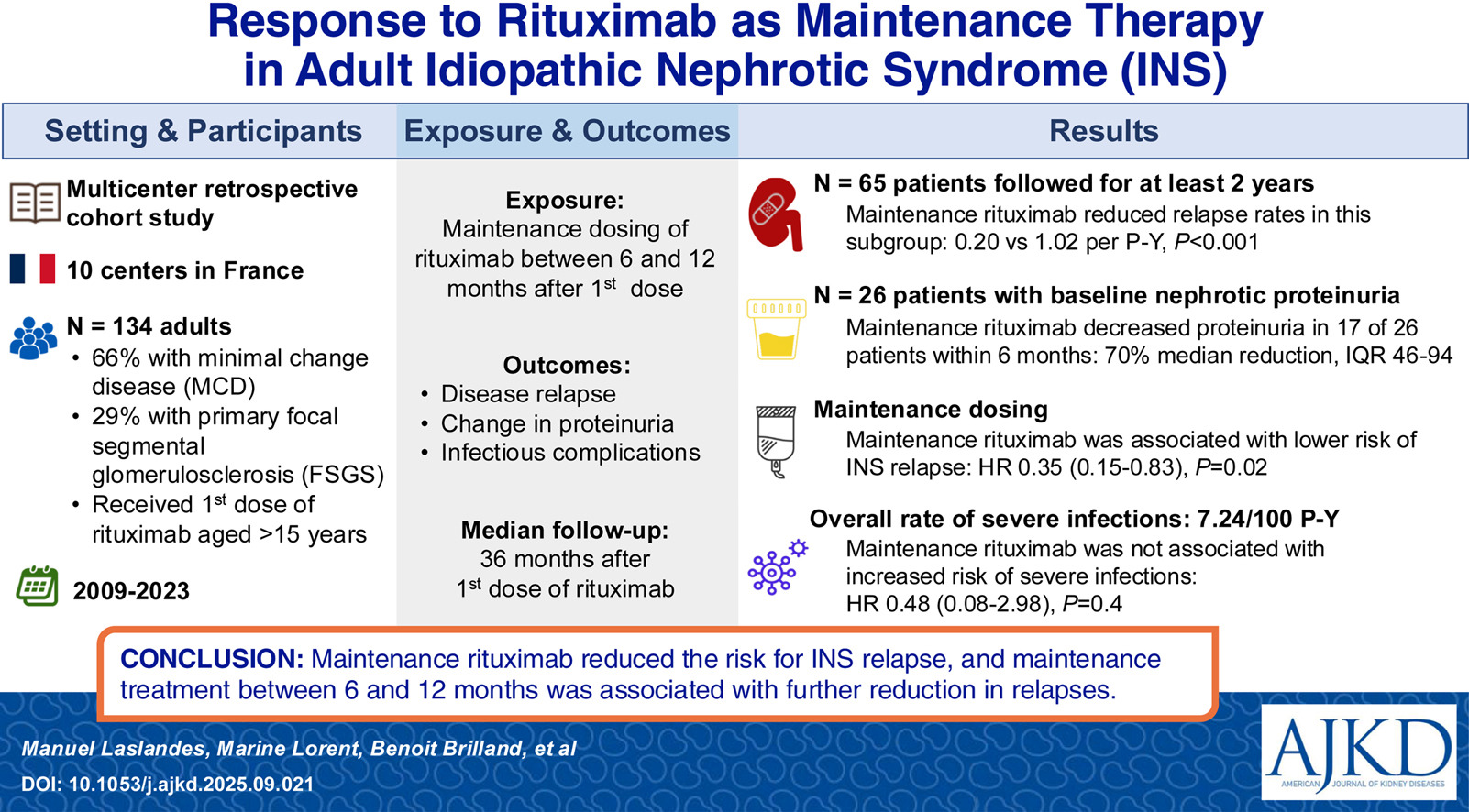
AJKDBlog COMMENTARY: Response to Rituximab as a Maintenance Therapy in Adult INS: An Interview by Drs. Manuel Laslandes and Christophe Masset [FREE]
AJKDBlog COMMENTARY: After Remission, What Next? Rethinking Rituximab Strategy in Idiopathic Nephrotic Syndrome by Drs. Zohreh Gholizadeh Ghozloujeh and Sayna Norouzi [FREE]
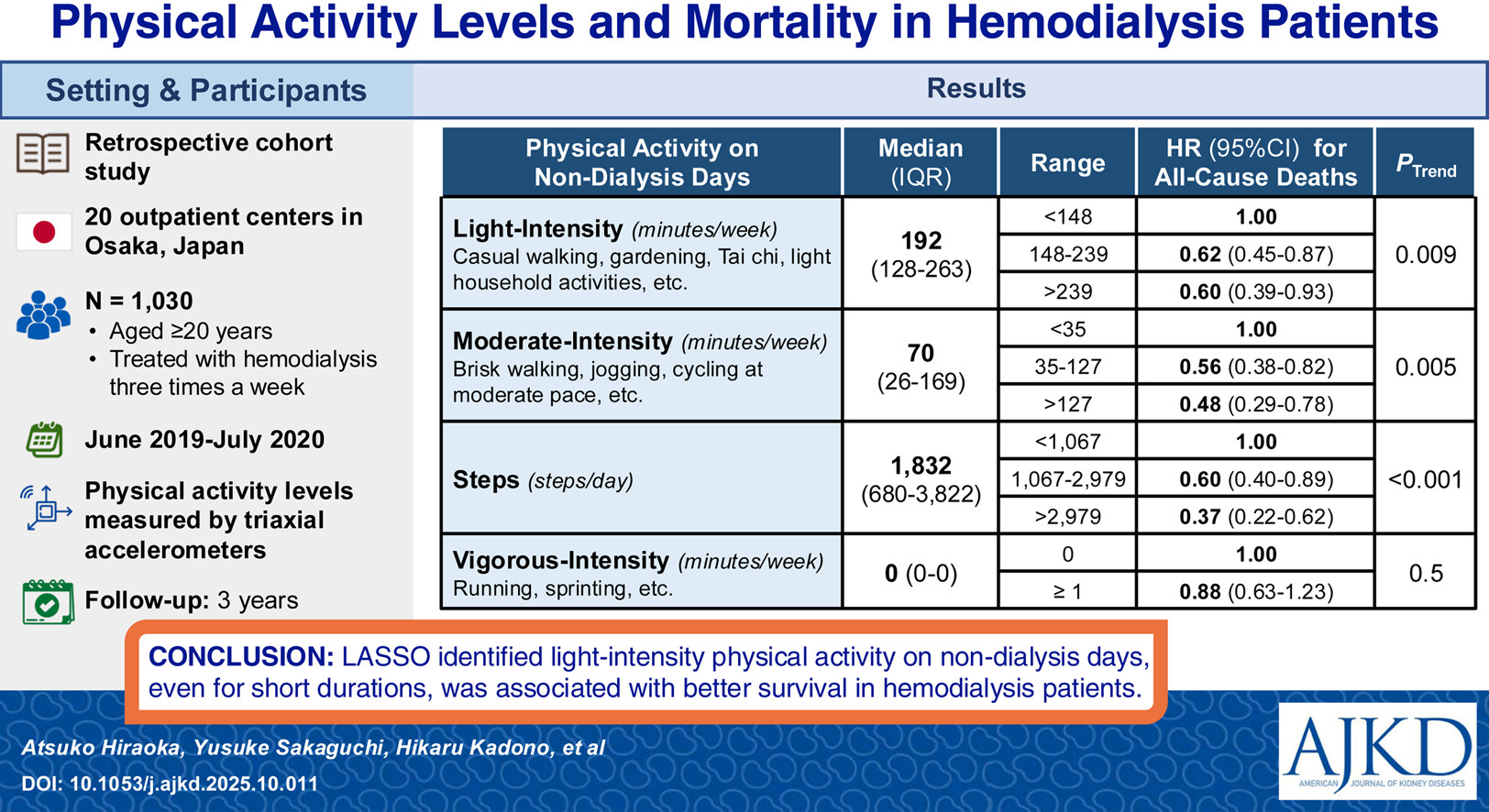
Accelerometry-Derived Physical Activity Levels and Mortality in Hemodialysis Patients: A Prospective Cohort Study by Atsuko Hiraoka
et al.
From the authors: Sedentary behavior is prevalent in hemodialysis patients. Although current guidelines recommend 150-300 minutes/week of moderate-intensity physical activity (PA) (eg, brisk walking, cycling at a moderate pace, jogging) or 75-150 minutes/week of vigorous-intensity PA (eg, running, sprinting), it is uncertain whether these targets are applicable to hemodialysis patients who have a high prevalence of frailty. In this 3-year prospective cohort study involving 1,030 Japanese hemodialysis patients, light-intensity PA (eg, casual walking, light household activities, gardening, tai-chi) on nondialysis days was most closely associated with better survival among various PA parameters. The lowest mortality risk was observed at about 300 minutes/day of light-intensity PA on nondialysis days. Light-intensity PA, even for short durations, may be associated with favorable outcomes among hemodialysis patients.
DOI: 10.1053/j.ajkd.2025.10.011
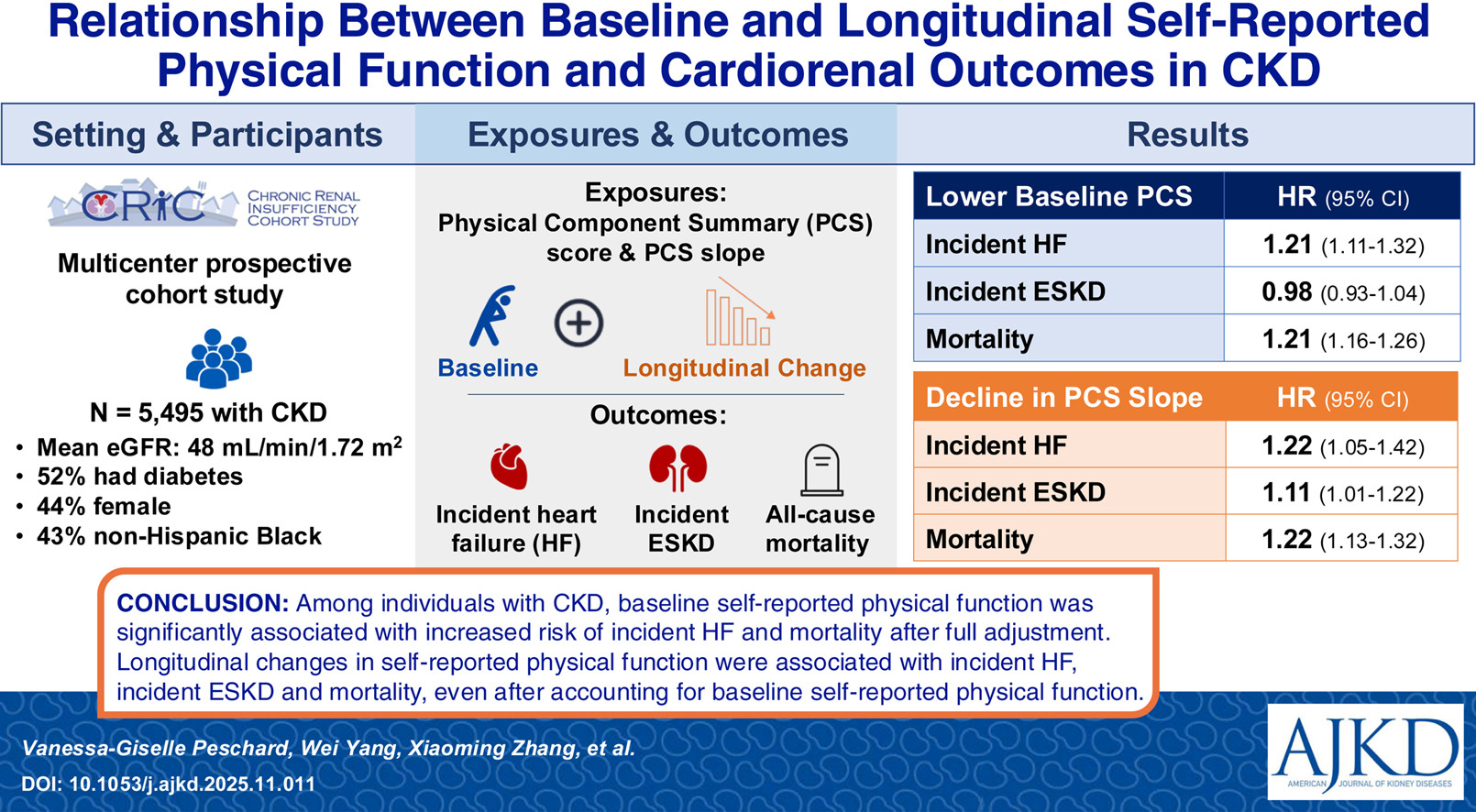
Relationship Between Baseline and Longitudinal Self-Reported Physical Function and Cardiorenal Outcomes in CKD: Findings From the CRIC Study by Vanessa-Giselle Peschard et al.
From the authors: People with chronic kidney disease (CKD) often experience a decline in physical function, but it is unclear how the decline impacts important outcomes in CKD. This study explored how both initial physical function and changes over time relate to important outcomes in CKD, including heart failure, kidney failure, and death. We found that people who rated their physical function lower or whose physical function declined over time were more likely to experience heart failure, kidney failure, and death. These patterns held true even after accounting for other heatlh conditions. These findings suggest that early interventions to preserve physical function could potentially prevent or delay these outcomes in patients but should be tested.
DOI: 10.1053/j.ajkd.2025.11.011
AJKDBlog COMMENTARY: Why Physical Function Matters More Than We Think in CKD by Kashvi Gupta [FREE]
KDQOI Commentary in the May 2026 issue:
KDOQI US Commentary on the KDIGO 2024 Clinical Practice Guideline for the Management of Antineutrophil Cytoplasmic Antibody (ANCA)–Associated Vasculitis by Salem Almaani et al.
DOI: 10.1053/j.ajkd.2025.12.002
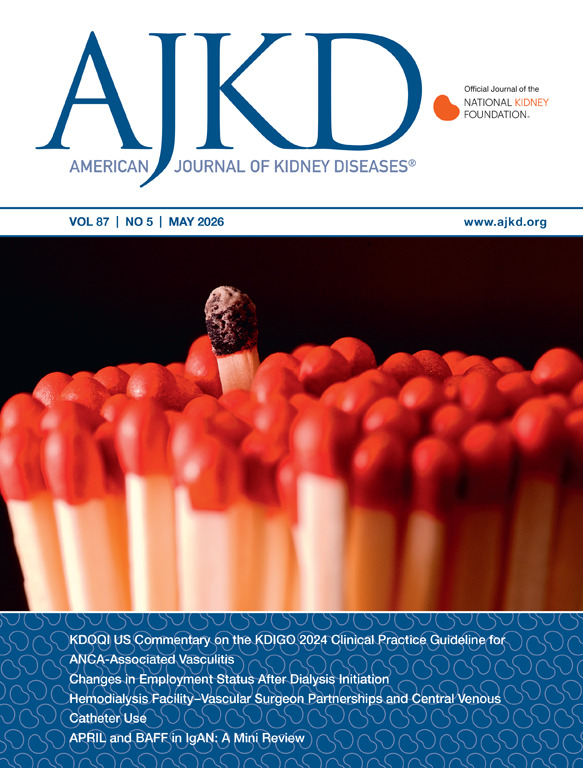
Phosphorus was discovered in 1669 by Hennig Brand, when he isolated the element by evaporating urine. It was not until 1830 that phosphorus was introduced into friction matches, as it was observed that wooden splints coated with white phosphorus would ignite when exposed to heat generated by friction. However, white phosphorus is volatile and toxic, and it caused an epidemic of “phossy jaw” in match factory workers,a disease in which white phosphorus taken up through cavities in the teeth caused jaw necrosis. This realization led to the substitution for red phosphorus, a more stable and less toxic form of the element. This became the standard for centuries, though today the red phosphorus is found inthe striking surface on the box rather than in the match head. Phosphate is an essential part of energy storage in the human body in the form of ATP bonds, which allow us to use our muscles to walk, eat, and breathe. In this issue of AJKD, Neyra et al demonstrate an association between severe hypophosphatemia and fewer ventilator-free days in ICU patients with AKI.
Special thanks to Editorial Intern Natasha Freeman for curating the cover image and drafting the cover blurb for this issue. The photo “Match Fire” by LeeChandler is released on Pixabay under the CCO license.
Read the most popular articles from the January-December 2025 issues of AJKD.

Copyright: ibreakstock / Shutterstock
Read the most popular posts from Nov 2024-Oct 2025 on the AJKD Blog.