


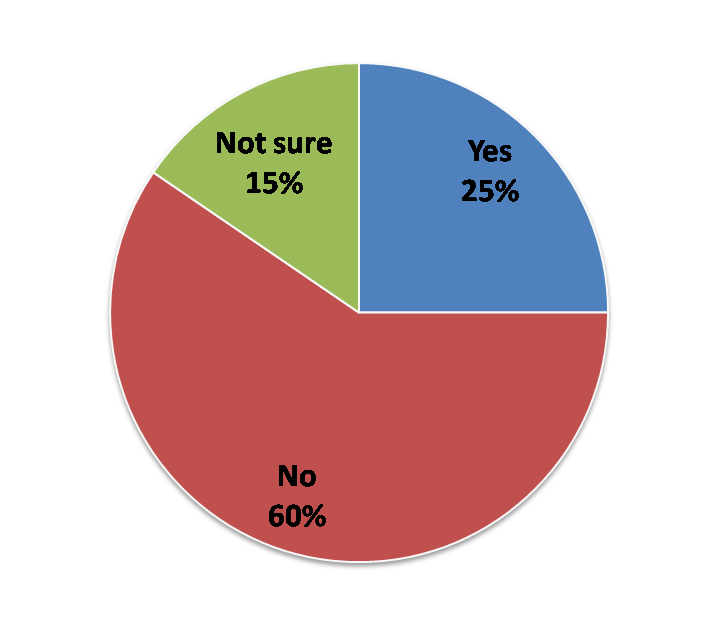
Poll results for the “Should undocumented immigrants get covered for kidney transplantation?” poll.
Surprisingly, nearly 60% of our readers did not support transplantation in undocumented immigrants, 15% were not sure, and only 25% supported transplantation.
Why won’t the nephrology community support transplantation in undocumented immigrants? The answer seems obvious—at least at first. Transplantation is expensive. Estimates place the first year’s expense to Medicare at about $110,000, with subsequent costs of about $27,000 per year. When there are US citizens who cannot afford transplantation, spending taxpayer money for undocumented patients does not seem appropriate. In addition, transplanting undocumented immigrants takes a kidney away from the deceased donor pool. This may further prolong the wait for others to receive a kidney transplant. Political beliefs on undocumented immigrants may also play a role.
But to make a complete argument, we must consider the benefits of transplanting undocumented immigrants. The price of maintenance dialysis is approximately $75,000 per year. Many undocumented immigrants with ESRD are going to an emergency room for dialysis care, which may be even more expensive. Over the long term, kidney transplantation is cheaper. In addition, transplanting undocumented immigrants may not reduce available organs for citizens. As the study by Linden et al points out, many undocumented patients may have a living donor. Furthermore, although undocumented immigrants do not have access to transplantation, they can still be deceased donors and potentially add to the pool of organs. Finally, not offering transplantation to an otherwise suitable candidate presents an ethical dilemma, as we should be promoting the best treatment options for all of our patients. Unfortunately, there are not many compromises available. One option would be for undocumented immigrants to obtain private health insurance for transplantation, although it may be difficult and expensive. Another option would be to provide access to outpatient dialysis care; although over the long term it will be more expensive than transplantation.
In conclusion, if this poll is representative, the nephrology community does not favor a change in policy to support kidney transplantation in undocumented ESRD patients. Perhaps it is not yet time to discuss policy changes. Rather, we need to first educate ourselves, look hard at data and cost, and come to a consensus as to the best course of action for these vulnerable patients.
Dr. Vinay Nair
eAJKD Advisory Board member