
Ensuring Kidney Health Equity in the Face of Crises this World Kidney Day
Ranim Razzouk, MD @RazzoukRanim
Dr. Ranim Razzouk is a senior Nephrology and Hypertension Fellow at the American University of Beirut, Lebanon. Her interests include kidney transplantation and glomerular diseases.

Bassem Tanios, MD @BassemTanios
Dr. Bassem Tanios is an Assistant Professor of Medicine at the Division of Nephrology and Hypertension at the American University of Beirut, Lebanon. He strongly advocates for ESRD patients, his interests include cardiovascular disease in ESRD, hypertension, and renal transplantation.
According to data from 167 countries representing 97.4% of the world population between 2016 and 2022, there is still considerable variation in the provision of kidney care, particularly among low and low-middle-income countries. Disparities exist in terms of treatment availability including free kidney replacement therapy, accessibility to therapy, cost, distance from care centers, healthcare force shortages, and the presence of national strategies government policies for kidney care.
While hemodialysis is available in 98% of countries, peritoneal dialysis and kidney transplantation are only available in 79% and 70% of countries, respectively. Despite this, the accessibility of kidney replacement therapy is relatively low (32% for low-income countries and 45% for low-middle-income countries), with children having no access to hemodialysis in 19% of countries or to peritoneal dialysis or kidney transplantation in 6% of countries. In one study from Sub-Saharan Africa, only 10% of incident dialysis patients continued dialysis for more than three months, and only 1% for more than 12 months. This led to the death/presumed death of 95% of adults and 96% of children with kidney failure due to care inaccessibility.
On this World Kidney Day, we turn our eyes towards our region of the world. Once known as “The Hospital of the East”, Lebanon was reclassified as a low-middle-income country in July 2022. This change ensued after a major economic crisis befell the country in 2019 and was exacerbated by the COVID-19 pandemic and a massive blast that ravaged the port of and parts of the capital city, Beirut, in 2020. The healthcare system, kidney care, and our patients suffered significant devastation from these crises. The government lifted subsidies on many crucial drugs, including antihypertensives and medications essential for treating kidney disease. This change significantly increased the cost of these medications and limited patients’ access. The economic crisis also caused an unprecedented exodus of healthcare personnel, further plummeting healthcare services. Although care for kidney patients and kidney replacement therapies are still available and running according to standard-of-care practices at our center and many centers across Lebanon, some centers have resorted to rationing hemodialysis, albeit temporarily during periods of shortage.
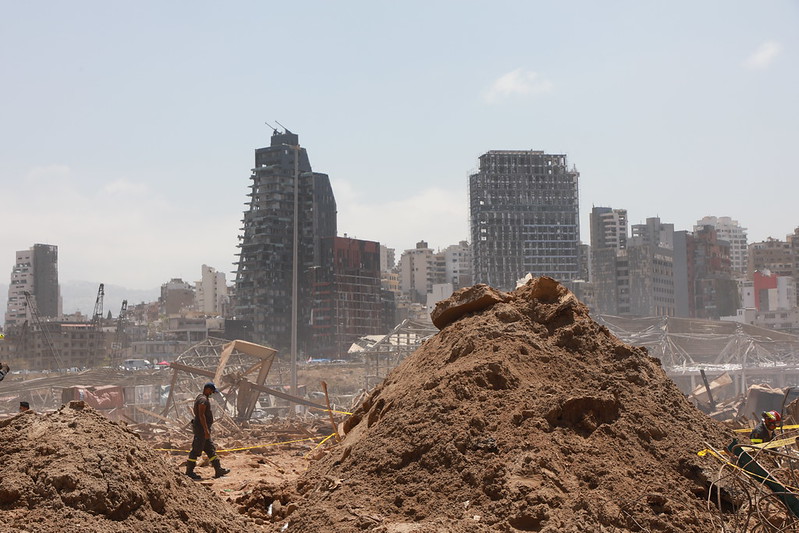
“Lebanon: the EU’s response to the tragic explosions in Beirut” is from EU Civil Protection and Humanitarian Aid on Flickr
Ongoing military conflicts in the Middle East have played a major role in impacting healthcare in general and kidney care in particular leading to the loss of countless lives. In Gaza, which has seen significant devastation in recent months, patients have experienced severe restrictions in accessing life-saving therapy. Very few hospitals are still functioning. Medications, clean water, and food are scarce. The ongoing war has and will continue to have a devastating impact on patients, including adult and pediatric patients with kidney disease, those on dialysis, and kidney transplant recipients.
Based on our experience and the experience of our patients in our region of the world, we suggest the following action items to attain equity in kidney care:
- First, it is important to effectively treat and prevent the progression of kidney disease and it is thus essential to ensure that drugs like renin angiotensin aldosterone system blockers, SGLT2 inhibitors, and mineralocorticoid receptor antagonists are universally available. This means that regardless of a patients’ socio-economic status or country, they should have access to these necessary drugs. Collaborations between international organizations, such as the World Health Organization and pharmaceutical companies, can help ensure the availability of medications at an affordable price. Promoting local pharmaceutical production and using approved generics are also important steps. This can significantly reduce the financial and human cost of kidney disease.
- Second, raising awareness about the risk factors associated with kidney disease is crucial. Early screening should be emphasized. This can be accomplished through national kidney organizations, nephrology conventions, and special events such as World Kidney Day 2024. Lebanon started marking World Kidney Day in 2013 following an initiative at the American University of Beirut. Since then, it has become an annual event organized by the Lebanese Society of Nephrology and Hypertension (LSNH), an affiliate society of the International Society of Nephrology, with physicians and patients nationwide participating in awareness, educational, and professional development activities.
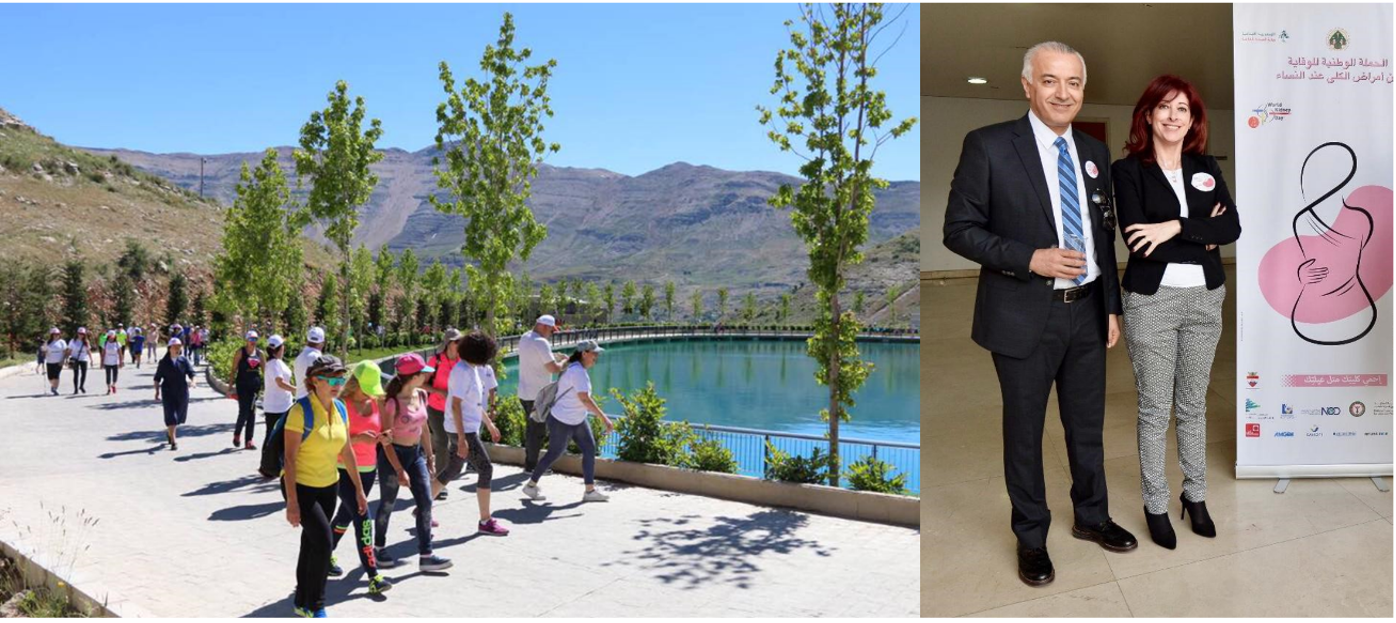
Walk for Kidneys! A World Kidney Day activity highlighting healthy lifestyle in 2017 (left) and women’s health in 2018 (right) Organized by LSNH President Dr. Robert Najem, and Mrs. Hanadi Mezher, WKD coordinator and European Dialysis and Transplant Nurses Association Ambassador for Lebanon; and founding President of the Lebanese Nephrology Nurses Association. (Reproduced with permission from LSNH)
- Third, social media outlets can be effective platforms to raise awareness about kidney donation and transplantation, as well as to address controversial topics such as brain death. Registries of Chronic Kidney Disease, dialysis, and transplantation in each country can also tackle the needs and requirements of each group. A further step would be to create advocacy groups in each country to fight for and empower these patients, especially in low- and low-middle-income countries.
- Fourth, recent technological advancements and artificial intelligence (AI) open new horizons to the global nephrology workforce and support kidney care globally via virtual platforms. Machine learning algorithms can play a crucial role in the timely identification of conditions like chronic kidney disease, issues with arteriovenous fistulas, cardiovascular complications, patient monitoring, risk prediction, and treatment optimization. Access to this technology can help bridge the global gap in kidney care mainly by expediting care and providing access to expert opinion regardless of the patient’s country of origin.
- Fifth, it is important to facilitate and promote physician training in developing countries to increase the workforce and provide adequate, high-quality care for patients. This can be achieved by implementing global nephrology guidelines and ensuring their widespread use.
- Lastly, to make kidney replacement therapy more accessible worldwide, it should be globalized, and incentives should be provided to encourage the availability of more economic options in all countries.
Finally, and perhaps most importantly, we urge for global peace, especially in our war-torn region. All resources, human and material alike, can go a long way if used to promote life, and improve healthcare for millions of people, including kidney patients around the world.
– Post prepared by Ranim Razzouk @RazzoukRanim and Bassem Tanios @BassemTanios
SPECIAL COLLECTION: World Kidney Day 
In celebration of World Kidney Day, this special collection highlights kidney disease research from around the world (all articles are freely available until March 30, 2024).
Leave a Reply