
Highlights from the March 2026 Issue
Editor’s Note: We asked authors of Original Investigations to provide short plain-language summaries that would briefly summarize what inspired their study, the basic approach taken, what was learned, and why it matters. We hope our readers will find this valuable in helping them keep up with the latest research in the field of nephrology.
Highlights from the March 2026 issue:
Corticosteroid, Parathyroid Hormone, and Body Composition Associations With Bone Density and Structure Following Kidney Transplantation by Susan L. Ziolkowski et al. [OPEN ACCESS]
DOI: 10.1053/j.ajkd.2025.10.005
EDITORIAL: Post-Transplant Bone Loss: How Muscles, Parathormone, and Steroids Come Into Play by Janaina A.M. Ramalho et al. [FREE]

Effectiveness and Safety of Apixaban Initiation Following Newly-Diagnosed Atrial Fibrillation in Patients With Kidney Failure on Hemodialysis by Wolfgang C. Winkelmayer et al.
From the authors: In this study of existing data of patients with kidney failure receiving dialysis who were newly diagnosed with atrial fibrillation, the most common heart rhythm disorder, we found that initiating a newer blood thinner, apixaban, was associated with fewer strokes, other clotting-related cardiovascular events, and deaths compared with what was observed in patients who did not initiate any blood-thinner treatment after their atrial fibrillation diagnosis. However, patients initiating apixaban did have higher rates of bleeding events that required hospitalization or, rarely, led to death. The information presented in this study can be used to inform shared decision-making between patients and their physicians.
DOI: 10.1053/j.ajkd.2025.10.009
EDITORIAL: Anticoagulation Decisions in Patients With Kidney Failure Requiring Hemodialysis: Caught Between a Clot and a Hard Place by An S. De Vriese [FREE]
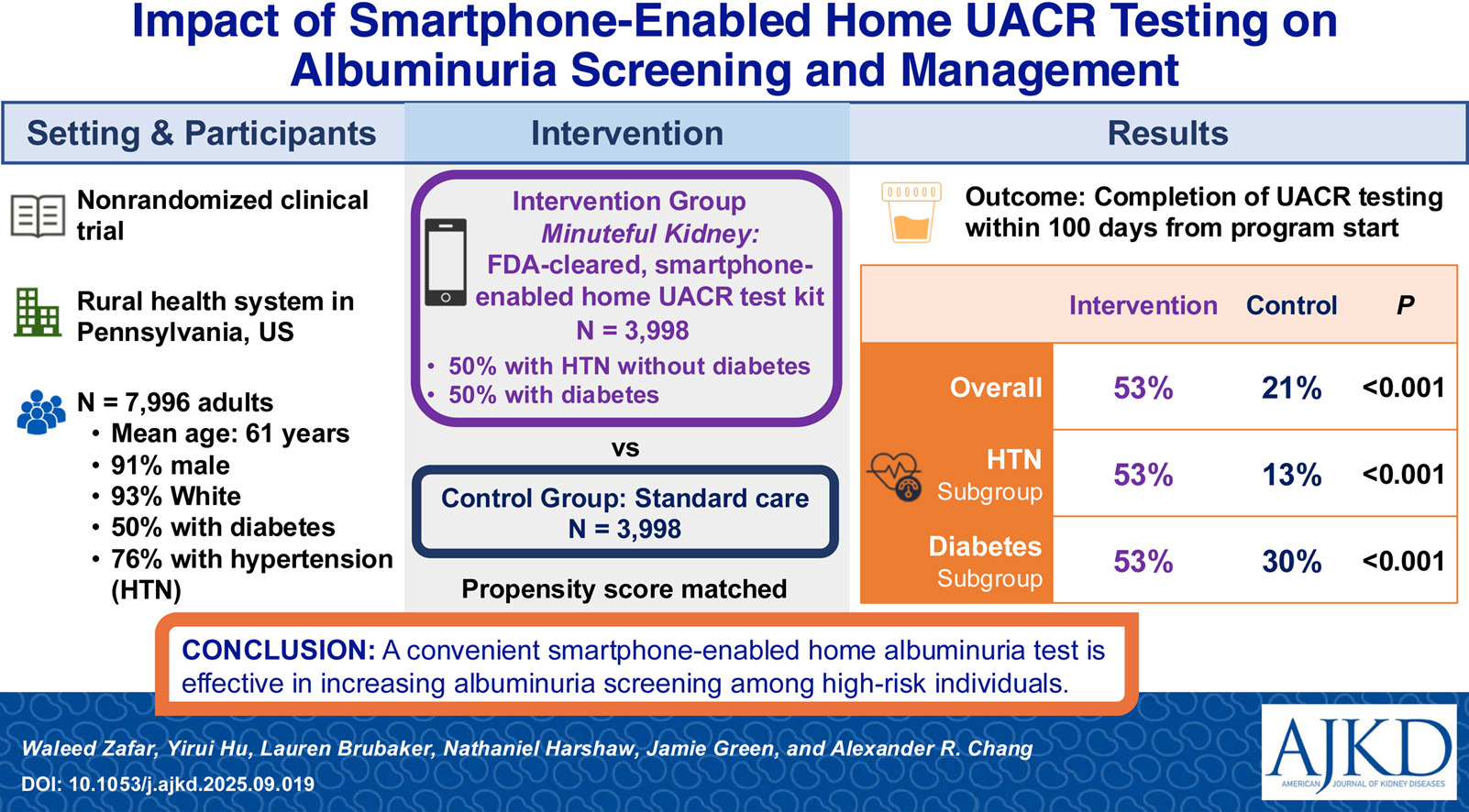
Impact of Smartphone-Enabled Home Urinary Albumin-Creatinine Ratio Testing on Albuminuria Screening and Management by Waleed Zafar et al. [OPEN ACCESS]
From the Authors: This study evaluated whether a smartphone-enabled home albuminuria test could improve chronic kidney disease (CKD) screening among adults with hypertension or diabetes. We found that home testing increased albuminuria test completion 2.5-fold in the intervention group compared with the control group (53% vs 21%). The impact was larger in the hypertension-only subgroup (53% vs 13%) than in the diabetes subgroup (53% vs 30%). Among those tested at home, 38% (hypertension subgroup) and 45% (diabetes subgroup) had abnormal albuminuria levels. These individuals were more likely to have follow-up care and new prescriptions for certain kidney-protective medications. These findings support the use of home albuminuria testing as an effective strategy to increase screening and early intervention for kidney disease in high-risk populations.
DOI: 10.1053/j.ajkd.2025.09.019
EDITORIAL: Nephrology Leadership Through Collaboration to Deliver on CKD Care by Jehan Zahid Bahrainwala [FREE]
Associations of Skeletal Muscle Mass and Body Mass Index With Clinical Outcomes in Autosomal-Dominant Polycystic Kidney Disease: An Observational Study by Dha Woon Im et al.
From the authors: Low muscle mass is a known health concern, and we aimed to study its impact specifically in patients with autosomal-dominant polycystic kidney disease (ADPKD). We investigated how muscle mass relates to patient survival and progression to end-stage kidney disease. Using computed tomography scans performed on more than 1,400 patients with ADPKD, we measured the amount and quality of their muscle. We discovered that patients with more muscle, especially higher-quality muscle, had a significantly lower risk of death and were less likely to develop end-stage kidney disease. Conversely, lower-quality muscle was associated with an increased risk of death. These findings suggest that maintaining good muscle mass may improve outcomes for patients with ADPKD. These data can inform future strategies for improving outcomes in people with ADPKD.
DOI: 10.1053/j.ajkd.2025.09.004
Patient and Caregiver Perspectives on Diet and Nutrition for Children With CKD: A Systematic Review of Qualitative Studies by Ao Zhang et al.
From the authors: Children with chronic kidney disease (CKD) face significant challenges in following dietary and fluid restrictions, which often affect their daily lives and social interactions. This study examines how children with CKD and their caregivers feel about these restrictions. We reviewed 70 studies to gather the perspectives of patients and caregivers on their dietary experiences. We found that many children felt frustrated by bland foods, and their caregivers often struggled with enforcing recommended diets. Despite these difficulties, both patients and caregivers developed coping strategies such as seeking advice from dietitians and supporting each other. This research highlights the importance of improving nutritional support and emotional well-being to help families manage their children’s CKD.
DOI: 10.1053/j.ajkd.2025.09.011

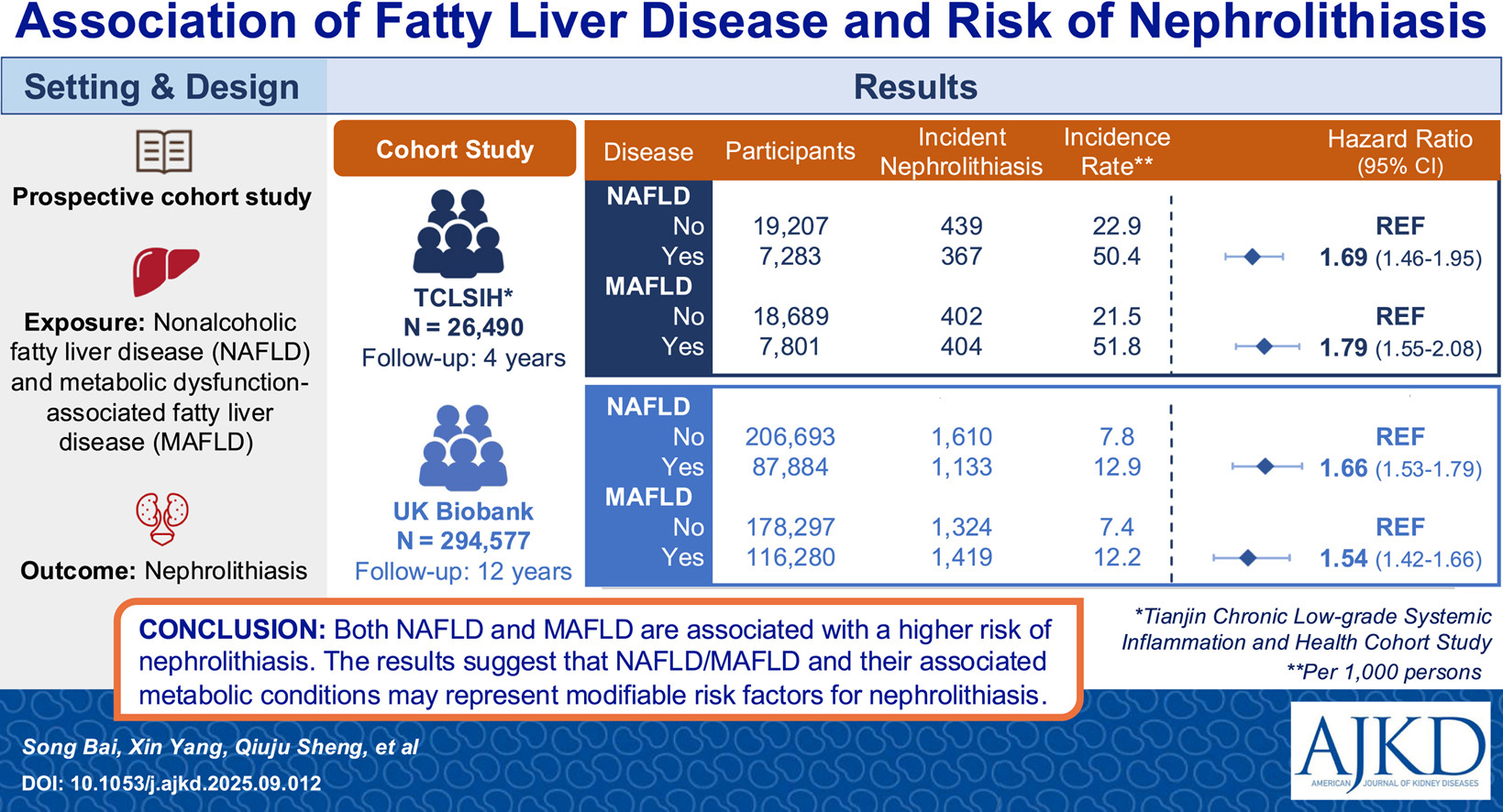
Association of Fatty Liver Disease and the Risk of Nephrolithiasis: Findings From Two Prospective Cohort Studies by Song Bai et al.
From the authors: Evidence on the association between nonalcoholic fatty liver disease (NAFLD) or metabolic dysfunction–associated fatty liver disease (MAFLD) and the risk of nephrolithiasis remains limited. In this study, we assessed whether NAFLD or MAFLD were associated with an increased risk of developing nephrolithiasis by analyzing data from 2 large prospective cohorts in the People’s Republic of China and the United Kingdom. Our findings demonstrated that individuals with NAFLD or MAFLD had a significantly higher risk of incident nephrolithiasis later in life. This increased risk remained consistent across different age and sex groups. Our findings underscore the importance of liver health as a potential risk factor for nephrolithiasis.
DOI: 10.1053/j.ajkd.2025.09.012
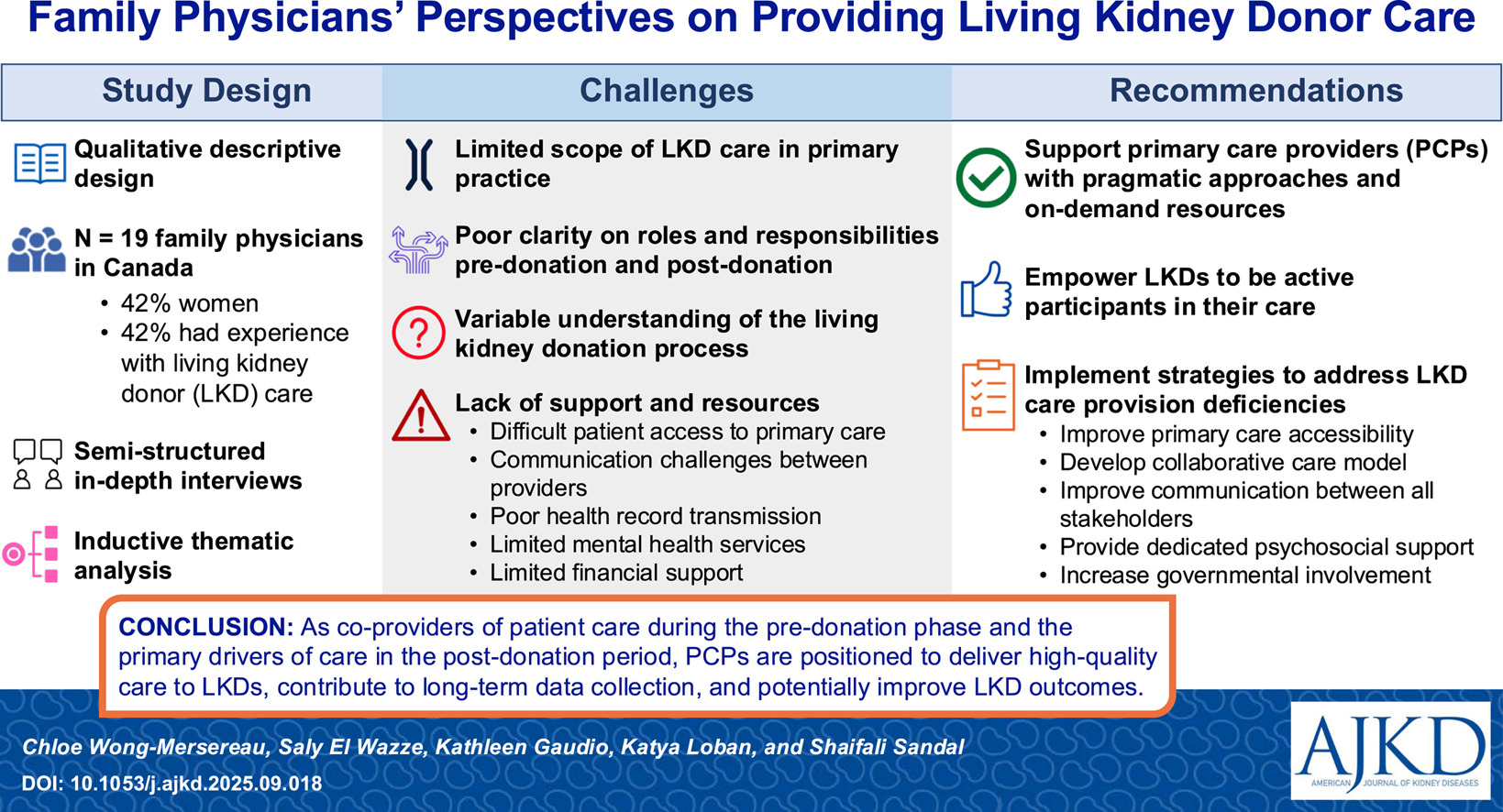
Family Physicians’ Perspectives on Providing Living Kidney Donor Care by Chloe Wong-Mersereau et al.
From the authors: Living kidney donors (LKDs) have reported gaps in their care, such as poor communication and a lack of coordination between doctors. Because family physicians play a key role in supporting donors before and after surgery, we interviewed 19 Canadian family doctors to hear their perspectives. Participants reported challenges such as unclear roles, limited scope of seeing LKDs in their practices, poor communication with transplant centers, and a lack of mental health and financial services. They suggested multiple ways to improve LKD care, such as giving family doctors better resources, empowering LKDs to be active partners in their care, and several other systems-level approaches. These findings suggest that greater connections among primary care providers may improve donor well-being and outcomes.
DOI: 10.1053/j.ajkd.2025.09.018
Special Report in the March 2026 issue:
Improving Vaccination in People With CKD: Report From a National Kidney Foundation Working Group by Susan F. Massengill et al. [OPEN ACCESS]
DOI: 10.1053/j.ajkd.2025.10.014
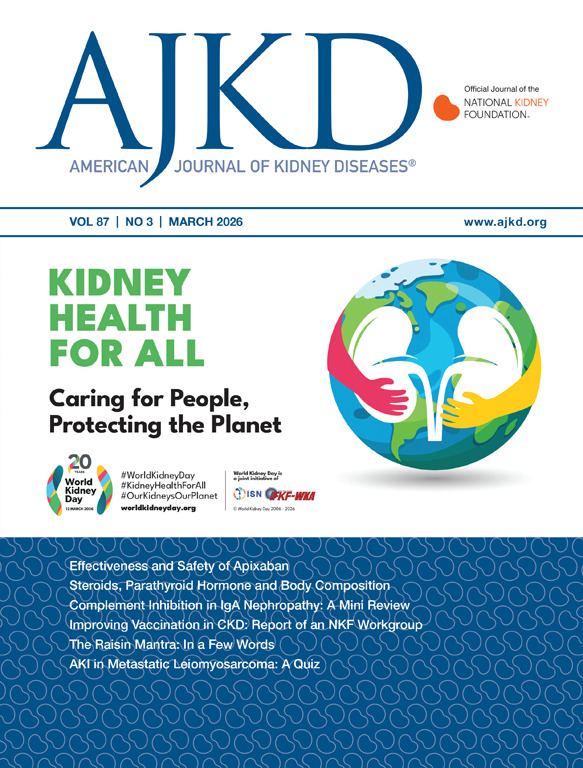 On the Cover:
On March 12, 2026, the 21st annual World Kidney Day highlights the bidirectional association of the global burden of kidney disease with the health of our planet. This year’s theme, “Kidney Health for All: Caring for People, Protecting the Planet” emphasizes the role of climate-related risks, such as air pollution, heat stress, dehydration, and extreme weather events, on kidney disease incidence and progression. Treatments for end-stage kidney disease, such as dialysis, are resource-intensive and lead to consumption of water, energy, and plastics. Preventing, treating, and curing kidney diseases can positively impact our environment. Further information on the 2026 WKD campaign is available at http://www.WorldKidneyDay.org.
Call for Applications: AJKD Editorial Internship Program 2026-27
 The AJKD Editorial Internship Program provides editorial experience to early career researchers interested in education, teaching, or medical editing/writing. Apply by April 30, 2026. Details on the AJKD Blog.
Leave a Reply