

Kidney transplant recipients are at least twice as likely to develop cancer compared with immunocompetent people. Cancer is now the second leading cause of death in kidney transplant recipients. In a recent Core Curriculum published in AJKD, the authors review common pretransplant and posttransplant cancers and management strategies to help nephrologists understand and manage the associated risks and optimize diagnosis and treatment.
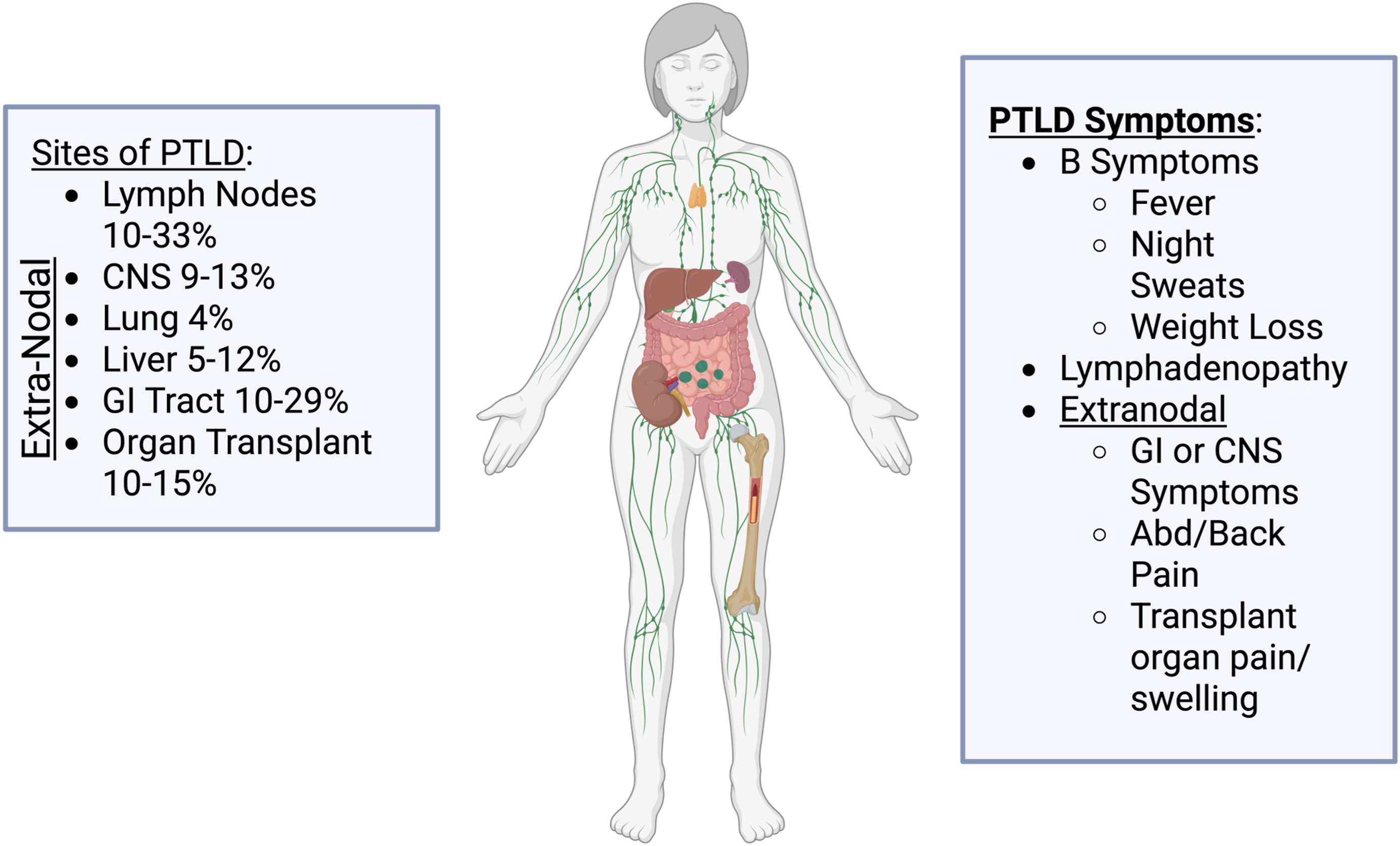
Diagnostic sites (percent of incidence) and symptoms of PTLD. Created with BioRender.com. Abbreviations: Abd, abdomen; CNS, central nervous system; GI, gastrointestinal; PTLD, posttransplant lymphoproliferative disorder. Figure 1 from Blosser et al, © National Kidney Foundation.
AJKDBlog’s Interviews Editor Timothy Yau chatted with authors Christopher Blosser and Naoka Murakami about the complexities associated with the care of transplant patients, novel cancer therapies, and the need for multidisciplinary teams in the screening and management of cancer in this vulnerable population.
If the embedded player above doesn’t work, please click here to watch the video interview. If you are interested in the SONG initiative mentioned in the interview, check out this link. Special thanks to Drs. Blosser and Murakami for their time and insight!
To view this Core Curriculum by Blosser et al [Free], please visit AJKD.org:
Title: Malignancy and Kidney Transplant: Core Curriculum 2026
Authors: Christopher Blosser, Elena-Bianca Barbir, Salma Shaikhouni, Naoka Murakami
DOI: 10.1053/j.ajkd.2026.01.011