
#NephMadness 2025: Green House – Let’s Not Avoid Nephrotoxins, Just for Today
Submit your picks! | @NephMadness | @nephmadness.bsky.social | NephMadness 2025
Josh King
Josh King is a nephrologist and medical toxicologist at University of Maryland, the APD of the University of Maryland Nephrology Fellowship, and the medical director of the Maryland Poison Center. He is a clinician-educator who practices in tox, renal, and IM. Josh probably won’t stop talking about nephrotoxins, even if you ask politely.

Competitors for the Green House Region
Team 1: Tubular Toxins
vs
Team 2: Oxalate Offenders
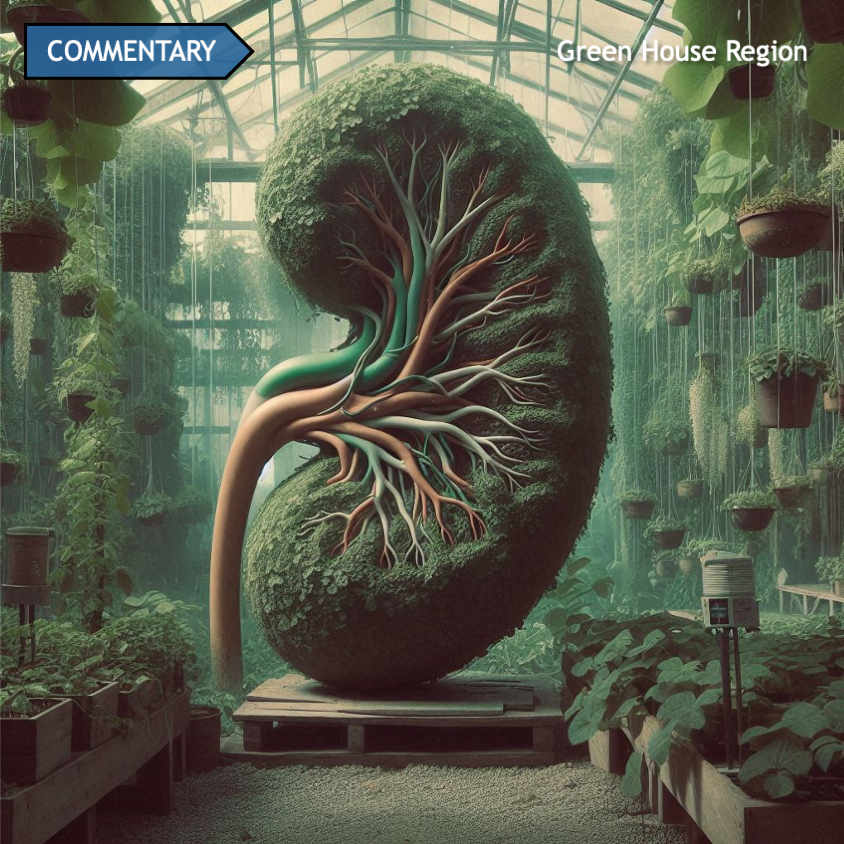
Image generated by Evan Zeitler using DALLE-E 3, accessed via ChatGPT at http://chat.openai.com, February 2025. After using the tool to generate the image, Zeitler and the NephMadness Executive Team reviewed and take full responsibility for the final graphic image.
Philippus Aurelius Theophrastus Bombastus von Hohenheim, also known as Paracelsus, was a unique figure, often termed the godfather of modern toxicology. He was a physician who understood that both experimental methods and evidence-based practice were essential for learning and applying knowledge gained through experiment. He was not exactly humble. Paracelsus once said that he had more knowledge in his little finger than all of the physicians of antiquity; he burned his students’ textbooks in a bonfire at the end of the semester during the single year that he was teaching in Switzerland (they did not invite him back), and he might have died in a bar fight. He also was a believer in alchemy and magick-with-a-k, and wrote more on the use of sigils and alchemical transformation then he did what we would consider useful practice today.
So why do we remember this guy? Because he said the phrase “the dose makes the poison.” And it is as true today as it was 500 years ago. Everything is a poison; nothing is without poison.
It turns out that plants wield poison with aplomb to deal with harshness of their environment and to keep themselves safe. And that ultimately brings us to this NephMadness‘s Green House Region. We have the Oxalate Offenders and the Tubular Toxins, who reflect that poison in nature in different ways.
Oxalates are simple carboxylic acids with simple toxicity; they bond with calcium making calcium oxalate salts, which precipitate out, and cause big problems. In humans, they’re most known for kidney stones, but their toxicity goes beyond this. Plants will actually use these crystalline salts to defend themselves. Dieffenbachia species, appropriately named mother-in-law tongue or dumbcane, are full of insoluble calcium oxalate – sharp little needles that cause significant pain to any animal (or person!) who dares take a bite out of their leaves or touch them to their eyes. It is thought that soluble oxalates are used by plants primarily to deal with hard water, as they do a great job of removing calcium from the environment.
But when they’re introduced into our body, either through ingestion of rhubarb, peanuts, or other foods high in oxalic acid, they bind with calcium and make insoluble calcium oxalate crystals that proceed to wreak havoc on renal tubules. These crystals not only choke up the tubules, they actually penetrate them and cause inflammatory reactions, damage, and ultimately tubular injury and death in both acute and chronic scenarios. While endogenous hyperoxaluria, a rare condition, can result in substantial kidney and other organ damage over time, similar effects can result from ingesting large amounts of plants which contain high concentrations of oxalates. Probably the most nefarious offender, star fruit, contains not only oxalates, but a neurotoxin (caramboxin) that builds up in kidney failure and can result in seizures, encephalopathy, and yes, even death.
Let’s be honest here. Everyone reading this who’s a nephrologist, or a provider who sees patients with kidney injury in one shape or another, has written the phrase “avoid nephrotoxins” in AKI. Probably over and over again. It’s a trope at this point. But what do we actually mean when we say to avoid nephrotoxins? We either mean to avoid things that affect renal blood flow (e.g. NSAIDs, the garlic to our nephrologic Nosferatu), or things that injure the tubules. And when we say the tubules, we’re really talking the proximal tubule, that workhorse of the kidney that contains most of the ATP-generating mitochondria.
Fortunately for us, the proximal tubules do a great job of reabsorbing things we want to keep (e.g. energetic substances – looking at you, Krebs cycle intermediates) and secreting things we don’t want to keep. Unfortunately for the tubules, some of these substances that we secrete are toxic to the proximal tubular cells themselves, and a few of the ones we reabsorb are toxins masquerading as energetic substrates. The latter category may be toxins that affect the kidney, such as amatoxins from Amanita phalloides – this false friend of a substance is a peptide and resembles something that we would want to digest, but instead inhibits RNA polymerase, leading to renal tubular death and AKI (these mushroom toxins are better known for their deadly effect on the liver, but they take a swipe at the kidney on the way out). There are numerous toxins that fall into either category.
While most of us are familiar with medications which are tubulotoxic, quite a few of these tubular toxins occur in nature. They can be direct tubulotoxins (e.g. orellanine, found in Cortinarius species mushrooms and notorious for producing delayed nephrotoxicity through reactive oxygen species that may result in ESKD) or indirect nephrotoxins.
Most nephrologists should be familiar with plant compounds such as aristolochic acid (AA) nephropathy – AA results in both tubular death as well as urothelial cancers – but there are many herbal medications in use in developing areas (especially sub-Saharan Africa) which contain unknown nephrotoxins and are responsible for a substantial burden of kidney disease in areas where most patients are unlikely to have access to life-saving therapies, including dialysis and kidney transplant.
Lastly, a number of compounds which affect the tubules may cause diseases treated by nephrologists, such as one of my favorites, glycyrrhizic acid from licorice. Not only does it cause spelling bee contestants to quiver with fear, it inhibits the conversion of cortisol to cortisone, mimicking hyperaldosteronism and resulting in hypertension, hypokalemia, and metabolic alkalosis.
So, which of these teams should win NephMadness? I’m going to premise reject here. Oxalate Offenders *are* Tubular Toxins. Tubular toxins don’t just hurt the tubules themselves – look at licorice. The key is not that one team should win, but that nephrotoxic substances in nature should be recognized.
Unfortunately, we live in an era where unregulated and potentially unsafe remedies are common – and what’s on a package insert may not correlate well with reality. If you want a compelling example outside of nephrology, I invite you to read about the Diamond Shruumz debacle last summer, where gummies containing a supposedly “natural” psychedelic mushroom compound, muscimol, actually contained a synthetic serotonergic agent that led to a number of patients having seizures and other neurotoxic events.
And quite a few folks are taking substances where the claims outstrip the data (I’m looking at you, CBD, and your substantial p450 inhibition leading to potential medication interactions – notably including tacrolimus).
So, let’s get down to the gamification. In full disclosure, while I prefer tabletop or video games to basketball, NephMadness does a great job of bringing awareness to various aspects of nephrology knowledge and practice. If reading about these compounds causes anyone to be a bit more circumspect in reviewing patients’ supplements, foods, and herbal and alternative medicines, well, we all win.
But because this is a competition, a game, we need a putative winner!
And in my mind, the winners are Tubular Toxins. Proximal tubules are too capacious for their own good; as Paracelsus said, the dose makes the poison, and they concentrate toxins which are shrugged off in small amounts throughout the body to the point where they can cause kidney injury and failure. When making your NephMadness bracket, this is the one time when you should *not* avoid nephrotoxins!
– Guest Post written by Josh King
As with all content on the AJKD Blog, the opinions expressed are those of the author of each post and are not necessarily shared or endorsed by the AJKD Blog, AJKD, the National Kidney Foundation, Elsevier, or any other entity unless explicitly stated.
Click to read the Green House Region
Submit your picks! | @NephMadness | @nephmadness.bsky.social | NephMadness 2025


Leave a Reply