
Highlights from the November 2025 Issue
Editor’s Note: We asked authors of Original Investigations to provide short plain-language summaries that would briefly summarize what inspired their study, the basic approach taken, what was learned, and why it matters. We hope our readers will find this valuable in helping them keep up with the latest research in the field of nephrology.
Highlights from the November 2025 issue:
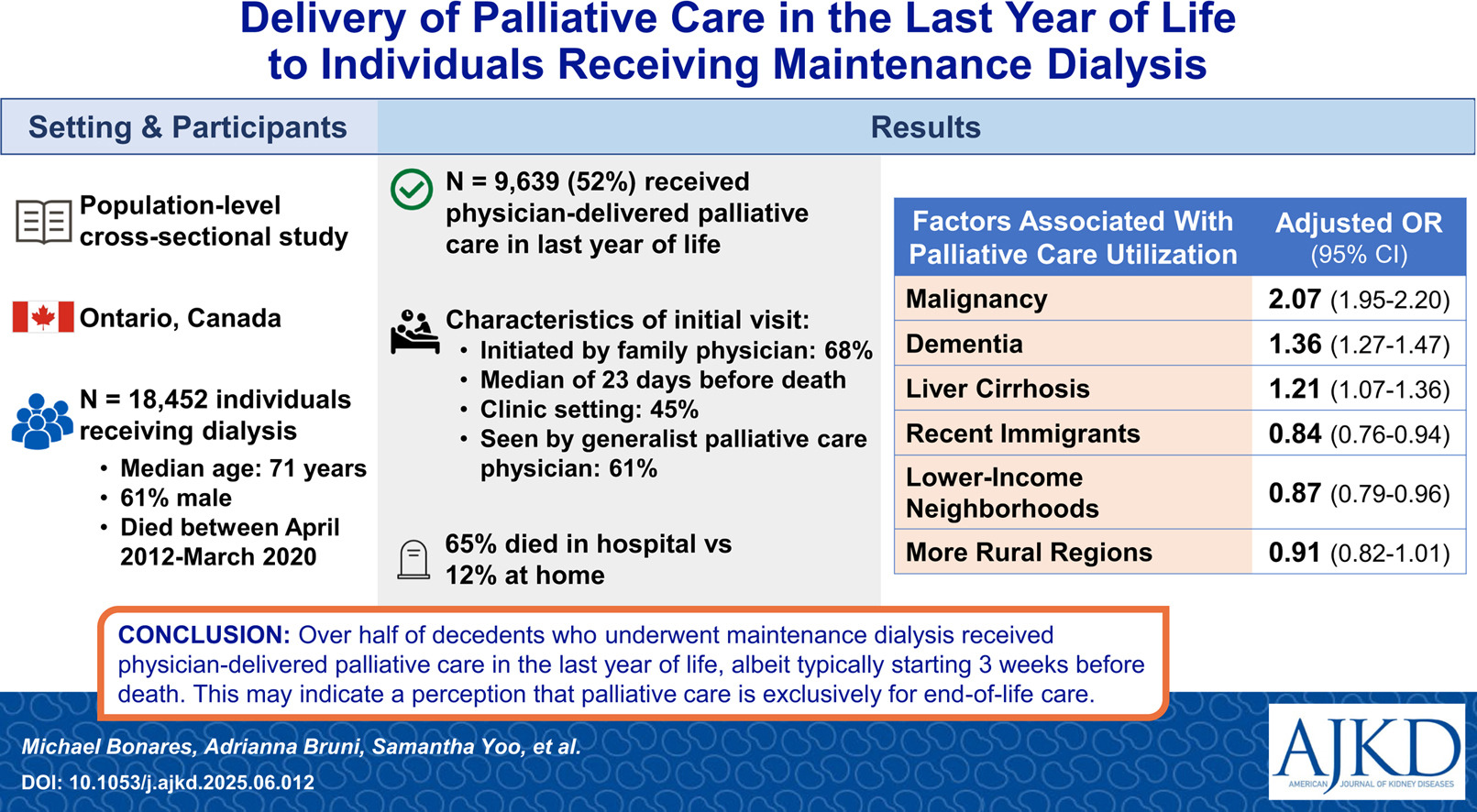
Delivery of Palliative Care in the Last Year of Life to Individuals Receiving Maintenance Dialysis: A Population-Level Cross-Sectional Study by Michael J. Bonares et al. [OPEN ACCESS]
DOI: 10.1053/j.ajkd.2025.06.012
EDITORIAL: Supportive Care for Patients Receiving Maintenance Hemodialysis: Why Nephrologists Should Care and What They Can Do by Alvin H. Moss et al. [FREE]
Sex and Mortality Risk in Patients Following Failure of a Kidney Transplant by Samantha Carija et al.
From the authors: Sex and gender are known to impact the risk of health outcomes in dialysis patients. In this study, we examined the relationship between sex differences and mortality after the failure of a kidney transplant that necessitated a return to maintenance dialysis. The study examined registry data from 4,135 patients in Australia and New Zealand who returned to dialysis after their first kidney transplant failed between 2000 and 2020. Compared with female patients, male patients were less likely to die early after allograft loss. The reduced risk of death was attributed to infection and dialysis withdrawal. We did not observe any significant sex-based differences in all-cause and cause-specific mortality beyond 1 year after allograft loss.
DOI: 10.1053/j.ajkd.2025.05.012
EDITORIAL: Rethinking Transplant Care Through a Sex- and Gender-Based Lens by Pascale Khairallah et al. [FREE]

Impact of the Type of Dialysate Acid Concentrate Container on the Environmental Footprint of Hemodialysis Centers by Rodrigo Martínez-Cadenas et al. [OPEN ACCESS]
From the Authors: Hemodialysis is a lifesaving treatment for people with kidney failure, but it also has a significant environmental impact. One overlooked factor is the variety of formats in which the acidic solution used in dialysis is delivered: small plastic canisters, flexible bags, and large storage tanks. This study examined the environmental impact of these container options across multiple dialysis centers in Spain. We found that storage tanks had the lowest environmental footprint, whereas plastic canisters had the highest. These findings highlight a practical way for dialysis providers and consumers to reduce waste and carbon emissions by selecting more sustainable container options, improving the environmental impact of kidney care.
DOI: 10.1053/j.ajkd.2025.06.009
EDITORIAL: Reducing the Environmental Footprint of Hemodialysis: The Case for Centralized Acid Delivery by Katherine A. Barraclough and Jane Waugh [FREE]

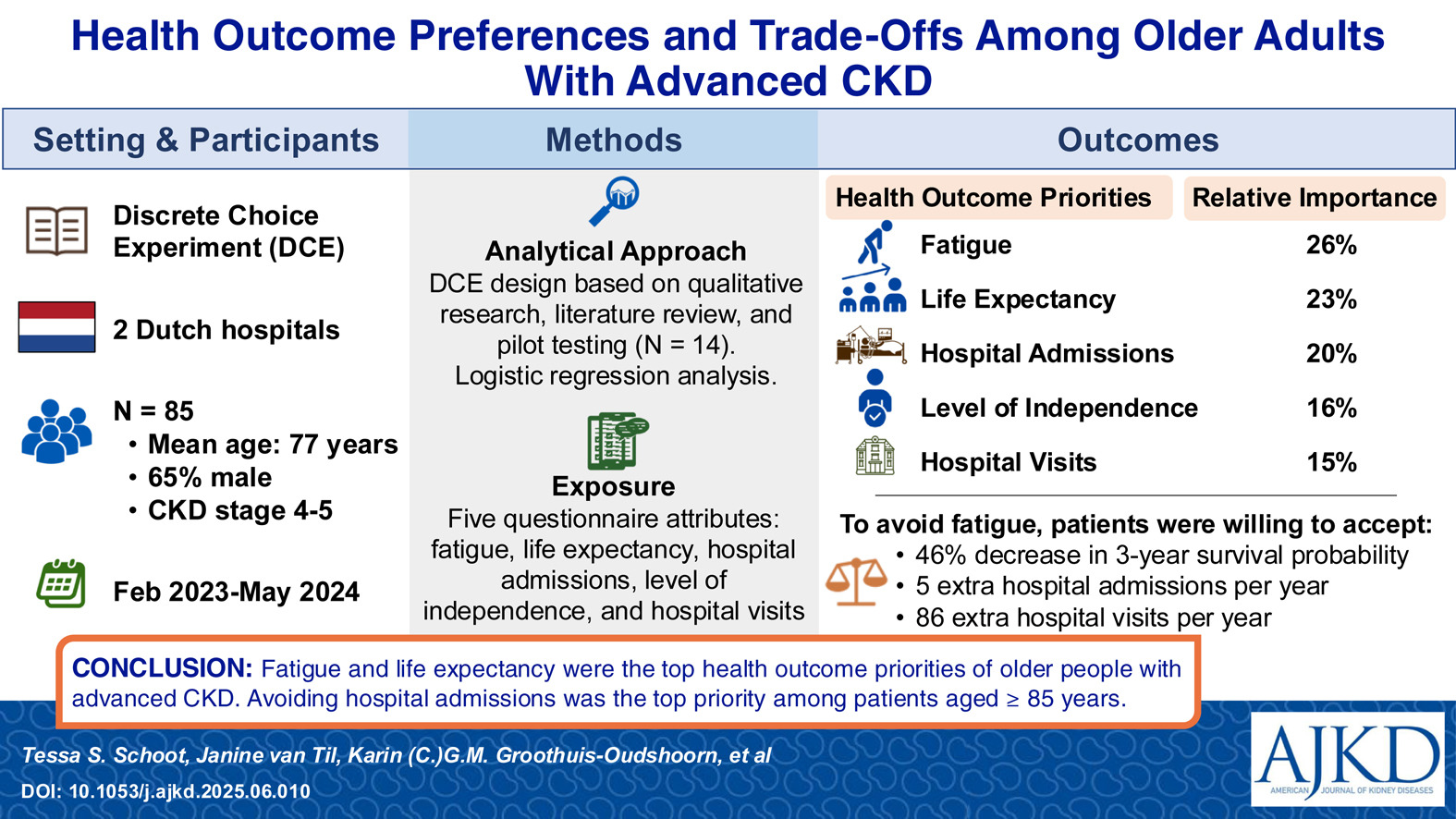
Health Outcome Preferences and Trade-offs Among Older Adults With Advanced CKD: A Discrete Choice Experiment by Tessa S. Schoot et al. [OPEN ACCESS]
From the authors: This study explored what matters most to older patients with kidney disease when making decisions about treatments. We asked patients to choose between treatment options that varied in terms of fatigue, life expectancy, independence, hospital admissions, and hospital visits. The findings revealed that fatigue and life expectancy were the most important factors for patients aged 65 years or older. The subgroup of patients aged 85 years or older cared most about avoiding hospital admissions. These findings help us understand what older patients with kidney disease may care about most when deciding on treatment options, which may inform their treatment decisions.
DOI: 10.1053/j.ajkd.2025.06.010
EDITORIAL: Choices Matter: Expanding the Quality of Shared Decision-Making for Older Adults With Advanced CKD by Benjamin Catanese et al. [FREE]
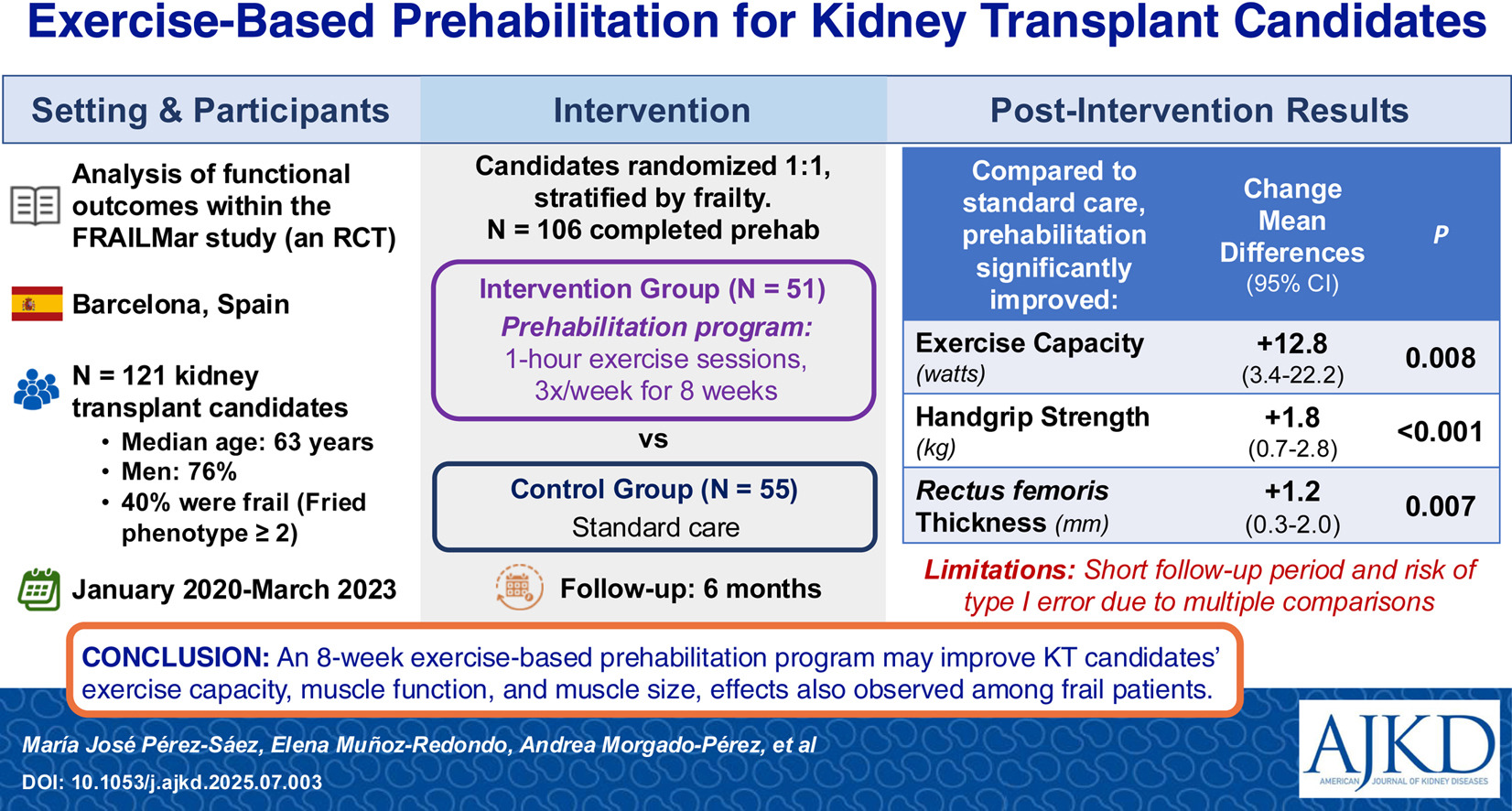
Exercise-Based Prehabilitation for Kidney Transplant Candidates: the FRAILMar Randomized Controlled Trial by María José Pérez-Sáez et al.
From the authors:
DOI: 10.1053/j.ajkd.2025.07.003
Core Curriculum In Nephrology in the November 2025 issue:
The Nephrologist’s Perspective in Evaluation and Management of Localized Renal Masses: Core Curriculum 2025 by Kristen Tillquist et al. [OPEN ACCESS]
DOI: 10.1053/j.ajkd.2025.05.014
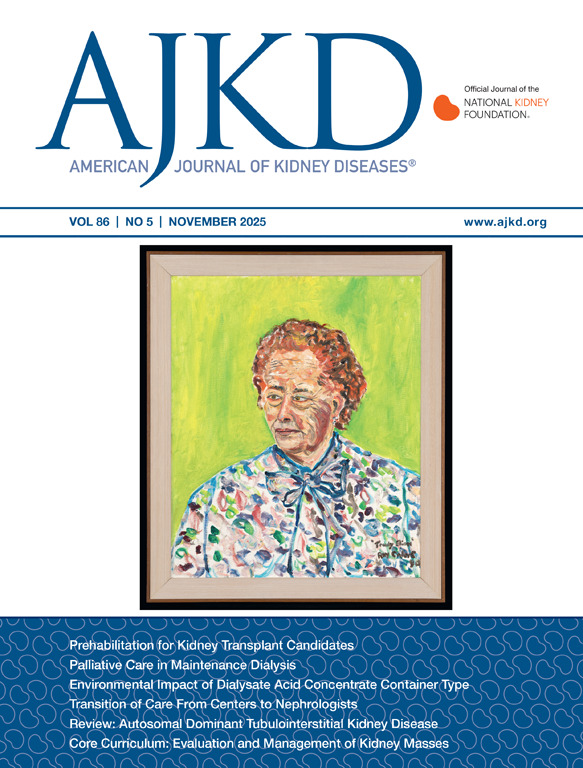 On the Cover:
Gertrude Elion was an American pharmacologist and biochemist who co-developed aza-thioprine, the first immunosuppressive agent used in organ transplantation. Despite her extraordinary intellect, she faced significant barriers due to gender bias that she would not allow to impede her professional journey. She became Department Head, Experimental Therapy at Burroughs Wellcome, and received the 1988 Nobel Prize in Physiology or Medicine. In this issue, Carija et al. examine the association between sex and mortality following kidney allograft loss.
Special thanks to Editorial Intern Benjamin Catanese for curating the cover image and drafting the cover blurb for this issue. The oil painting “Gertrude Elion” by Sir Roy Calne is released by the Wellcome Collection under the Attribution 4.0 International (CC BY 4.0) license.

The editors are delighted to recognize these articles that have been selected to receive the 2025 AJKD Editors’ Choice Award (all articles are freely available until February 1, 2026).
Leave a Reply