
Highlights from the April 2026 Issue
Editor’s Note: We asked authors of Original Investigations to provide short plain-language summaries that would briefly summarize what inspired their study, the basic approach taken, what was learned, and why it matters. We hope our readers will find this valuable in helping them keep up with the latest research in the field of nephrology.
Highlights from the April 2026 issue:
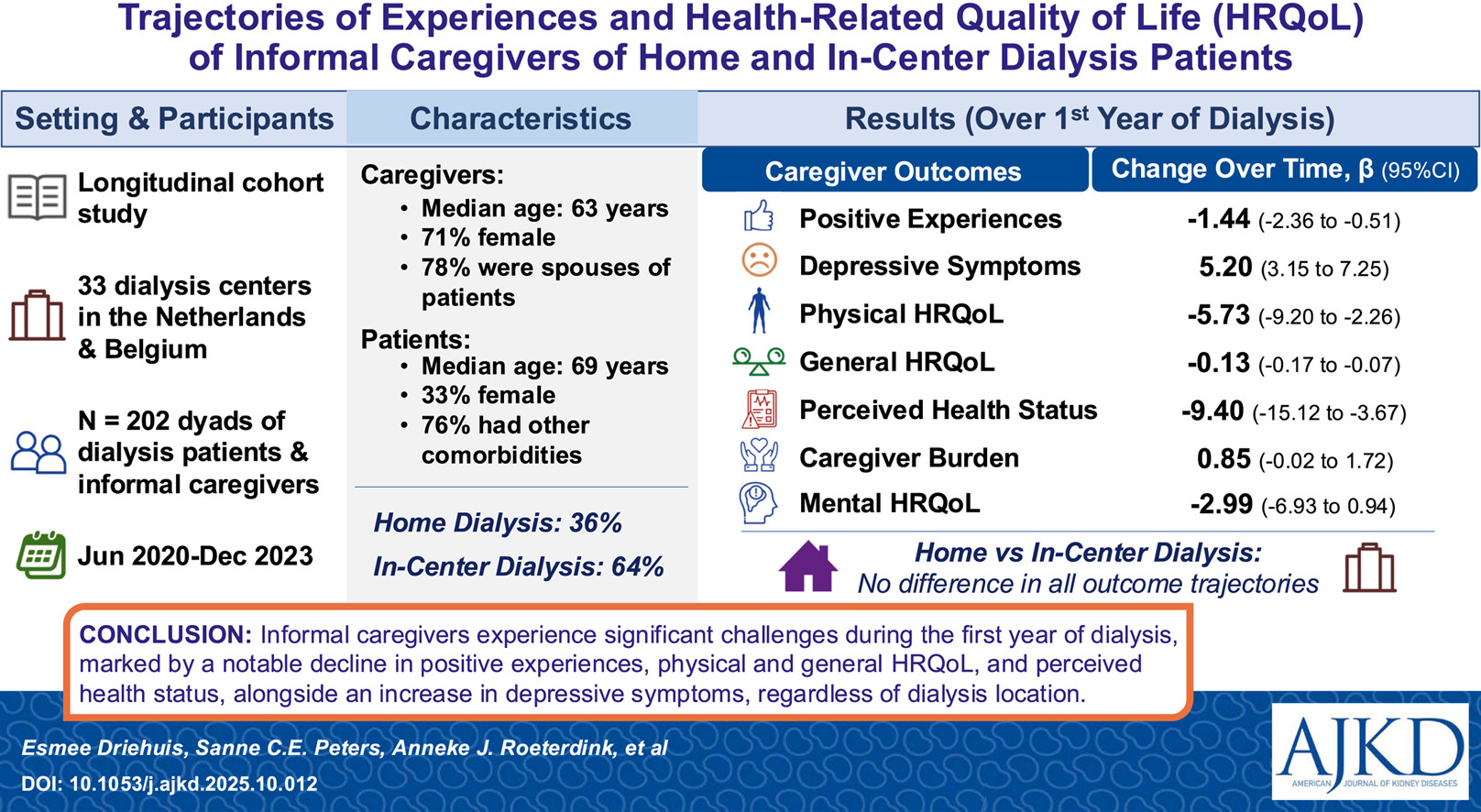
Trajectories of Experiences and Health-Related Quality of Life of Informal Caregivers of Home and In-Center Dialysis Patients: A Multicenter Longitudinal Cohort Study by Esmee Driehuiset al. [OPEN ACCESS]
DOI: 10.1053/j.ajkd.2025.10.012
EDITORIAL: Beyond the Individual: Toward a Family-Centered Understanding of Dialysis Caregiving by Jeanette Finderup et al. [FREE]
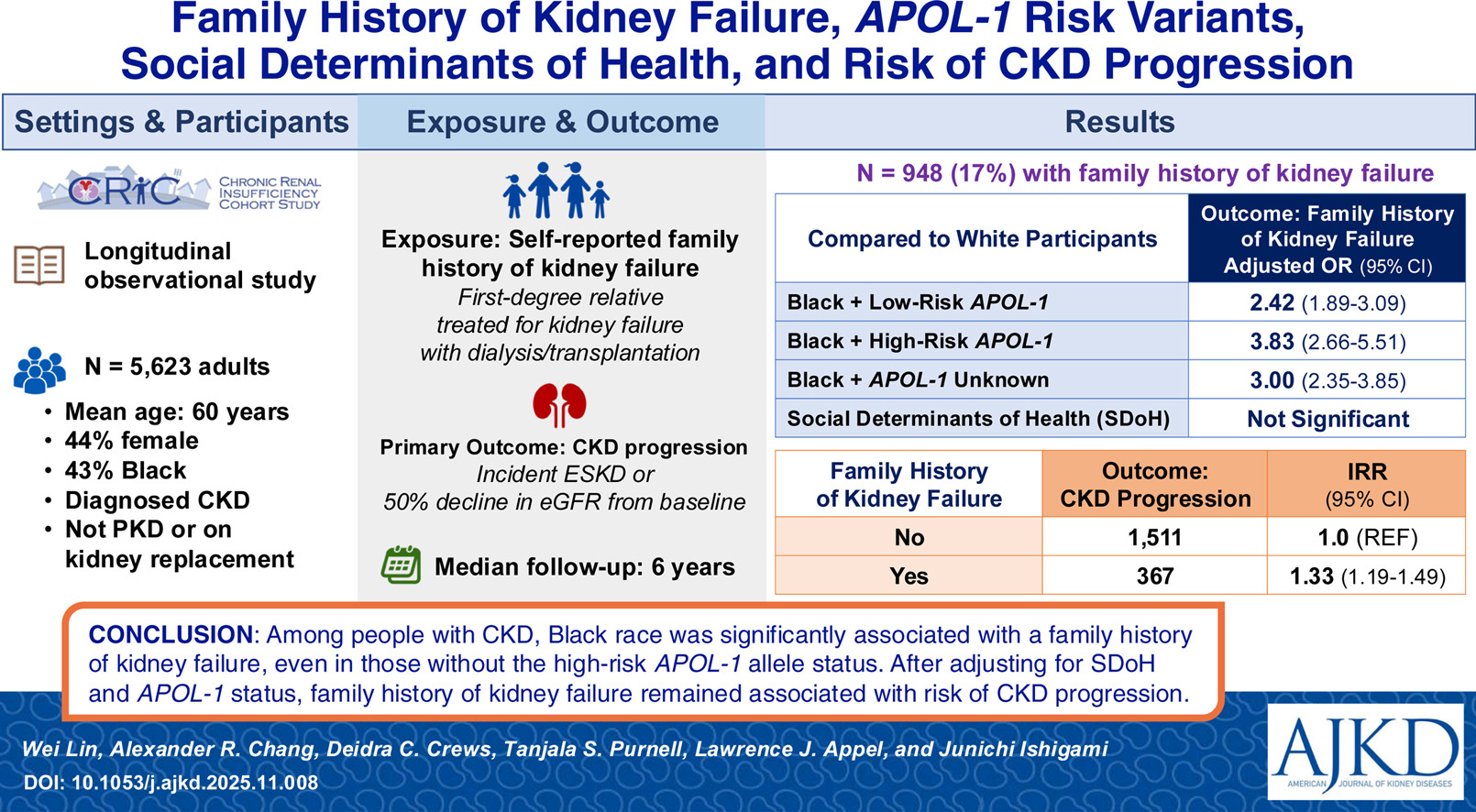
Family History of Kidney Failure, APOL1 Risk Variants, Social Determinants of Health, and Risk of CKD Progression: Findings From the CRIC Study by Wei Lin et al.
From the authors: Kidney disease sometimes runs in families. We studied more than 5,600 people with kidney problems to determine whether having a close family member with kidney failure makes someone more likely to experience worse kidney disease. We found that people, especially Black individuals, with family members who had kidney failure were more likely to have worsening kidney problems themselves. This was true even when we considered other health problems like high blood pressure or diabetes. Our study suggests that doctors should ask about family history because it may help identify people who are at higher risk. More research is needed to understand why kidney disease is often clustered within families.
DOI: 10.1053/j.ajkd.2025.11.008
EDITORIAL: Family Matters: Dissecting the Impact of Family Medical History, APOL1 Genotype, and Sociodemographic Factors on CKD Progression in the Chronic Renal Insufficiency Cohort (CRIC) Study by Clara J. Fischman [FREE]
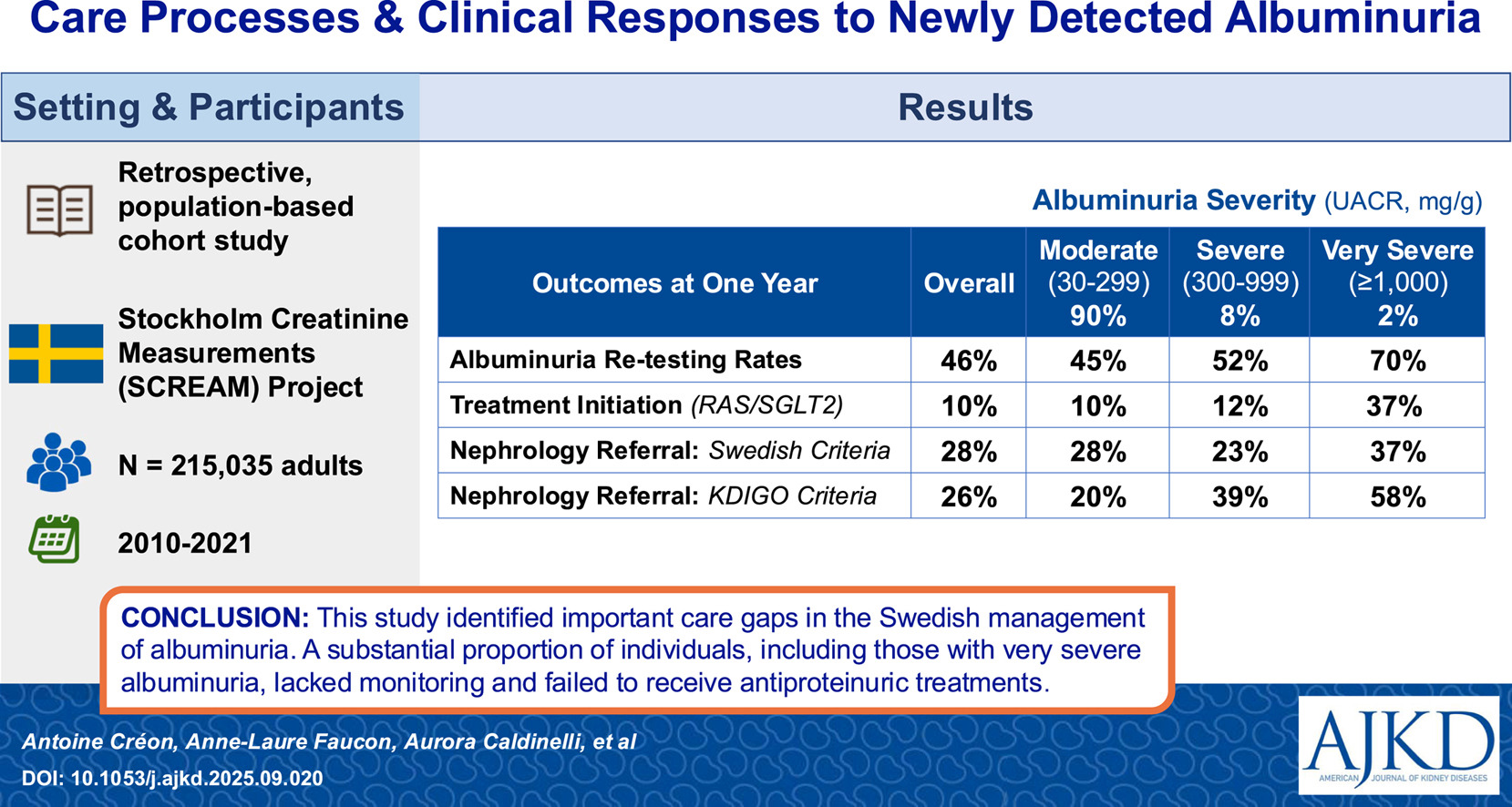
Care Processes and Clinical Responses to Newly Detected Albuminuria: The Stockholm Creatinine Measurements (SCREAM) Project by Antoine Créon et al. [OPEN ACCESS]
From the Authors: Early signs of kidney damage, such as albuminuria (protein in the urine) may not always lead to the appropriate clinical follow-up that is recommended in clinical practice guidelines. This study characterized how patients with albuminuria were managed in Stockholm’s health care environment. Between 2010 and 2021, 215,035 adults had elevated albuminuria detected for the first time, but many did not receive the recommended follow-up care, including a confirmation test, referral to a nephrologist when indicated, or initiation of kidney-protective medications. This study highlights the need for better strategies to improve care for individuals with albuminuria, ensuring earlier intervention that may prevent more severe health consequences of early indications of kidney damage.
DOI: 10.1053/j.ajkd.2025.09.020
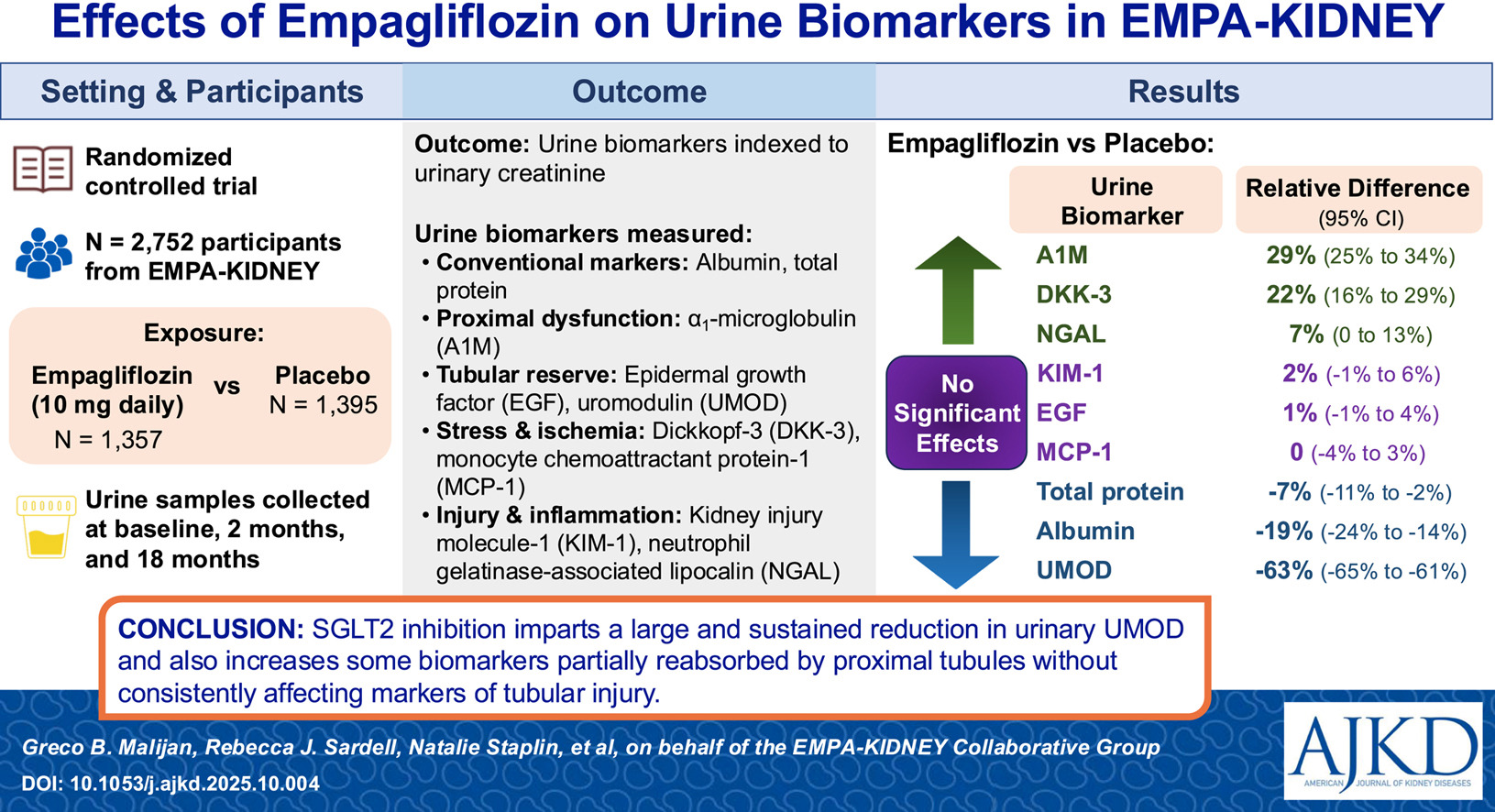
Effects of Empagliflozin on Urine Biomarkers in EMPA-KIDNEY by Greco B. Malijan et al.
From the authors: Sodium/glucose cotransporter 2 inhibitors or “flozins” are medications that prevent kidney failure and acute kidney injury in a broad range of patients with kidney disease. However, exactly how these drugs exert their kidney protective effects is incompletely understood. In a large clinical trial involving patients with varying causes of kidney disease, empagliflozin reduced excretion of 2 common proteins in the urine (albumin and uromodulin). The substantial reduction in uromodulin was unexpected and is of particular interest because uromodulin is manufactured in a later part of the kidney beyond the site of action of empagliflozin. New experiments are needed to understand these results and assess whether the effect on uromodulin can explain the benefits of flozins for the kidney.
DOI: 10.1053/j.ajkd.2025.10.004
KDQOI Commentary in the April 2026 issue:
KDOQI US Commentary on the KDIGO 2025 Clinical Practice Guideline for the Evaluation, Management, and Treatment of Autosomal Dominant Polycystic Kidney Disease (ADPKD) by Neera K. Dahl et al. [FREE]
DOI: 10.1053/j.ajkd.2025.11.006
EDITORIAL: Guidance on Care for Autosomal Dominant Polycystic Kidney Disease: A Patient Perspective by Brittany Dickerson [FREE]
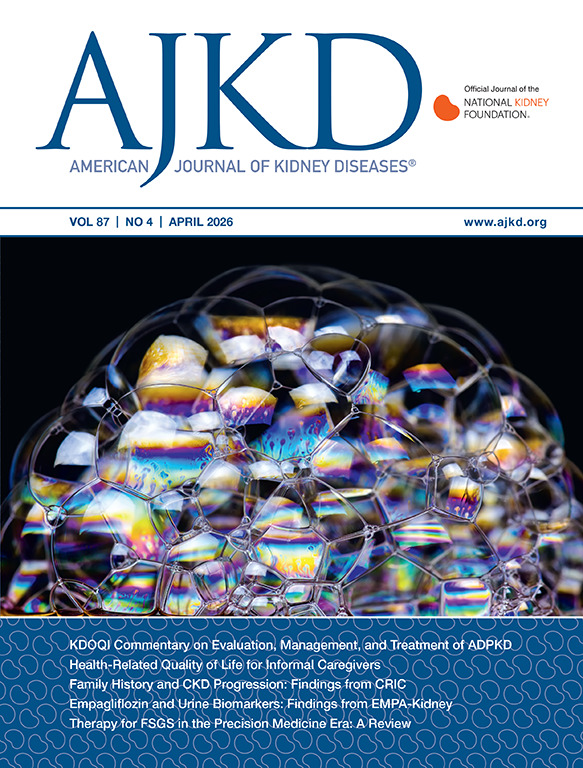 On the Cover:
The cover image, featuring a dense network of translucent bubbles, evokes the clustered cystic morphology and complex microarchitecture that define autosomal dominant polycystic kidney disease (ADPKD). Heterogeneous growth of renal cysts and marked interindividual variability in cyst burden and disease progression complicate prognostication in ADPKD. This complexity underscores the importance of early identification of patients at highest risk for progression, when disease-modifying interventions are most effective. In this issue of AJKD, the KDOQI US Commentary on the KDIGO 2025 Clinical Practice Guideline synthesizes contemporary evidence to guide risk stratification, monitoring, and treatment across the spectrum of ADPKD.
Special thanks to Editorial Intern Elias Elenjickal for curating the cover image and drafting the cover blurb for this issue. The photo “Bubbles II” by AJC1 is released on Flickr under the CC BY-SA 2.0 license.
Call for Applications: AJKD Editorial Internship Program 2026-27
 The AJKD Editorial Internship Program provides editorial experience to early career researchers interested in education, teaching, or medical editing/writing. Apply by April 30, 2026. Details on the AJKD Blog.
Leave a Reply