
Unseen, Unheard: The Silent Strain on Dialysis Caregivers
Madhumitha Rajagopal is a research-track nephrology fellow at the Mount Sinai hospital. She received a Ph.D. in Molecular Cellular Physiology from the University of California, Davis and an M.D. from the Albert Einstein College of Medicine. She then pursued an ABIM Research pathway residency at The Mount Sinai hospital and stayed on for Nephrology fellowship. Her research publications include basic science research identify pathways involved in the regulation of epithelial ion transport pathways in the renal tubule. She is now interested in using computational approaches to identify markers of renal disease and uncover potential therapeutic targets. After fellowship, she intends to remain in academic medicine and pursue her interests in research and patient care. Dr. Rajagopal is a 2024-25 Editorial Intern.
“The disease really did have an influence on me. You try to sympathize with him, especially in the beginning. In retrospect I actually went a little too far with that. He did not move much. I did not move much either because I wanted to be there. I wanted to support him; I wanted to accompany him. I also wanted to support him when he was psychologically unwell. And yes, my condition also deteriorated fast.” This quote from an interview with a caregiver of a dialysis patient depicts the burden carried by dialysis caregivers, both physically and mentally.
We have long known that dialysis caregiver burden is high and is associated with lower quality of life – making caregivers “hidden patients”. While as physicians we provide personalized attention to our patients, caregivers go largely unacknowledged. A recent qualitative study by Driehuis et al. in AJKD attempts to identify and describe the impact of this burden on caregiver lives so we might begin to address it more holistically. The researchers interviewed 15 informal caregivers recruited by the Dutch Kidney Patients Association and performed a directed qualitative content analysis using the stress-appraisal model of caregiver burden. The interviews revealed that caregiving for a loved one undergoing kidney replacement therapy (KRT) leads to substantial physical, emotional, relational, and financial strain. Caregivers often take on complex medical, logistical, and administrative tasks, while sacrificing their own health, careers, and personal lives. The level of burden varied based on dialysis modality (home vs. in-center), communication with healthcare providers, and availability of support. Caregivers report changes in their relationship with the patient from one of spouses to one of nurse-patient, decrease in physical intimacy, significant changes to their daily routine that impact their finances, careers, and other life decisions. Crucially, caregivers reported feeling invisible in the clinical process, especially during decisions about dialysis, which directly affected their lives. While the study provides an interesting insight into caregiver burden, it does have some limitations that need to be acknowledged; (1) limited sample size with only Dutch caregivers recruited, (2) demographics of patients who agreed to participate in video-taped interview, (3) undocumented reasons for declining study participation, and (4) different cultural expectations on caregiver roles/obligations – the study reports one in three Dutch adults provide informal care.
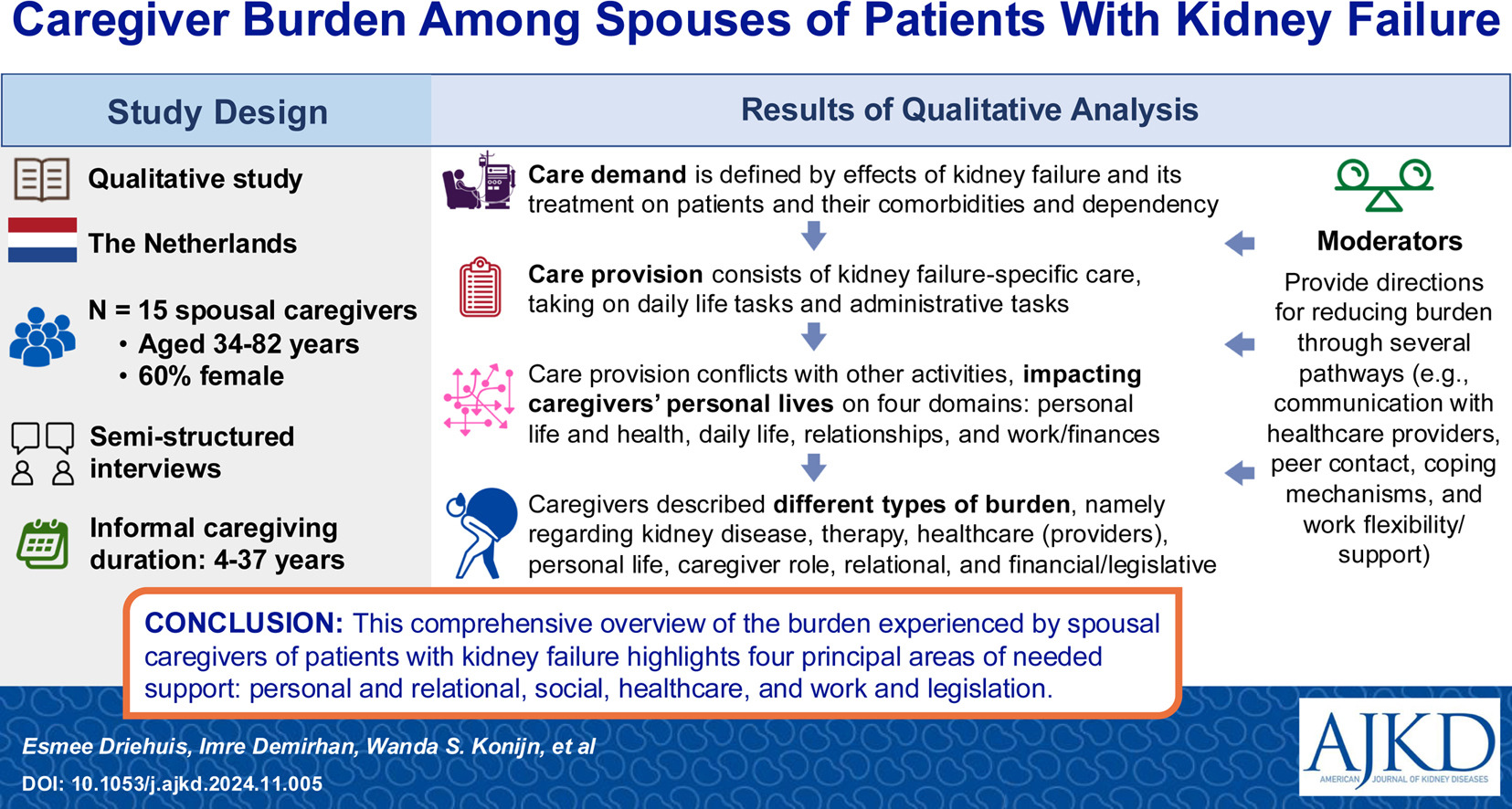
Despite these significant limitations, the study does highlight the important and ignored role that caregivers play in maintaining health, well-being, and serving as emotional support to patients struggling with kidney failure. It is clear that kidney failure doesn’t just affect the patient; it reshapes the lives of entire families. This study makes clear what caregivers have long known: dialysis decisions reverberate through every corner of a caregiver’s life. Yet these decisions are too often made without their input. As physicians, our primary concern is our patient. But as we advise our patient on their options, perhaps there is a role for including the persons whom these decisions most impact. Spousal caregivers, in particular, shoulder enormous responsibilities—from assisting with home dialysis and managing appointments, to handling administrative and household duties. They do this while managing their own stress, declining health, and strained relationships. When dialysis is initiated or its modality chosen without considering the caregiver’s capacity or circumstances, it can lead to burnout, fractured relationships, and even poorer patient outcomes.
Physicians must recognize caregivers as essential partners in care. Treatment choices like home versus in-center dialysis are not just clinical decisions; they are life decisions, often requiring significant reorganization of the caregiver’s daily life. Ignoring their perspective can compromise the sustainability of care. A good place to start might be acknowledging at the outset how their life will also change. There might also be utility in establishing structured support for caregivers that is built into dialysis care, whether from connections to others in the same situation or from additional resources and coping strategies.
The path forward is simple but powerful: include caregivers in conversations from the outset: asking them about their needs, their capacity, and their preferences, equipping them with information, offering them support and above all, acknowledging their role. As this study shows, doing so not only supports the caregiver but also the patient.
– Post prepared by Madhumitha Rajagopal
To view Driehuis et al [OPEN ACCESS], please visit AJKD.org.
Title: Determinants of Caregiver Burden Among Spouses of Patients With Kidney Failure: A Qualitative Study
Authors: Esmee Driehuis, Imre Demirhan, Wanda S. Konijn, Theodôr J.F.M. Vogels, Namiko A. Goto, ∙ Marjolein I. Broese van Groenou, Marianne C. Verhaar, Brigit C. van Jaarsveld, Alferso C. Abrahams
DOI: 10.1053/j.ajkd.2024.11.005
Leave a Reply