
Highlights from the November 2026 Issue
Editor’s Note: We asked authors of Original Investigations to provide short plain-language summaries that would briefly summarize what inspired their study, the basic approach taken, what was learned, and why it matters. We hope our readers will find this valuable in helping them keep up with the latest research in the field of nephrology.
Highlights from the November 2026 issue:
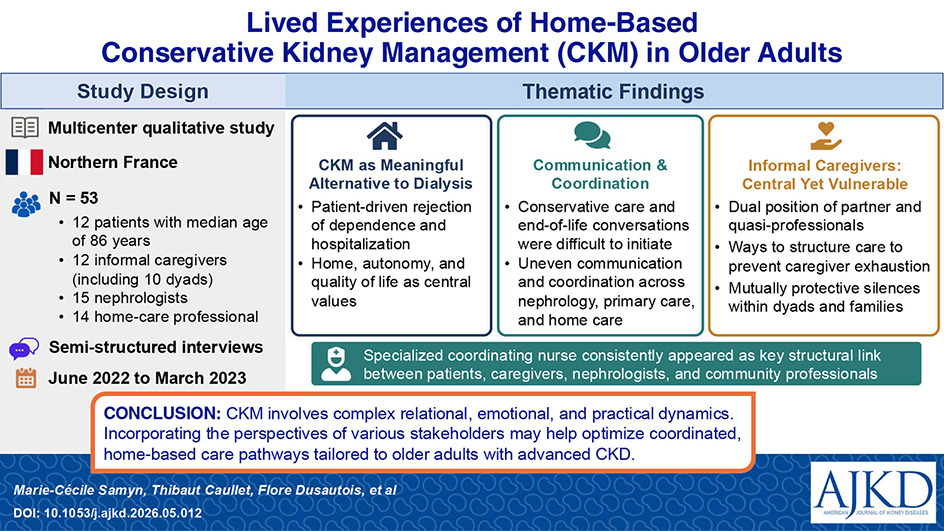
Lived Experiences of Home-Based Conservative Kidney Management in Older Adults: A Qualitative Study by Marie-Cécile Samyn et al. [OPEN ACCESS]
DOI: 10.1053/j.ajkd.2026.05.012
EDITORIAL: “There’s No Goal…Except That We Take Care of Them”: Meeting the Needs of People Whose Kidney Failure is Managed Conservatively by Barnaby Hole and Samantha Gelfand et al. [FREE]
Donor Self-Esteem Before and After Living Kidney Donation by Ruth Neumann et al. [OPEN ACCESS]
From the authors: Living kidney donation is considered a safe procedure for carefully selected candidates although donors may experience complex feelings and emotions before and after the donation process. We studied 941 living kidney donors and assessed self-esteem before donation and for 5 years after donation or until the last follow-up visit. Nearly all donors (99%) reported normal to high self-esteem before donating, and fewer than 5% developed low self-esteem after donating. Reassuringly, donors with lower self-esteem before donation had a modest increase in self-esteem on average after donation. An increase in self-esteem after donation was accompanied by reduced symptoms of depression and anxiety.
DOI: 10.1053/j.ajkd.2026.05.023
EDITORIAL: How Important Is the Concept of ‘Self-Esteem’ in the Context of Living Kidney Donation? by Emma K. Massey et al. [FREE]
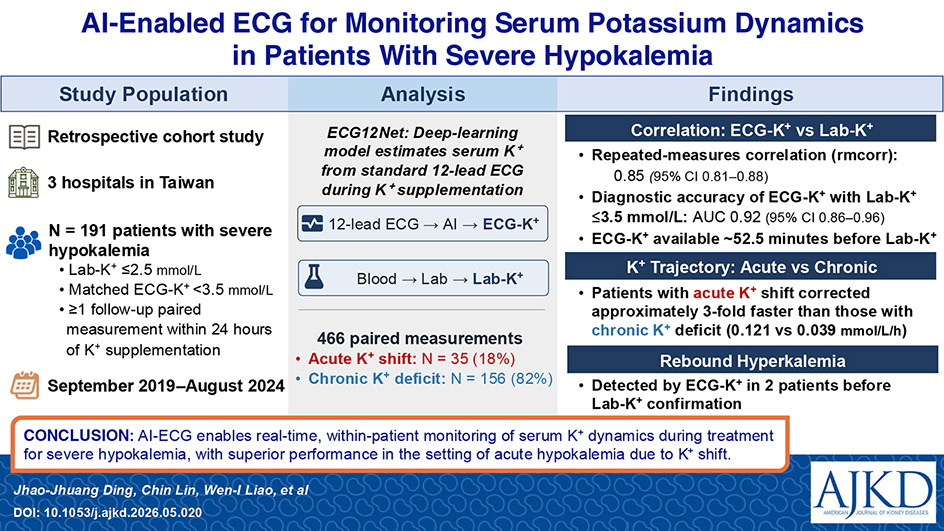
Artificial Intelligence-Enabled Electrocardiography for Monitoring Serum Potassium Dynamics in Patients With Severe Hypokalemia by Jhao-Jhuang Ding et al.
From the Authors: Severe hypokalemia, or very low blood potassium, is common in hospitalized patients and can cause dangerous heart rhythms. In clinical practice, potassium levels are often monitored with blood tests whose results are not immediately available. This study assessed whether an artificial intelligence (AI) tool that estimates blood potassium levels from a standard electrocardiogram (ECG) tracing can reduce the need for laboratory testing of blood for potassium levels. Patients with hypokalemia at 3 hospitals were studied. AI-based estimates of blood potassium were obtained very close in time to when blood was drawn for laboratory measurements of potassium. The AI-based estimates were available almost an hour earlier than laboratory tests, and both values were very similar. The similarity was greater when the hypokalemia was caused by a sudden shift into cells rather than chronic potassium loss from the body. AI-based estimates of potassium potentially offer a faster, noninvasive way to track potassium changes for patients over time, to guide potassium replacement, to reduce the need for repeated blood draws, and to detect dangerously high levels of potassium earlier.
DOI: 10.1053/j.ajkd.2026.05.020
EDITORIAL: Bloodless Potassium: Can Artificial Intelligence–Enabled Electrocardiography Guide Both Acute Detection and Correction of Hypokalemia? by Xiaoxiao Zhou and Javier A. Neyra et al. [FREE]
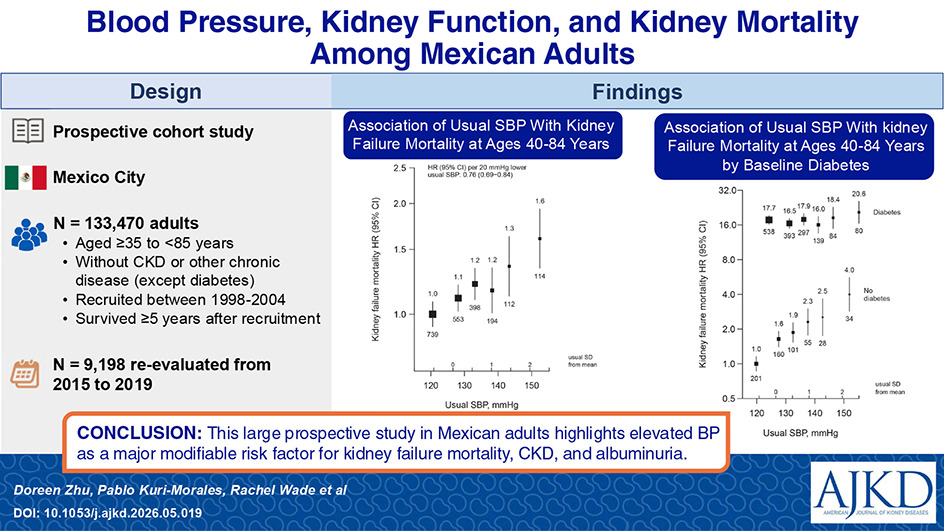
Blood Pressure, Kidney Function, and Kidney Mortality Among Mexican Adults by Doreen Zhu et al. [OPEN ACCESS]
From the Authors: Kidney disease is a major cause of death in Mexico, and high blood pressure may play an important role. The Mexico City Prospective Study followed approximately 150,000 Mexican adults aged 35 years or older for approximately 20 years, tracking causes of death over time. These analyses found that lower blood pressure was linked to a lower risk of dying from kidney failure. For every 20 mm Hg lower systolic blood pressure, the risk of dying from kidney failure was lower by approximately one quarter. High blood pressure accounted for 9% of all deaths from kidney failure. Lower blood pressure also was associated with better kidney function—as measured by blood tests, participant questionnaires, and urine protein levels—some years later. These analyses suggest that reducing high blood pressure is likely to prevent kidney disease and deaths related to kidney disease in Mexico.
DOI: 10.1053/j.ajkd.2026.05.019
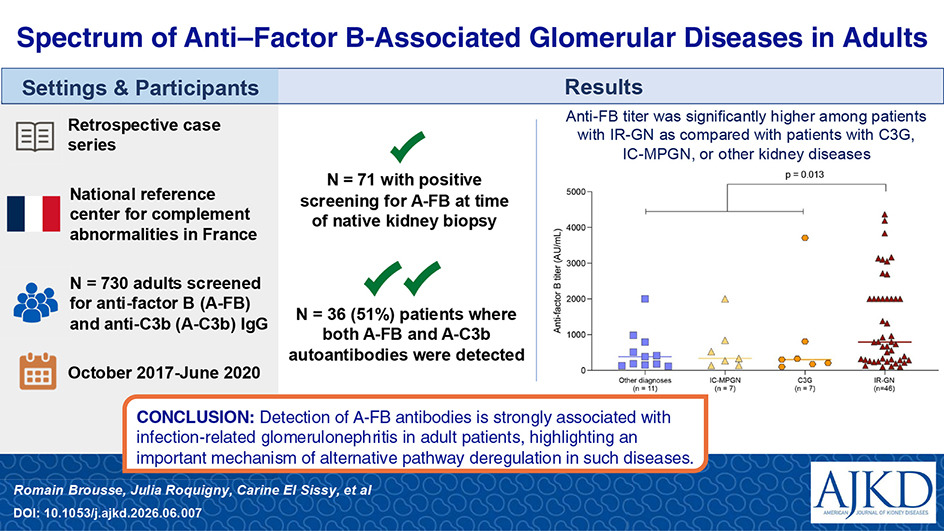
Spectrum of Anti–Factor B-Associated Glomerular Diseases in Adults by Romain Brousse et al.
From the authors: Antibodies targeting factor B, a key protein of the complement cascade, have been shown to activate the complement system and promote kidney inflammation. However, the clinical characteristics and outcomes of patients with such autoantibodies remain largely understudied, particularly in adults. This study systematically screened over 700 adults referred for complement investigation and identified 71 patients with anti-factor B antibodies and concurrent biopsy-proven kidney disease. These antibodies were predominantly associated with infection-related glomerulonephritis, activated the alternative complement pathway, and tended to disappear once the underlying infection was controlled. These findings highlight the importance of screening for anti-factor B antibodies in patients with complement-mediated kidney disease, as their detection may prompt the search for an underlying infection and guide therapeutic decisions.
DOI: 10.1053/j.ajkd.2026.06.007
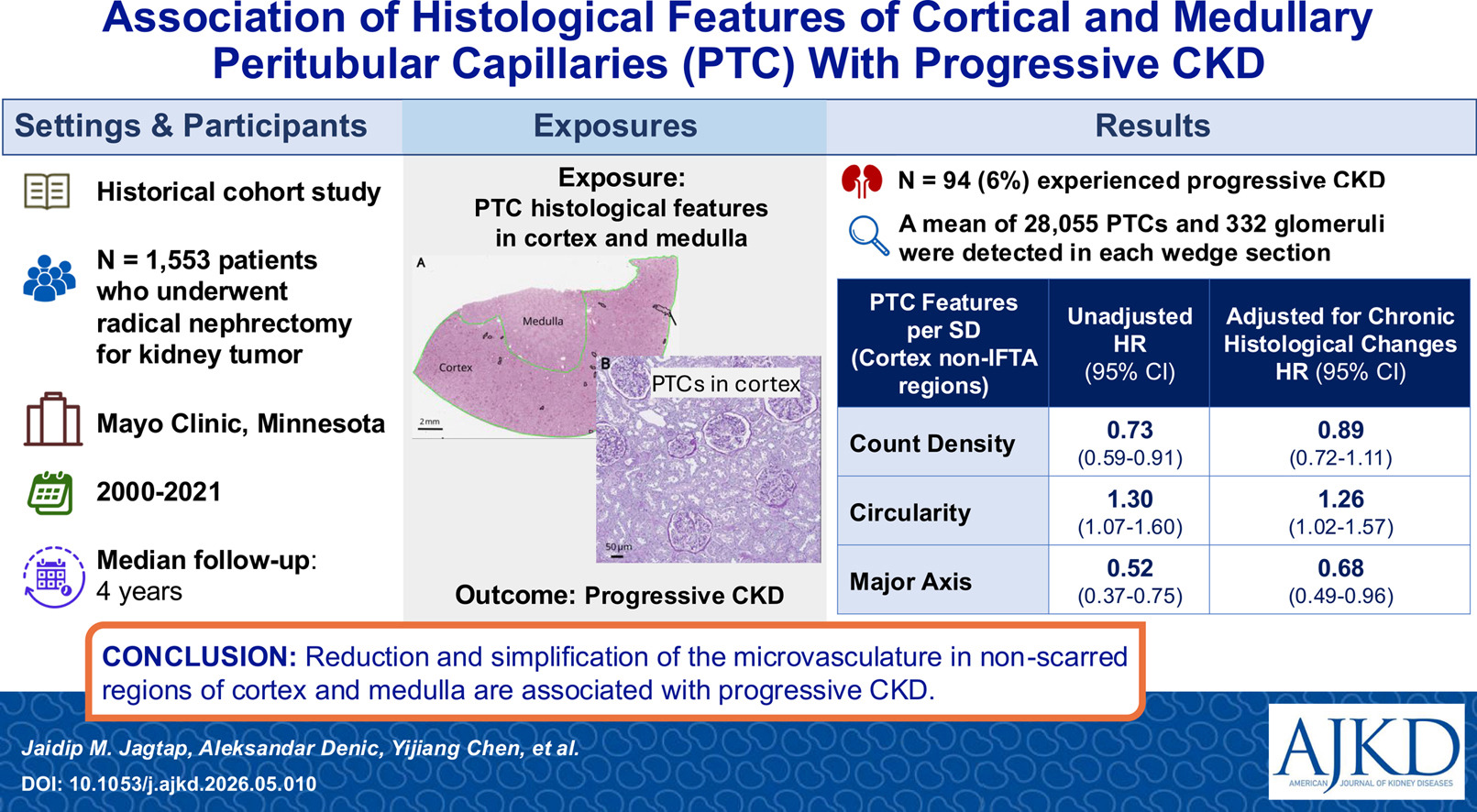
Association of Histological Features of Cortical and Medullary Peritubular Capillaries With Progressive CKD by Jaidip M. Jagtap et al. [OPEN ACCESS]
From the authors: Peritubular capillaries support oxygen transport, nutrient exchange, and waste elimination by the renal tubules in the kidney. Using artificial intelligence and image processing tools, we characterized the size, shape, and density of these capillaries in sections of human kidneys removed from patients with a kidney tumor. The study found that in the nonscarred regions of kidney tissue, lower density and rounder capillaries in the space between tubules were associated with a subsequent loss of kidney function.
DOI: 10.1053/j.ajkd.2026.05.010
Core Curriculum in Nephrology in the November 2026 issue:
Complement in Kidney Disease: Core Curriculum 2026 by Joshua M. Thurman and Felix Poppelaars
DOI: 10.1053/j.ajkd.2026.06.008
 On the Cover:
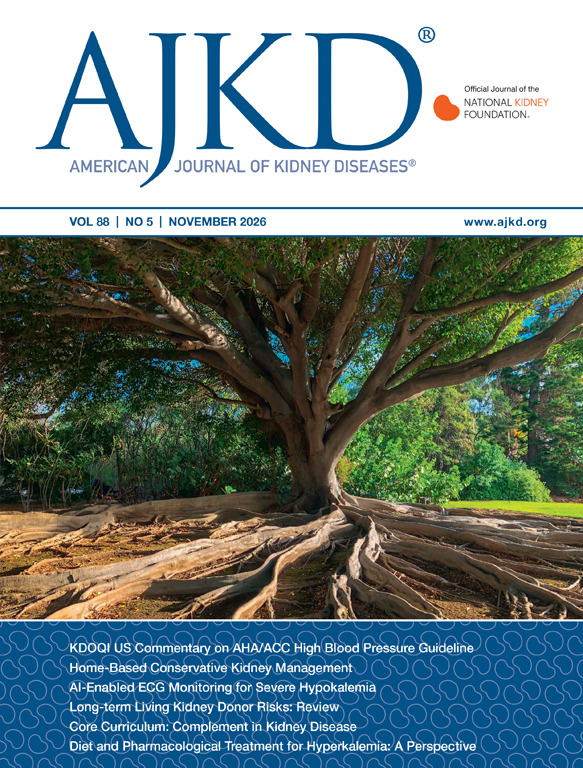
On August 8, 2023, the historic Lahaina banyan tree in Maui survived the devastatng August 2023 wildfire. Its survival is now seen as a symbol of resilience. Trees like the Lahaina banyan, depicted on this issue’s cover, are known to survive extreme environmental events due to their unique, well-grounded root system. Analogously, high self-esteem stems from a grounded sense of self-worth that is secure despite challenging external circumstances. In this issue, Neumann et al studied over 900 living kidney donors and evaluated self-esteem before and up to 5 years after donation. These investigators report resilient self-esteem among these donors.
Special thanks to Editorial Intern Ifeoluwa Stowe for curating the cover image and drafting the cover blurb for this issue. The photo “brown tree trunk on brown soil — Banyan tree in Hawaii” by Emma Henderson is released on Unsplash under the Unsplash License.”
SPECIAL COLLECTION: HIGHLY CITED
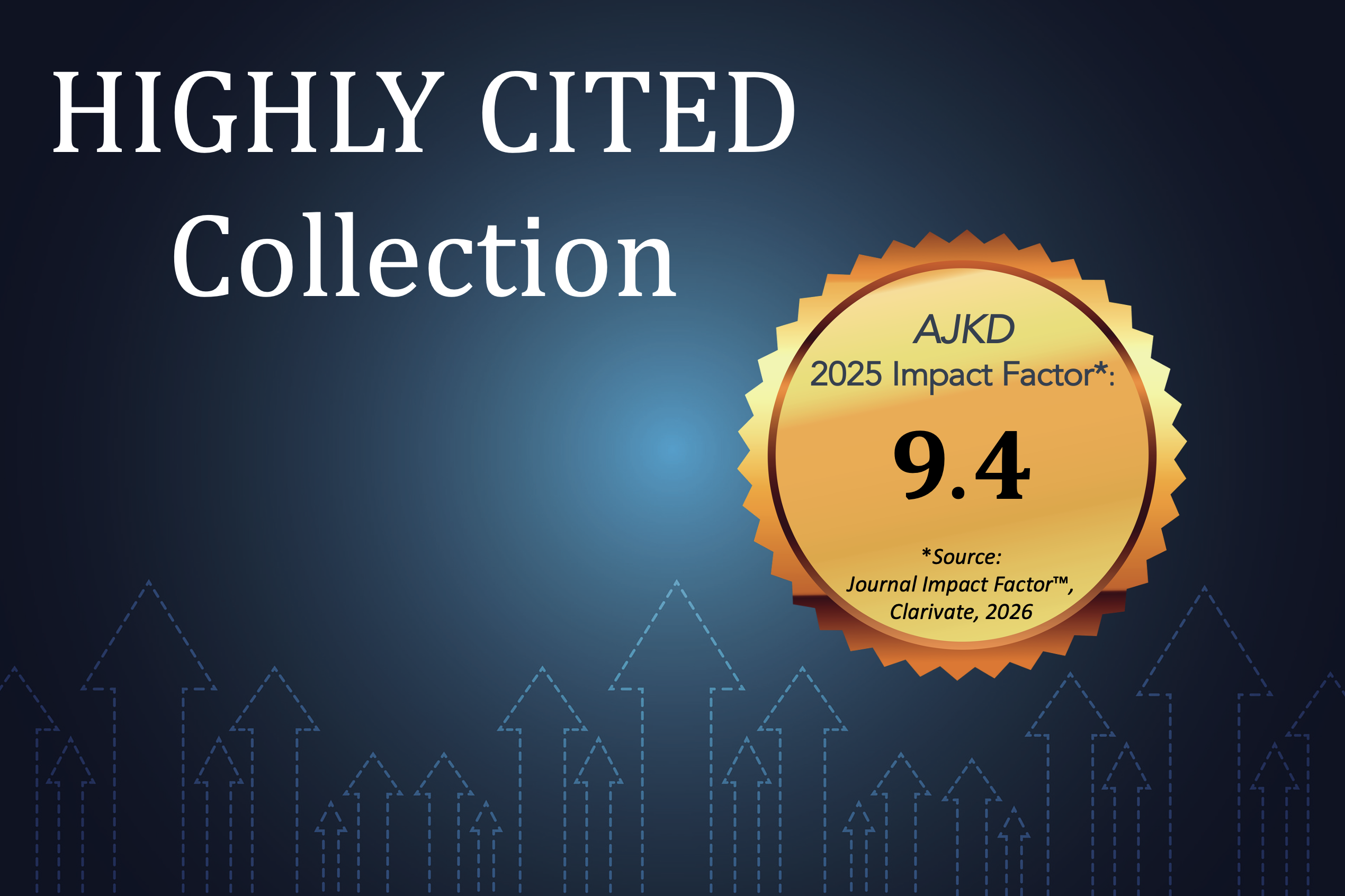
The articles in this special collection highlight the top cited Original Investigations published in 2023 and 2024 that contributed to AJKD’s 2025 Impact Factor of 9.4.
Leave a Reply