
Highlights from the August 2026 Issue
Editor’s Note: We asked authors of Original Investigations to provide short plain-language summaries that would briefly summarize what inspired their study, the basic approach taken, what was learned, and why it matters. We hope our readers will find this valuable in helping them keep up with the latest research in the field of nephrology.
Highlights from the August 2026 issue:
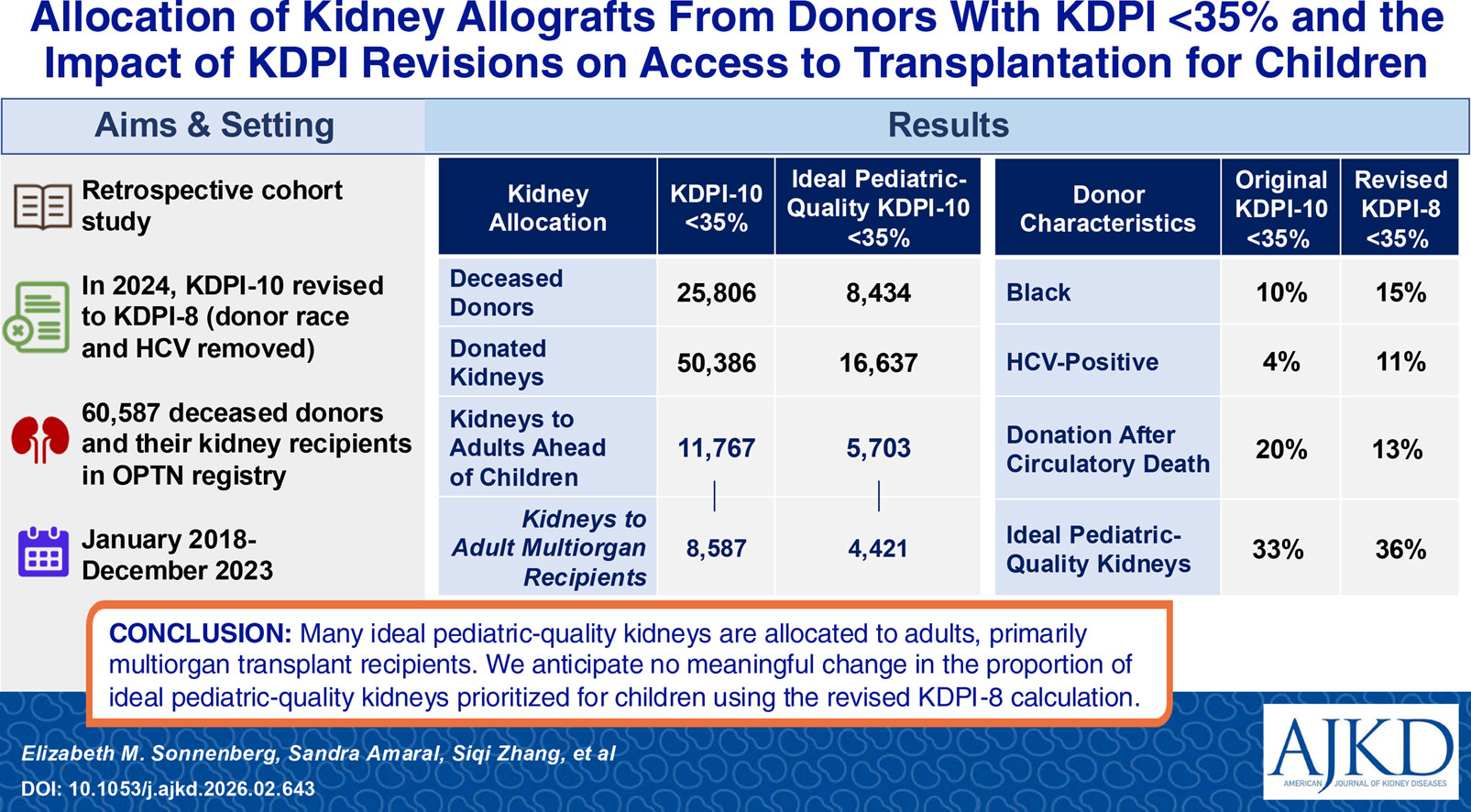
Allocation of Kidney Allografts From Donors With Kidney Donor Profile Index <35% and the Impact of Kidney Donor Profile Index Revisions on Access to Transplantation for Children by Elizabeth M. Sonnenberg et al. [OPEN ACCESS]
DOI: 10.1053/j.ajkd.2026.02.643
EDITORIAL: Deceased Donor Kidney Allocation Changes and Pediatric Recipients: Are We Making the Best Match? by Megan Yanik and Olga Charnaya [FREE]
Prevalence Estimates of Predicted Pathogenic COL4A3-COL4A5 Variants in the Chinese Population and Its Implications for Clinical Practice by Mengyao Zeng et al.
From the authors: Type IV collagen genes (COL4A3, COL4A4, and COL4A5) are essential for kidney function. When these genes carry harmful variants, they can cause Alport syndrome and other kidney disorders. Using genomic data from 10,588 Chinese adults, we found that 1 in 64 people (1.55%) carry these variants, approximately 1.6 times the rate reported in other populations. Two genetic variants were found to be particularly common in Chinese individuals. These findings may inform clinical practice related to diagnosis and genetic testing to enable more personalized kidney care.
DOI: 10.1053/j.ajkd.2026.03.039
EDITORIAL: Alport Syndrome May Be More Common in People of East Asian Ancestry by Judy Savige and Mary Huang [FREE]

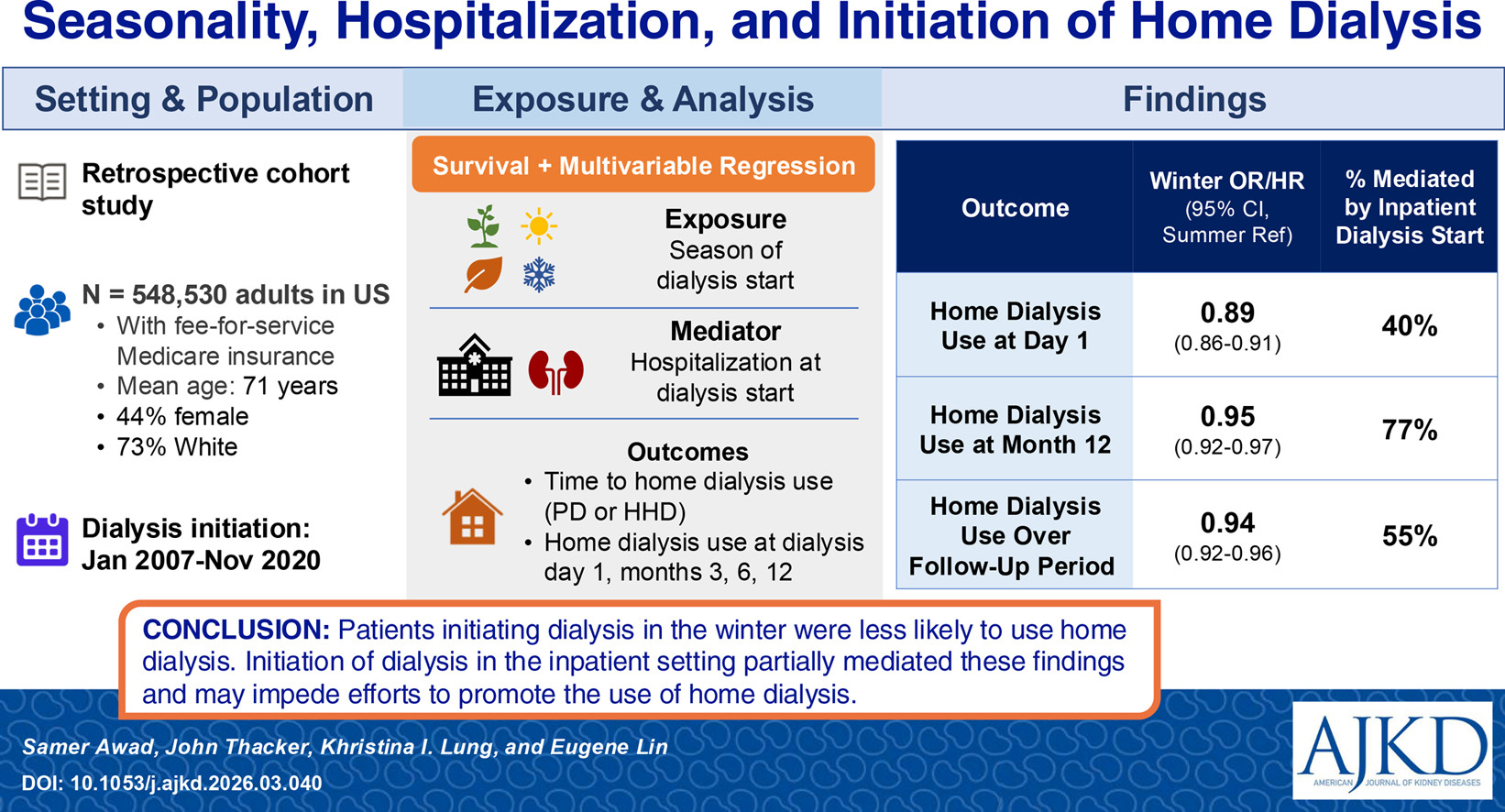
Seasonality, Hospitalization, and Initiation of Home Dialysis: A Retrospective Cohort Study by Samer Awad et al.
From the Authors: Home dialysis is underused in the United States despite having outcomes similar to in-center hemodialysis and, in many circumstances, being associated with a higher quality of life. Research studies have broadly shown seasonal effects on health care utilization. This study showed that patients starting dialysis in the winter were less likely to initiate home dialysis than during other seasons, and these differences in home dialysis use persisted throughout the first year of dialysis. When examining potential mechanisms for these differences, this study found that dialysis initiation during the winter was more likely to occur in the hospital, which, in turn, was associated with lower use of home dialysis. Initiation of dialysis during a hospitalization appears to be a factor that may impede efforts to promote the use of home dialysis.
DOI: 10.1053/j.ajkd.2026.03.040
Transplantation and Mortality as Competing Outcomes Among Patients on Dialysis With Newly Diagnosed Cancer: A Longitudinal Cohort Study by Ryan Gately et al. [OPEN ACCESS]
From the Authors: People receiving dialysis who develop cancer are often excluded from kidney transplantation because of concerns about cancer-related survival. However, it is unclear how often people with cancer on dialysis die from cancer itself, die from other causes, or receive a transplant. Using registry data from Australia and New Zealand, we examined outcomes after a cancer diagnosis among people already receiving dialysis. We found that for several common cancers diagnosed at an early stage, death from cancer was uncommon and often occurred less frequently than death from other causes. In younger patients with certain cancers, transplantation was more likely than cancer-related death. These findings support earlier and more individualized consideration of transplantation in selected patients with a cancer diagnosis.
DOI: 10.1053/j.ajkd.2026.03.041

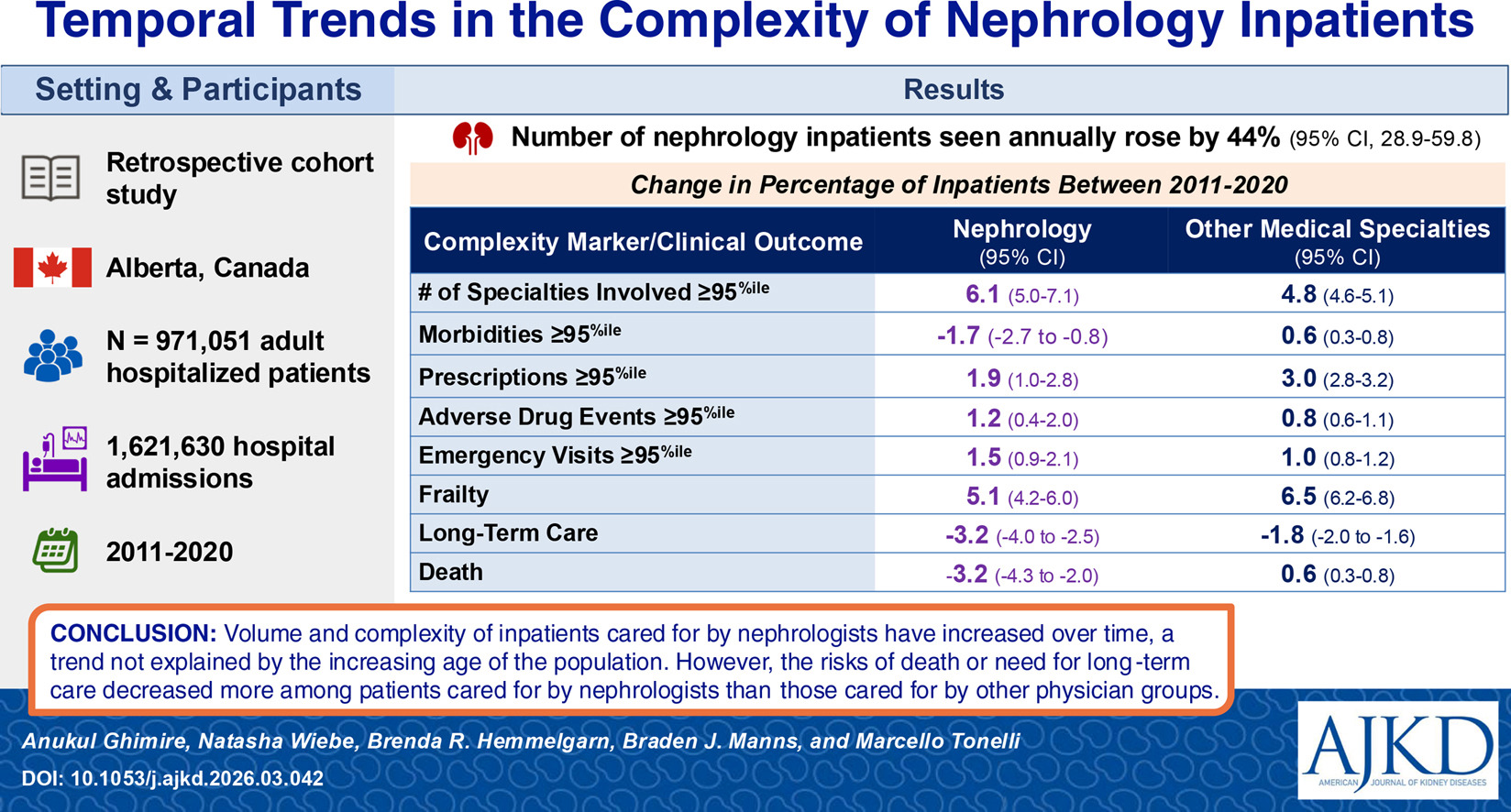
Temporal Trends in the Complexity of Nephrology Inpatients: A Population-Based Cohort Study by Anukul Ghimire et al. [OPEN ACCESS]
From the authors: Patients seen by nephrologists are highly complex, and clinical experience suggests that this complexity has increased over time. This study evaluated changes in various markers of patient complexity among hospitalized patients seen by nephrologists in Alberta, Canada, between 2011 and 2020. This study found increasing clinical complexity among patients seen by nephrologists, with changes greater than those observed among patients seen by other physician groups. Despite these changes showing increasing complexity among patients cared for by nephrologists, the risks of death or placement in long-term care within a year of hospital discharge decreased over time, and the decrease was greater among patients seen by nephrologists.
DOI: 10.1053/j.ajkd.2026.03.042
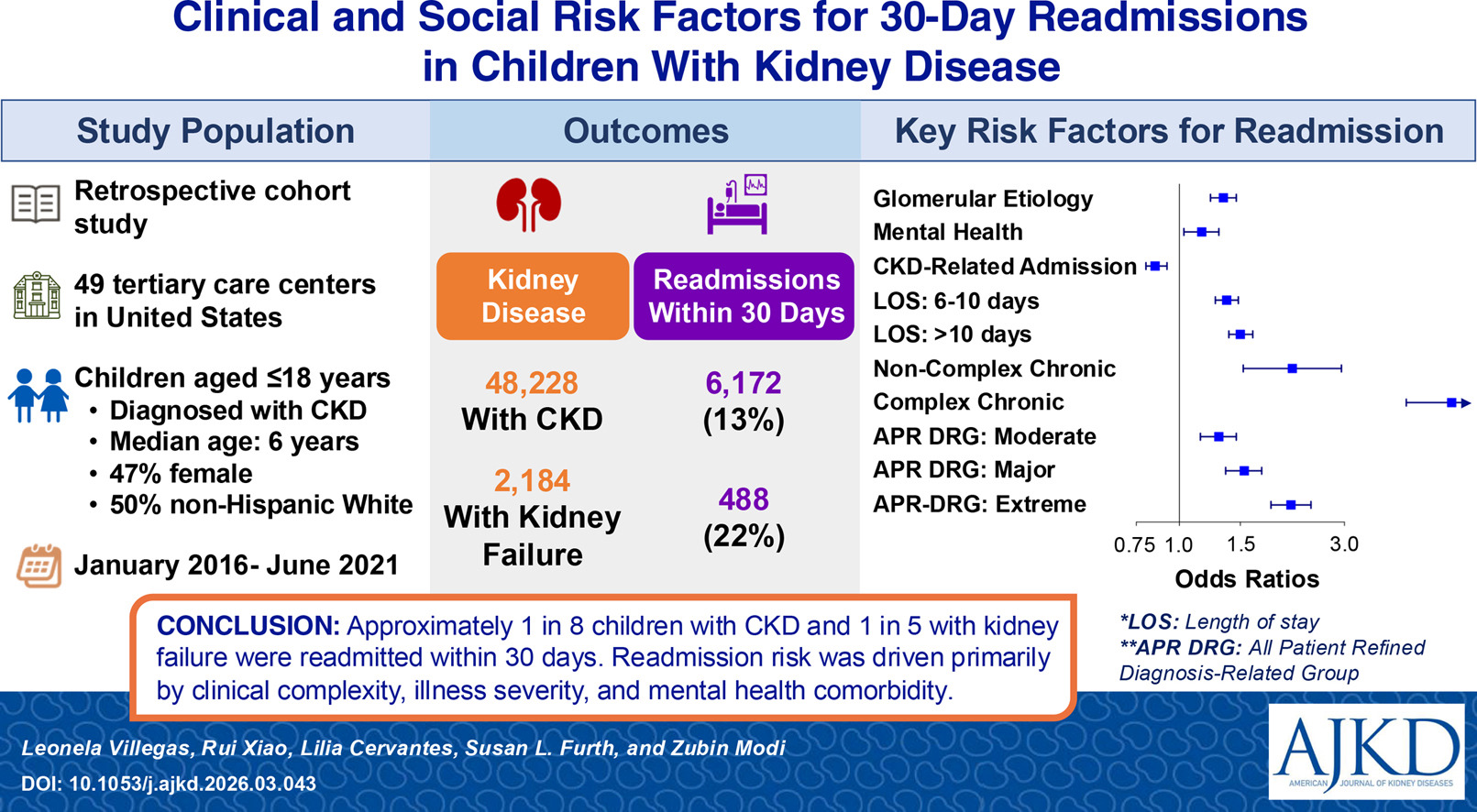
Clinical and Social Risk Factors for 30-Day Readmissions in Children With Kidney Disease by Leonela Villegas et al.
From the authors: Hospital readmissions place a significant burden on children with chronic kidney disease (CKD) and their families. In the United States, approximately 1 in 8 children with CKD and 1 in 5 children with end-stage kidney disease are readmitted to the hospital within 30 days of discharge. Factors associated with these readmissions remain poorly understood. In this study, we examined hospitalizations of children (age ≤18 years) with CKD across 49 hospitals in the United States to identify factors linked to 30-day readmission. Mental health comorbidities, glomerular cause of CKD, greater illness severity, longer initial hospital stays, and urban residence were associated with higher odds of readmission. Identifying children at higher risk of readmission may help improve discharge planning, follow-up care, and support for families.
DOI: 10.1053/j.ajkd.2026.03.043
Core Curriculum in Nephrology in the August 2026 issue:
Pathophysiology of Ketoacidosis: Core Curriculum 2026 by Biff Palmer and Deborah Clegg
DOI: 10.1053/j.ajkd.2026.02.646
 On the Cover:
Hospitalization can sometimes feel like a carousel that children with chronic kidney disease and their families cannot escape. The cycle of admission, discharge, and then readmission can bring exhaustion, uncertainty, disrupted routines, missed school and work, and the emotional weight of hoping that this time will be different. In this issue, Villegas et al examine the burden of pediatric readmissions and risk factors for read mission across 49 US hospitals. Better recognition of children at greatest risk for hospital readmission may strengthen clinicians’ discharge planning, improve follow-up care, and better support families navigating the exhausting cycle of recurrent hospitalization.
Special thanks to Editorial Intern Nicole Wyatt for curating the cover image and drafting the cover blurb for this issue. The photo “Do you dare?” by Susanne Nilsson is released on Flickr under the CC BY 2.0 license.
SPECIAL COLLECTION: HIGHLY CITED

The articles in this special collection highlight the top cited Original Investigations published in 2023 and 2024 that contributed to AJKD’s 2025 Impact Factor of 9.4.
Leave a Reply