
2026 Editors’ Choice Award
In 2017, we established an annual celebration of articles that our editorial team designated as “Editors’ Choice” selections. The editors are delighted to recognize the articles listed below that have been selected to receive the 2026 Editors’ Choice Award. These articles will be freely available at AJKD.org until January 31, 2027. Congratulations to all the authors!

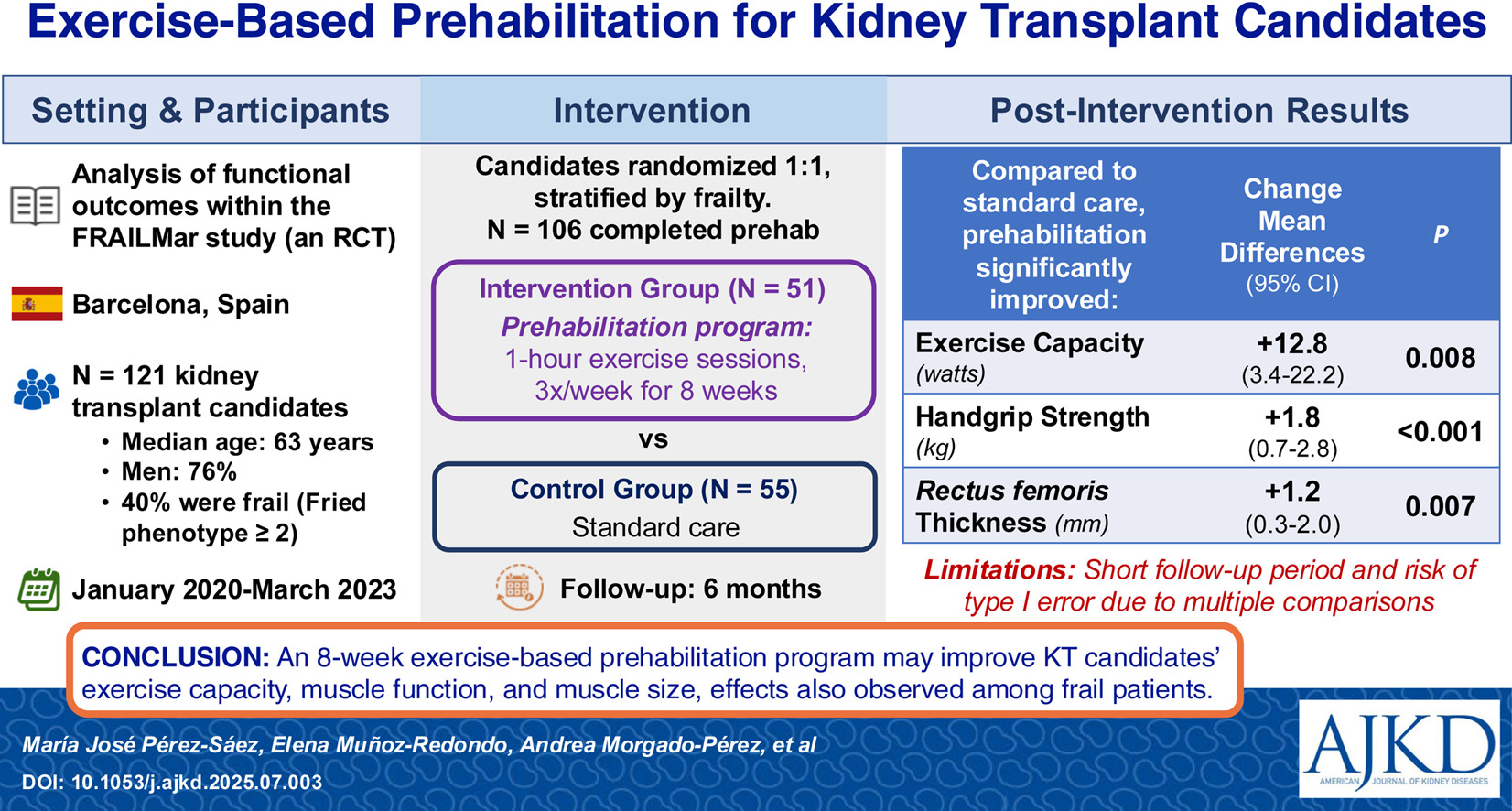
Exercise-Based Prehabilitation for Kidney Transplant Candidates: the FRAILMar Randomized Controlled Trial by María José Pérez-Sáez, Elena Muñoz-Redondo, Andrea Morgado-Pérez, Lou Delcros-Forestier, Anna Bach, Anna Faura, Dolores Redondo, Betty Chamoun, Carla Burballa, Anna Buxeda, Marta Crespo, Ester Marco, Julio Pascual (November 2025)
From the authors: Kidney transplantation is the preferred treatment for kidney failure, but recovery can be challenging, especially for frail patients with low physical activity and muscle strength. This study examined whether an exercise-based program before surgery can help improve fitness and muscle function in transplant candidates. Patients were randomly assigned to 1 of 2 groups: one followed an exercise program and the other received standard care. The exercise group participated in guided sessions for 8 weeks. The study found that those who exercised had better fitness, stronger grip strength, and larger muscle mass than those who did not. These findings suggest that exercise before transplantation might be clinically beneficial, though further research is needed to confirm these findings.
DOI: 10.1053/j.ajkd.2025.07.003
EDITORIAL: Exercise Prehabilitation in Kidney Transplant Candidates: Insights From the FRAILMar Trial by Carly Weaver et al. [FREE]
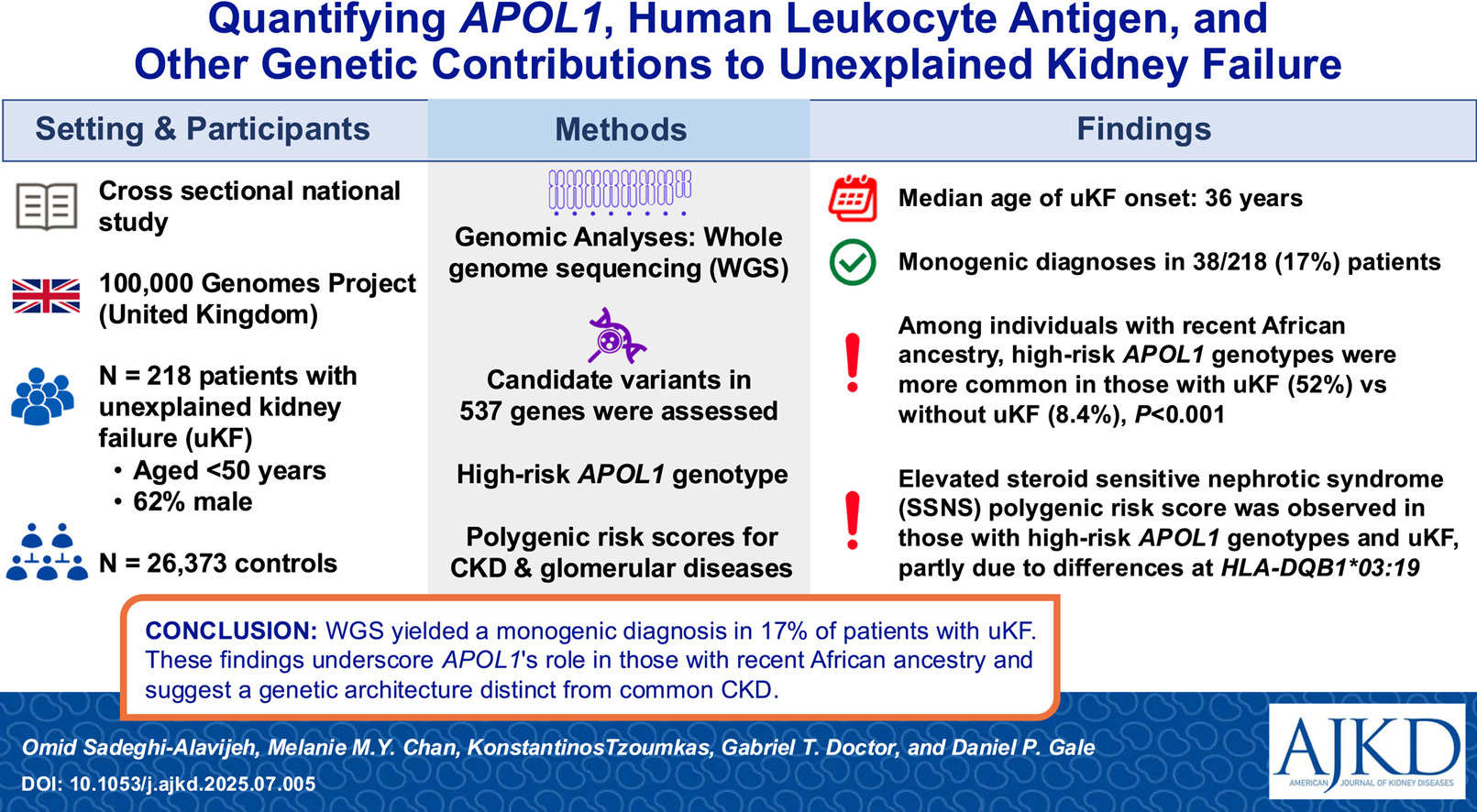
Quantifying APOL1, Human Leukocyte Antigen, and Other Genetic Contributions to Unexplained Kidney Failure by Omid Sadeghi-Alavijeh, Melanie M.Y. Chan, Konstantinos Tzoumkas, Gabriel T. Doctor, Daniel P. Gale (December 2025) [Open Access]
From the authors: Our study was motivated by the difficulty in understanding why some people experience kidney failure (KF) without a clear cause. Many patients face uncertainty about their future health and treatment because doctors cannot always find an explanation for their condition. To address this challenge, we examined the complete genetic blueprint of individuals with unexplained KF. We looked for genetic clues that might reveal hidden risks. Our work uncovered specific genetic factors that appear to contribute to KF, especially among people with African heritage. These insights are important because they may help explain why KF happens in some cases and inform personalized diagnosis and treatment.
DOI: 10.1053/j.ajkd.2025.07.005
EDITORIAL: Gaining a Genomic Foothold on Unexplained Kidney Failure by Janewit Wongboonsin et al. [FREE]
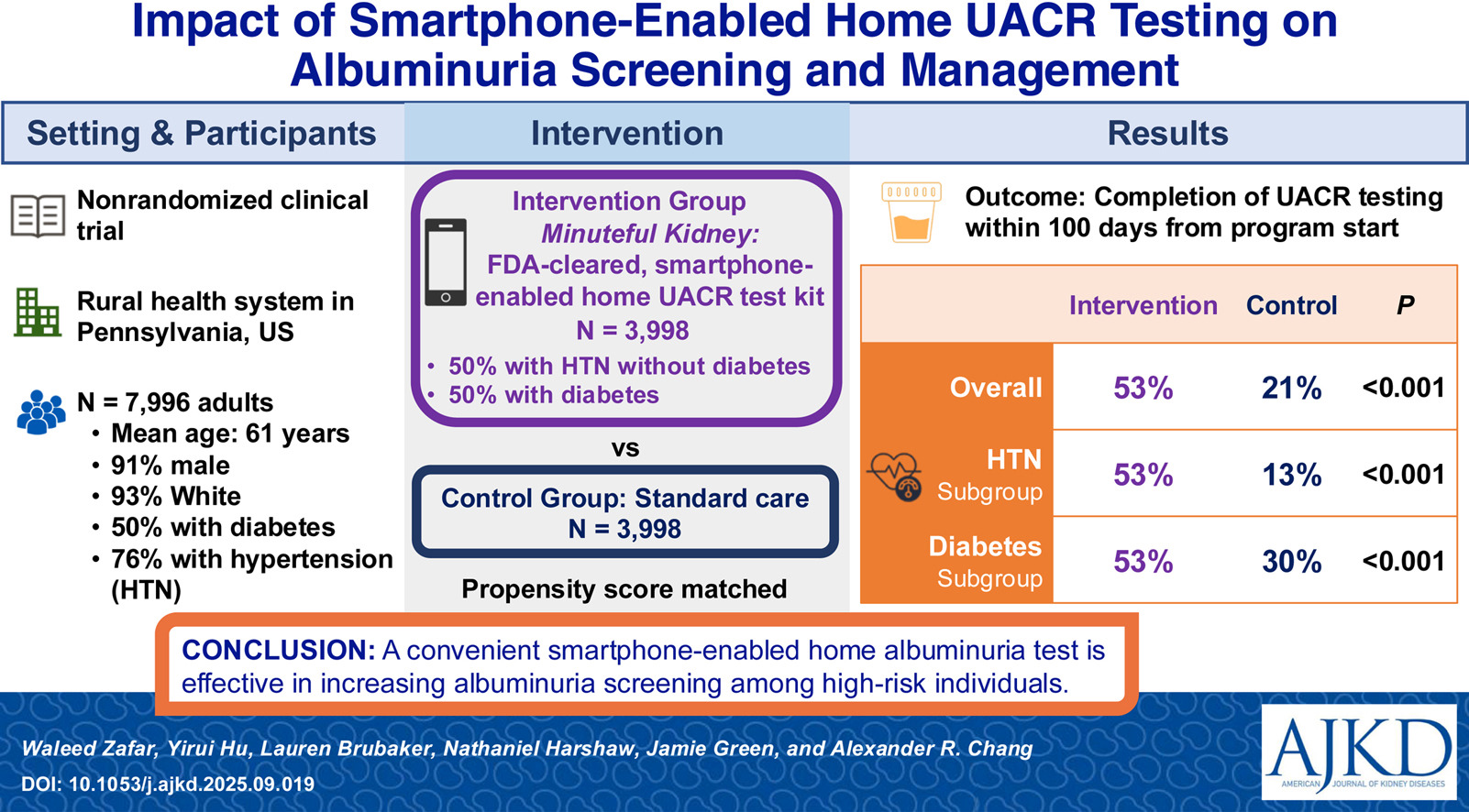
Impact of Smartphone-Enabled Home Urinary Albumin-Creatinine Ratio Testing on Albuminuria Screening and Management by Waleed Zafar, Yirui Hu, Lauren Brubaker, Nathaniel Harshaw, Jamie Green, Alexander R. Chang (March 2025) [Open Access]
From the Authors: This study evaluated whether a smartphone-enabled home albuminuria test could improve chronic kidney disease (CKD) screening among adults with hypertension or diabetes. We found that home testing increased albuminuria test completion 2.5-fold in the intervention group compared with the control group (53% vs 21%). The impact was larger in the hypertension-only subgroup (53% vs 13%) than in the diabetes subgroup (53% vs 30%). Among those tested at home, 38% (hypertension subgroup) and 45% (diabetes subgroup) had abnormal albuminuria levels. These individuals were more likely to have follow-up care and new prescriptions for certain kidney-protective medications. These findings support the use of home albuminuria testing as an effective strategy to increase screening and early intervention for kidney disease in high-risk populations.
DOI: 10.1053/j.ajkd.2025.09.019
EDITORIAL: Nephrology Leadership Through Collaboration to Deliver on CKD Care by Jehan Zahid Bahrainwala [FREE]
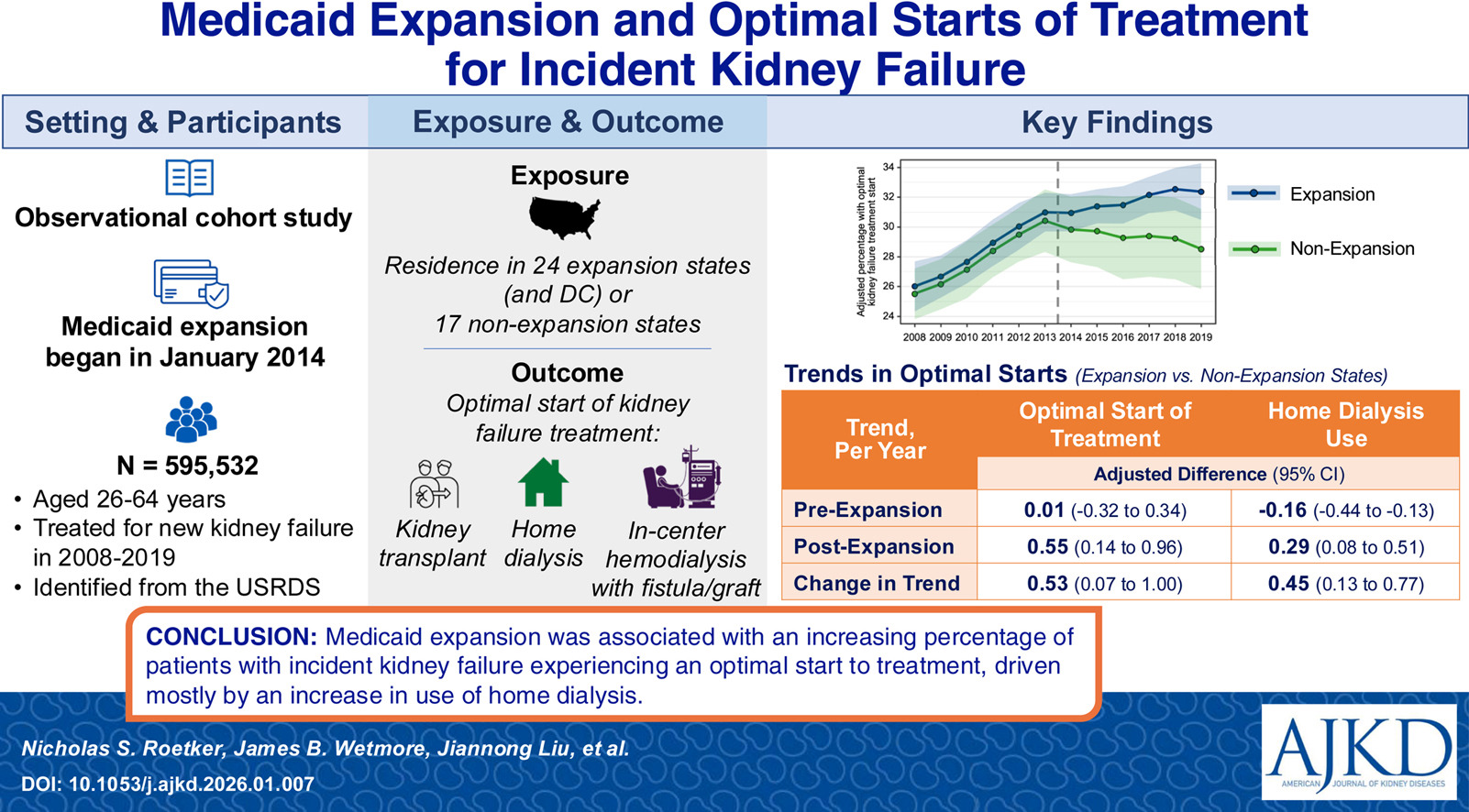
Medicaid Expansion and Optimal Starts of Treatment for Incident Kidney Failure
by Nicholas S. Roetker James B. Wetmore, Jiannong Liu, Haifeng Guo, David T. Gilbertson, Kirsten L. Johansen (July 2026) [Open Access]From the Authors: This study examined whether the expansion of Medicaid eligibility in 2014 led to improvements in the percentage of patients receiving an optimal start to treatment for new-onset kidney failure (ie, kidney transplant before the need to start dialysis, initiation of home dialysis, or initiation of in-center hemodialysis using an arteriovenous access). We compared trends from 2008 to 2019 across US states that expanded Medicaid and those that did not. Before 2014, both groups showed a similar upward trend in optimal starts. However, after Medicaid expansion, states that expanded Medicaid continued to experience an increase in optimal starts whereas states that did not expand showed a decrease over time. Much of the difference was explained by a larger increase in the use of home dialysis in states that expanded access to Medicaid. Our findings suggest that expanding Medicaid may lead to better initial treatment for kidney failure.
DOI: 10.1053/j.ajkd.2026.01.007
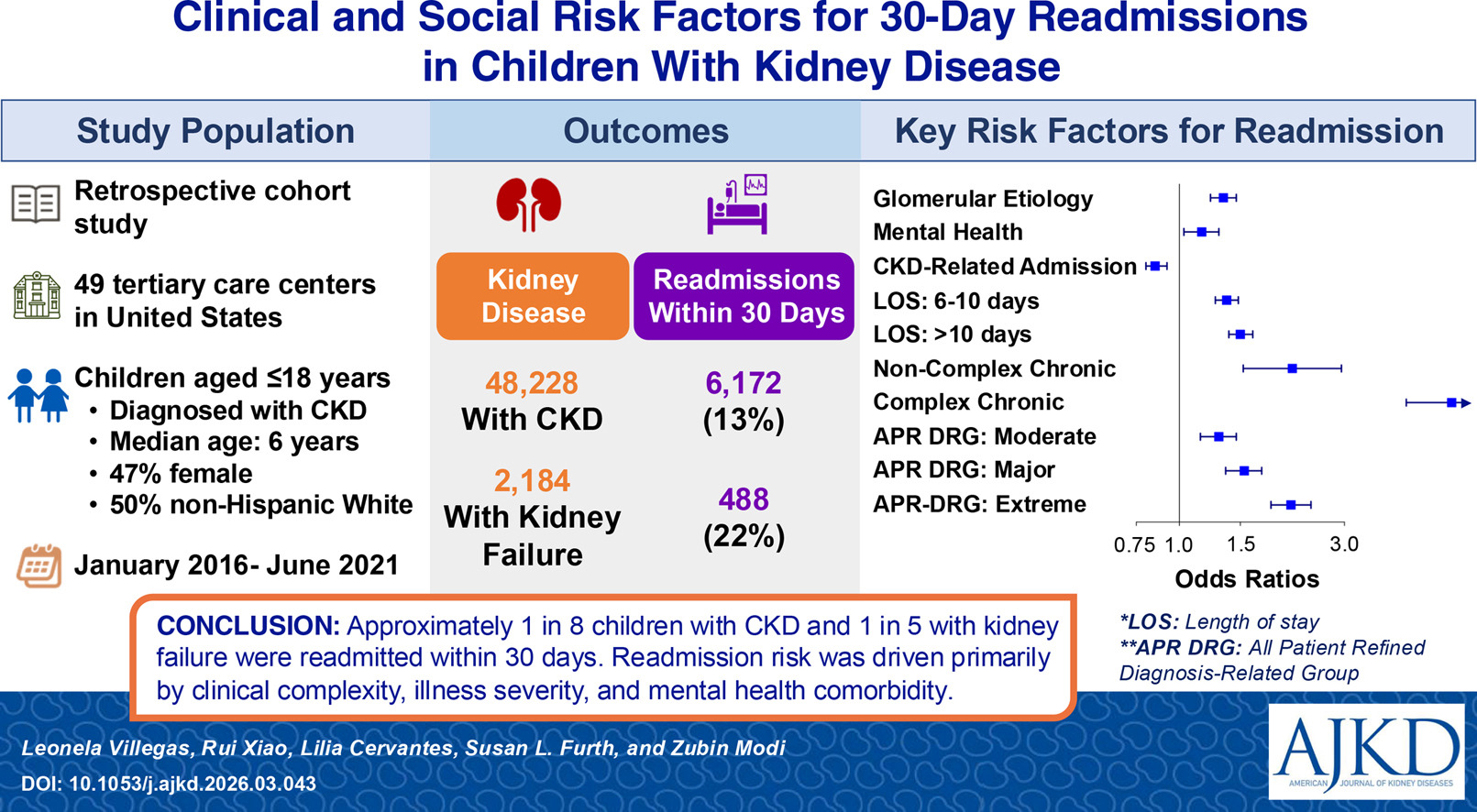
Clinical and Social Risk Factors for 30-Day Readmissions in Children With Kidney Disease by Leonela Villegas, Rui Xiao, Lilia Cervantes, Susan L. Furth, Zubin Modi (August 2026)
From the authors: Hospital readmissions place a significant burden on children with chronic kidney disease (CKD) and their families. In the United States, approximately 1 in 8 children with CKD and 1 in 5 children with end-stage kidney disease are readmitted to the hospital within 30 days of discharge. Factors associated with these readmissions remain poorly understood. In this study, we examined hospitalizations of children (age ≤18 years) with CKD across 49 hospitals in the United States to identify factors linked to 30-day readmission. Mental health comorbidities, glomerular cause of CKD, greater illness severity, longer initial hospital stays, and urban residence were associated with higher odds of readmission. Identifying children at higher risk of readmission may help improve discharge planning, follow-up care, and support for families.
DOI: 10.1053/j.ajkd.2026.03.043
~JAMES S. KAUFMAN EARLY CAREER AWARD~
“Recognizing early career achievement in nephrology research, this award also celebrates the dedication to and excellence in mentoring exemplified by Dr. Kaufman throughout his career”
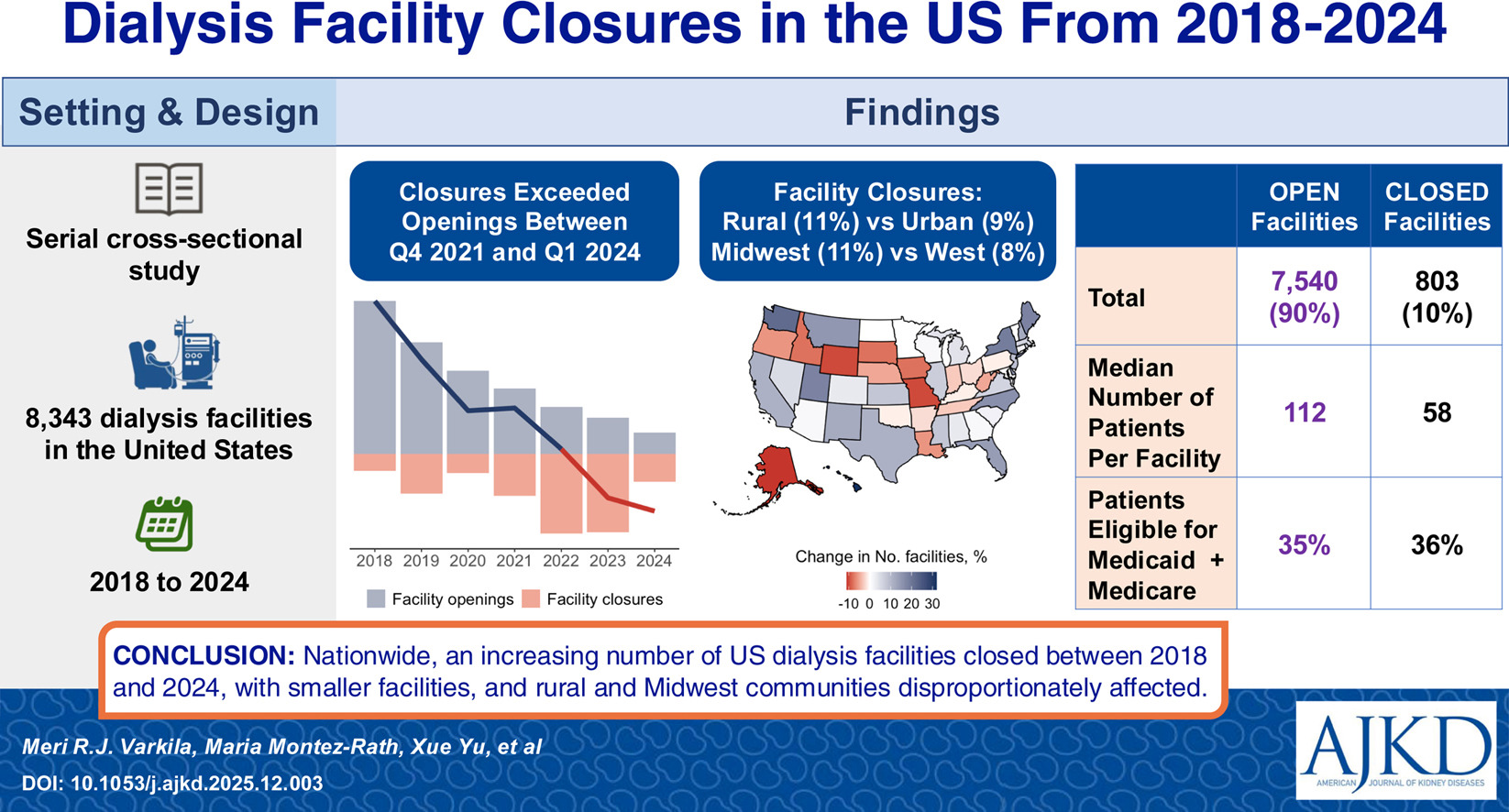
Dialysis Facility Closures in the US From 2018 to 2024: A Serial Cross-Sectional Study by Meri R.J. Varkila Maria Montez-Rath, Xue Yu, Nivetha Subramanian, Douglas K. Owens, Brian Brady, Geoffrey A. Block, Julie Parsonnet, Glenn M. Chertow, Shuchi Anand (June 2026)
DOI: 10.1053/j.ajkd.2025.12.003
EDITORIAL: Dialysis Facility Closures: Fraying a Fragile Lifeline for People With Kidney Failure by Allison C. Reaves et al. [FREE]
BLOG POST: Dialysis Facility Closure Trends Over the Past Decade: An Interview by Meri Varkila [FREE]
~JAMES S. KAUFMAN EARLY CAREER AWARD~
“Recognizing early career achievement in nephrology research, this award also celebrates the dedication to and excellence in mentoring exemplified by Dr. Kaufman throughout his career”
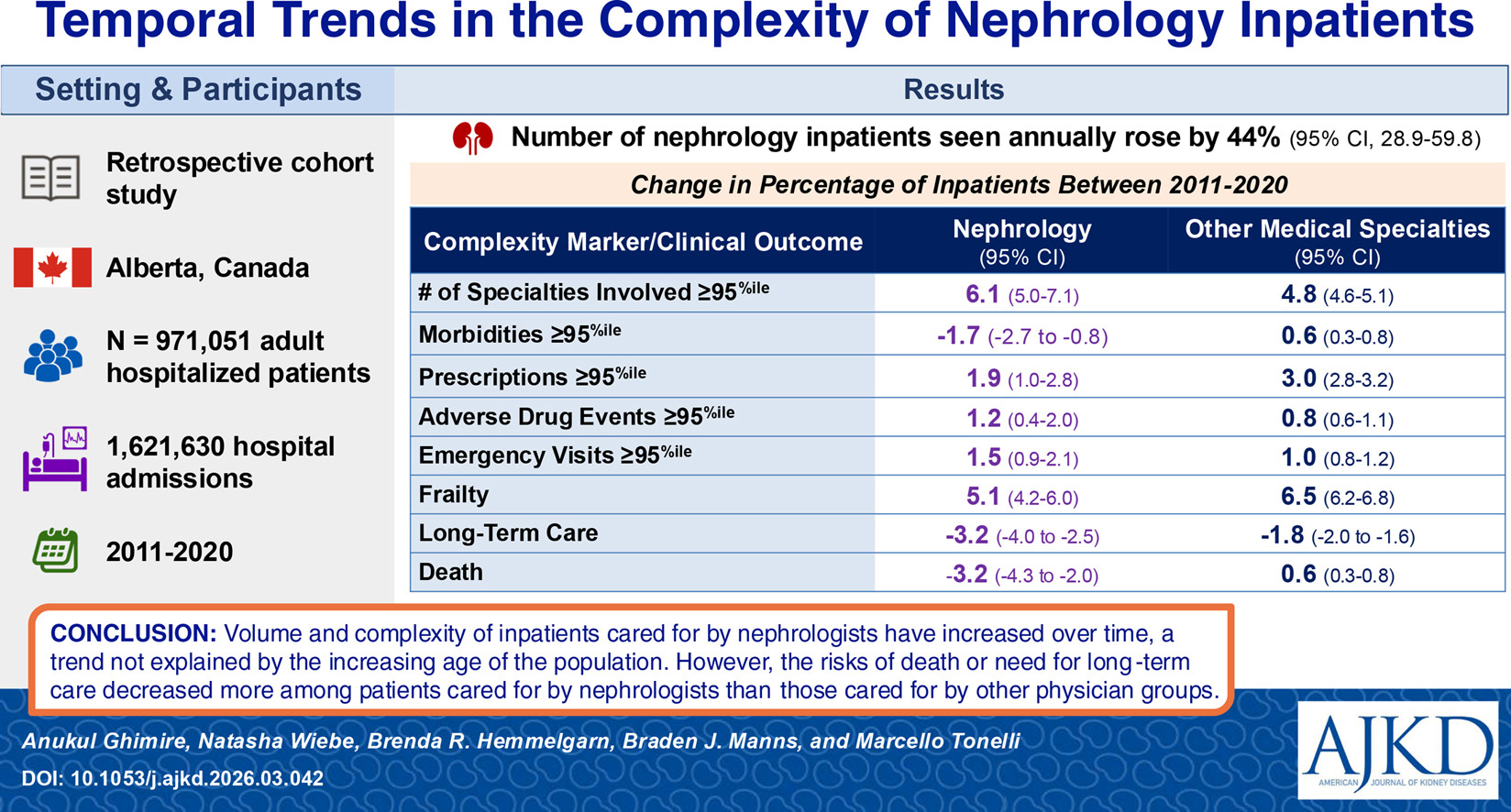
Temporal Trends in the Complexity of Nephrology Inpatients: A Population-Based Cohort Study by Anukul Ghimire, Natasha Wiebe, Brenda R. Hemmelgarn, Braden J. Manns, Marcello Tonelli (August 2026) [Open Access]
From the authors: Patients seen by nephrologists are highly complex, and clinical experience suggests that this complexity has increased over time. This study evaluated changes in various markers of patient complexity among hospitalized patients seen by nephrologists in Alberta, Canada, between 2011 and 2020. This study found increasing clinical complexity among patients seen by nephrologists, with changes greater than those observed among patients seen by other physician groups. Despite these changes showing increasing complexity among patients cared for by nephrologists, the risks of death or placement in long-term care within a year of hospital discharge decreased over time, and the decrease was greater among patients seen by nephrologists.
DOI: 10.1053/j.ajkd.2026.03.042
~NKF MISSION AWARD~
“Recognizing research published in AJKD that has great promise to enhance the lives of those affected by kidney disease”
Identifying Adaptation Needs of a Decision Aid for Older Latino Adults With Advanced CKD: A Qualitative Study Thalia Porteny, Kristen Kennefick, Hillary Matos, Kelli Collins Damron, Daniel E. Weiner, Sean Kalloo, Keren Ladin (January 2026)
Targeting and tailoring decision aids is a necessary step in providing goal-concordant and person-centered care for older Latino adults with advanced CKD.
Figure 1 from Porteny et al. © National Kidney Foundation.
DOI: 10.1053/j.ajkd.2025.07.014

The full list of AJKD Editors’ Choice articles is available at AJKD.org.
Leave a Reply