
Highlights from the October 2026 Issue
Editor’s Note: We asked authors of Original Investigations to provide short plain-language summaries that would briefly summarize what inspired their study, the basic approach taken, what was learned, and why it matters. We hope our readers will find this valuable in helping them keep up with the latest research in the field of nephrology.
Highlights from the October 2026 issue:
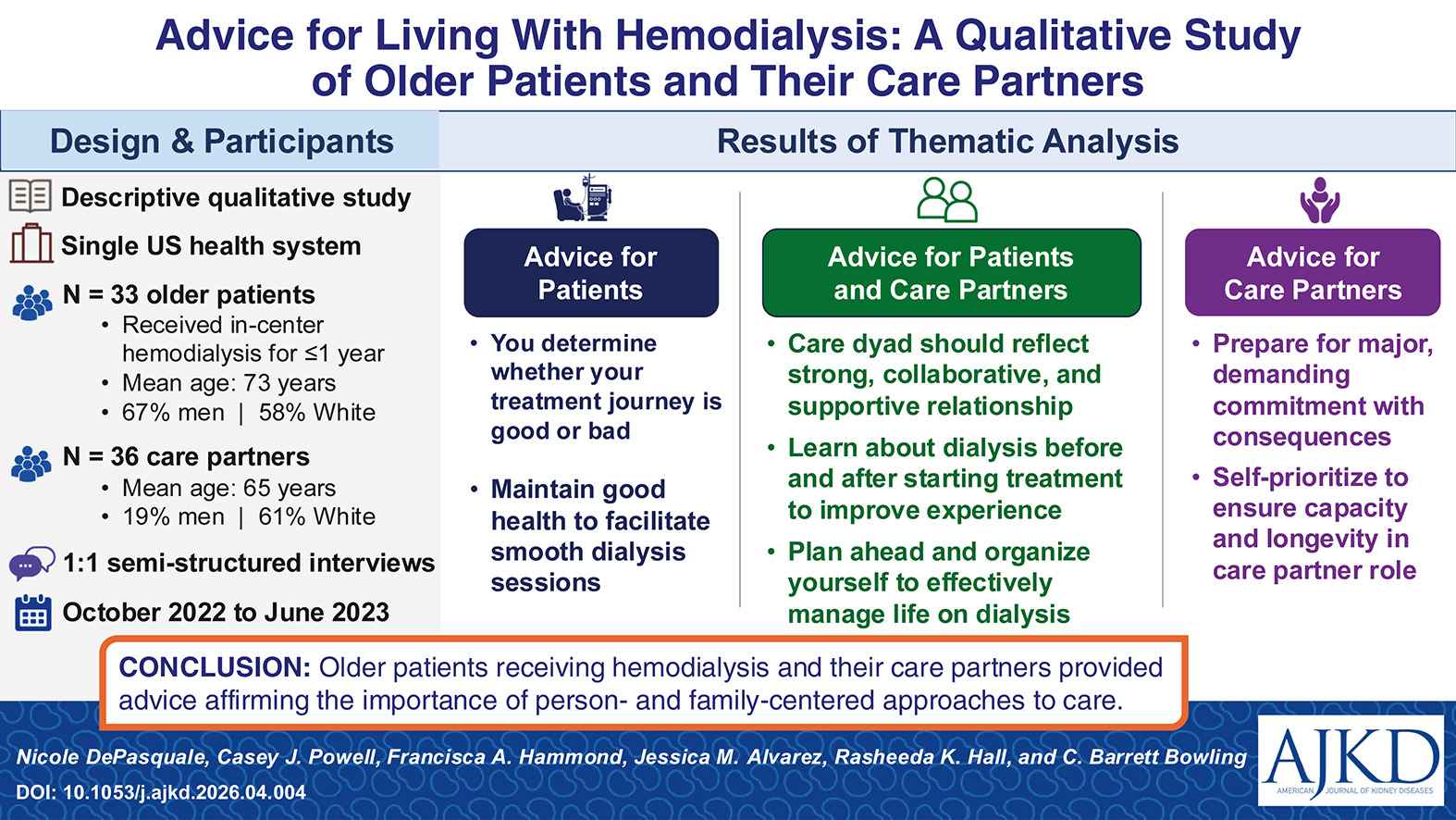
Advice for Living With Hemodialysis: A Qualitative Study of Older Patients and Their Care Partners by Nicole DePasquale et al. [OPEN ACCESS]
DOI: 10.1053/j.ajkd.2026.04.004
EDITORIAL: Saying the Quiet Part Out Loud: Resurfacing the Under-Recognized Needs of Patients and Care Partners by Monica Wilkerson
et al. [FREE]
Deceased Donor Kidney Transplantation Versus Continued Dialysis Among Patients Aged 75 Years or Older: A Target Trial Emulation by Napat Leeaphorn et al.
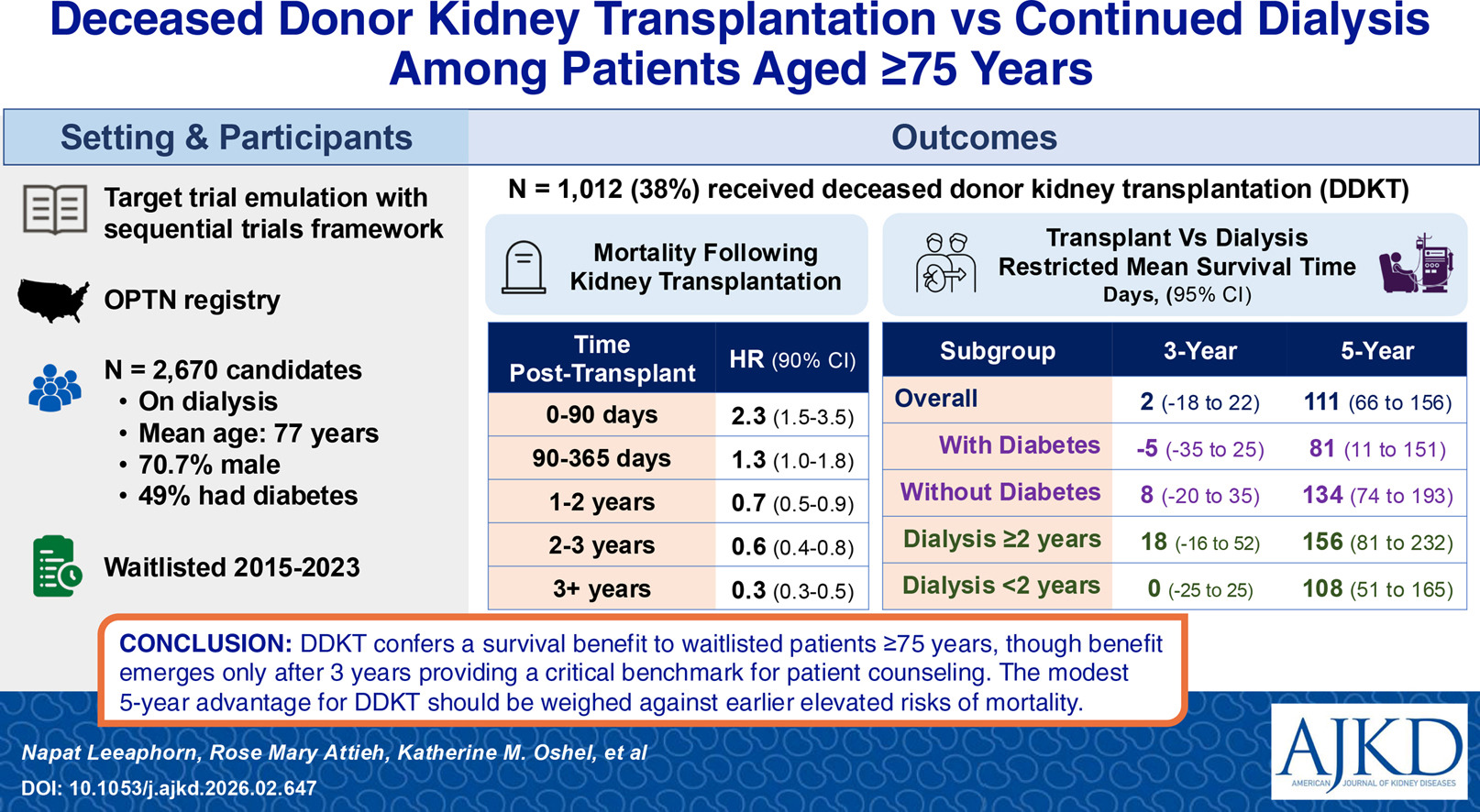
From the authors: Kidney transplantation is the preferred treatment for kidney failure, but whether it benefits patients aged 75 and older remains unclear. Previous studies in this age group have been limited by biased methods. This study used target trial emulation to mimic a randomized trial using national registry data, allowing estimation of transplantation’s true effect on patient survival. We found that transplant recipients face a higher mortality risk in the first few months after surgery, but those who survive this early period live longer than patients continuing to receive dialysis. This survival advantage becomes clear after about 3 years of follow-up. These findings can help elderly patients and their nephrologists make more informed decisions and emphasize that age alone should not exclude patients from consideration for kidney transplantation.
DOI: 10.1053/j.ajkd.2026.02.647
EDITORIAL: Kidney Transplant Decision-Making for Candidates Over Age 75: Insights From Target Trial Emulation by Maria E. Montez Rath et al. [FREE]
Time in Target Range for Hemoglobin A1c and Systolic Blood Pressure: Association With Adverse Kidney Events by Xi Meng et al.
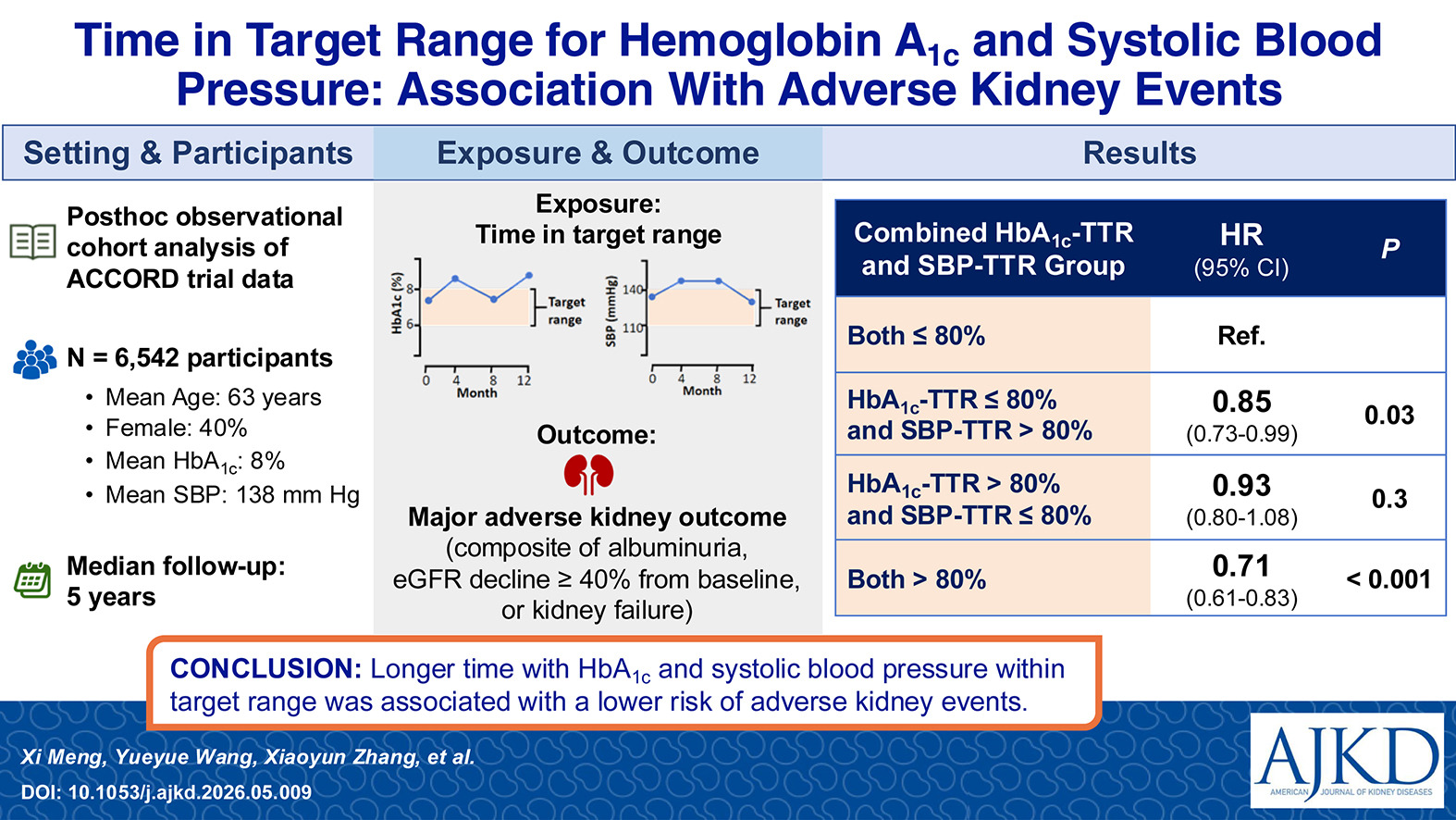
From the Authors: The concept of “time in target range” (TTR), defined as the proportion of time within a defined range, has been proposed in managing diabetes and hypertension. The combined effect of hemoglobin A1c (HbA1c)-TTR and systolic blood pressure (SBP)-TTR on adverse kidney events remains unknown. We evaluated the association of HbA1c-TTR and SBP-TTR, both individually and in combination, with incident kidney outcomes among patients who were enrolled in a clinical trial. We found that higher HbA1c-TTR and SBP-TTR were individually associated with a lower risk of adverse kidney events in patients with type 2 diabetes and hypertension. Having more time with both HbA1c and SBP within target range was also associated with a lower risk of adverse kidney outcomes compared with having either 1 individual parameter or neither individual parameter within target range.
DOI: 10.1053/j.ajkd.2026.05.009
EDITORIAL: Time in Target Range: The Optimal Marker for Kidney Protection
by Sachin Pasricha et al. [FREE]
Associations of Pre-Pandemic CKD With Acute and Post-Acute COVID-19: The C4R Study by Yuni Choi et al. [OPEN ACCESS]
From the Authors: Chronic kidney disease (CKD) affects approximately 1 in 7 US adults, yet its impact on COVID-19 outcomes, particularly in early stage CKD, remains incompletely understood. We analyzed pre-pandemic CKD stage data from 9 population-based US cohorts to assess their associations with the risk of severe COVID-19, symptom-defined long COVID, and postvaccination anti-spike 1 IgG levels. More advanced stages of CKD had a stronger relationship with severe COVID-19 and a lower anti-S1 antibody response. No consistent association was observed with symptom-defined long COVID, although its prevalence was higher among individuals with very high stage CKD. These findings suggest an altered vaccine-induced immunity and increased susceptibility to both acute and post-acute COVID-19 outcomes among persons with advanced CKD. Adults with advanced CKD may benefit from targeted preventive measures.
DOI: 10.1053/j.ajkd.2026.04.011

Perceptions of Hispanic Patients With Advanced CKD About Communication and Engagement Regarding Kidney Transplantation: A Qualitative Study by Aditi Gupta et al.
From the authors: Effective communication involves consideration of social context and background and can affect patient engagement with and understanding of treatment options. This study solicited perspectives on communication and engagement about barriers to kidney transplantation (KT) among Spanish-speaking Hispanic patients. Twenty Hispanic patients with advanced chronic kidney disease from 5 states were interviewed. These study participants reported that communication regarding eligibility for KT and the KT process was insufficient to make informed decisions about transplant options. They also reported that clinical providers did not adequately discuss all treatment options or fully consider patients’ socioemotional well-being. Patients reported often feeling fearful or discouraged after these conversations. Although differences in spoken language between patients and clinicians was a barrier, it was largely overcome by interpreters. These findings may inform strategies to improve communication and patient engagement, thereby addressing barriers to access to KT for Hispanic patients.
DOI: 10.1053/j.ajkd.2026.04.017
Risks of Postpartum Kidney Disease Following Pre-eclampsia and Gestational Hypertension by Ruby Lin et al. [OPEN ACCESS]
From the authors: This retrospective cohort study included over 3.4 million deliveries complicated by a new-onset hypertensive disorder of pregnancy, either gestational hypertension, pre-eclampsia without, or pre-eclampsia with severe features. These patients were followed for 1 year postpartum, over which time 1.3% were readmitted for kidney disease complications. Compared with gestational hypertension, pre-eclampsia without and with severe features was associated with a 1.6-fold and 2.4-fold increased rate of kidney disease, respectively. These findings may inform clinical follow-up strategies after the occurrence of hypertensive disorders of pregnancy, in particular, pre-eclampsia.
DOI: 10.1053/j.ajkd.2026.04.016
Hospitalizations With Pericarditis and Pericardial Effusions in People With Kidney Failure Receiving Dialysis in the United States (2016-2021) by Carl Walther et al.
From the authors: Inflammation of the connective tissue lining the heart (pericarditis) and accumulation of fluid around the heart (pericardial effusion) can occur in people who receive dialysis for kidney failure. However, little is known about how often this occurs in recent years or the related outcomes and costs. This study estimated how often hospitalizations with pericarditis or pericardial effusion in people with kidney failure on dialysis occur in the United States. We found that the number of hospitalizations with these problems and procedures to treat them have increased from 2016 to 2021. Additionally, the total cost of these hospitalizations increased from 2016 to 2021. The reasons for the observed increases are uncertain and warrant further study.
DOI: 10.1053/j.ajkd.2026.05.011
An Interactive Virtual Nephrologist to Engage Patients With Advanced CKD About Transplantation by Peter Reese et al. [OPEN ACCESS]
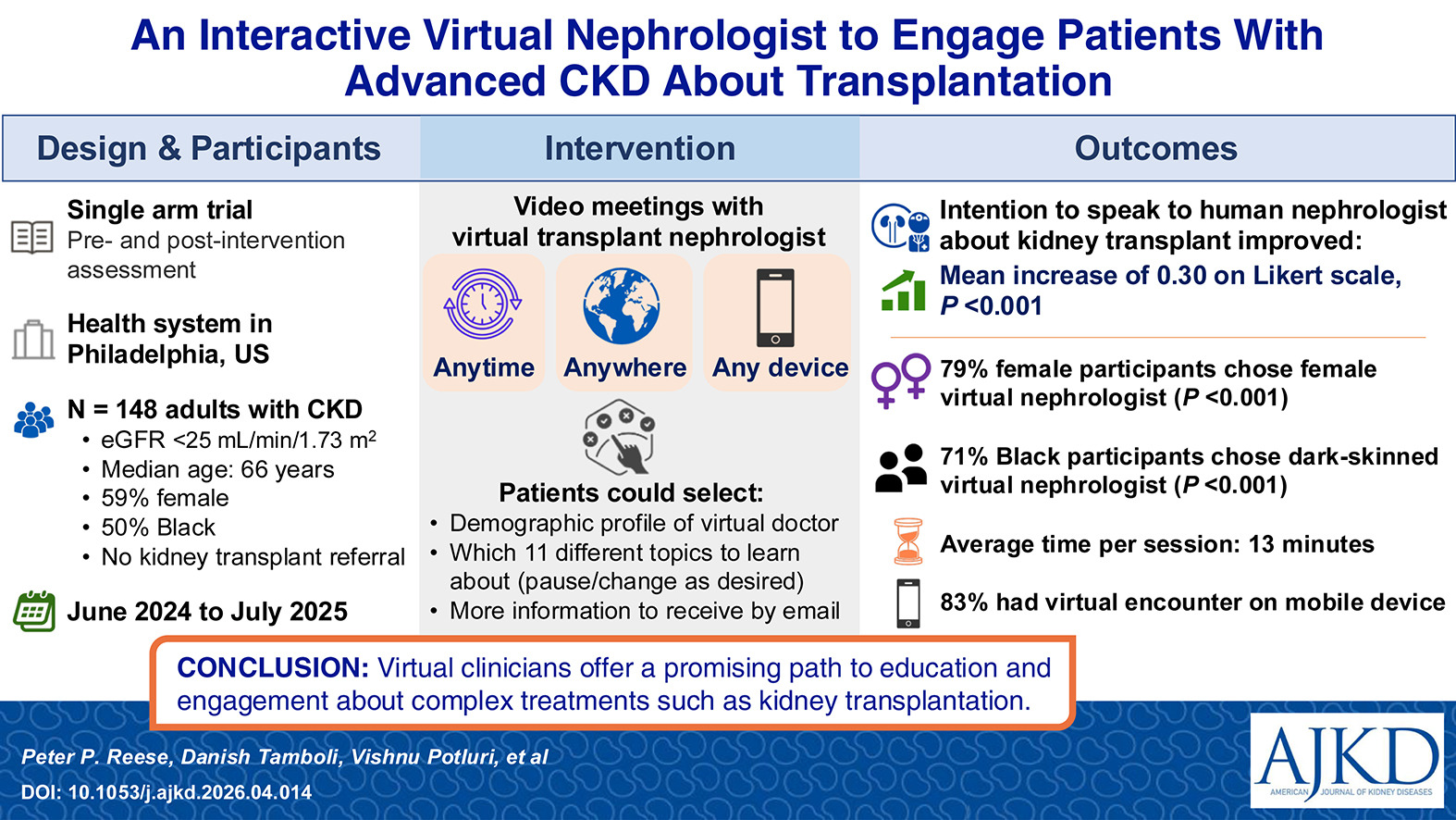
From the authors: Many patients with kidney failure requiring dialysis never learn about kidney transplantation or pursue this treatment. This study used artificial intelligence and high-quality information about kidney transplantation to create the “virtual nephrologist,” a series of videos that simulate a meeting with a doctor who teaches about transplantation. The study team then tested whether a meeting with the virtual nephrologist increased patients’ intentions to speak to their physicians about transplantation. The virtual nephrologist could be accessed on a smartphone or computer at any time and used simple language. Patients chose from 4 nephrologists with different backgrounds and went through topics including the waiting list and finding a transplant center. Participants reported that they were more likely to talk to their doctors about transplantation after using the virtual nephrologist, highlighting a need for more research on applying new technologies like this virtual nephrologist to engage patients about important health topics.
DOI: 10.1053/j.ajkd.2026.04.014
Core Curriculum in Nephrology in the October 2026 issue:
Approach to Hematuria: Core Curriculum 2026 by Megan Prochaska et al.
DOI: 10.1053/j.ajkd.2026.05.013
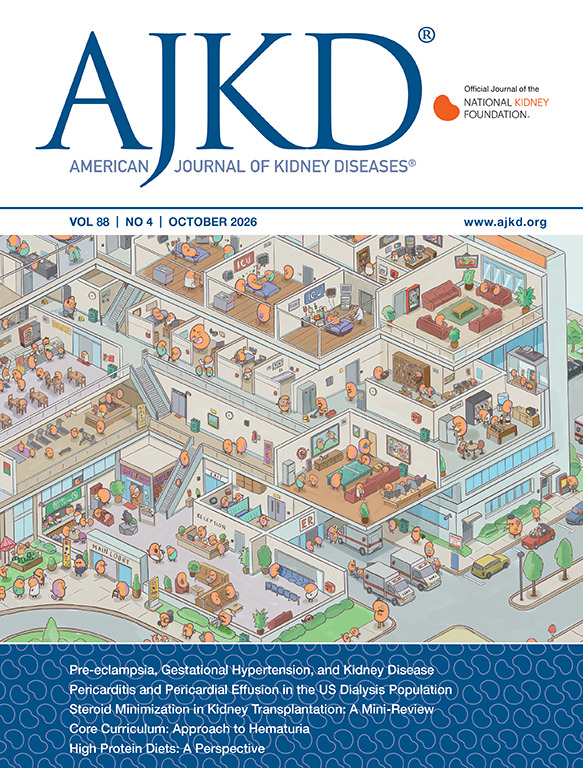 On the Cover:
In a Few Words is a recurring AJKD feature through which we give voice to the diverse experiences and stories that characterize kidney disease. We invite submissions of nonfiction, narrative essays, poems, and original art that relate to the personal, ethical, or policy implications of all facets of kidney disease. Physicians, allied health professionals, patients, and family members are encouraged to share how kidney disease has impacted their personal or professional lives. The digital artwork on our cover this month, created by Nirmay Sonar, celebrates the world of nephrology, with kidney beans representing doctors and patientsin every aspect of their lives.
“A World of Kidney Beans” digital illustration by Nirmay Sonar. Image [copyright] 2026 Nirmay Sonar; adapted with permission of the copyright holder.
SPECIAL COLLECTION: HIGHLY CITED
The articles in this special collection highlight the top cited Original Investigations published in 2023 and 2024 that contributed to AJKD’s 2025 Impact Factor of 9.4.
Leave a Reply